
Missionary Figure of the Month
TERESA GRIGOLINI
Mission and Martyrdom
October is the month of mission in the Church’s calendar. On this occasion, I would like to inaugurate a new series dedicated each month to a missionary figure to introduce to the readers of the blog. The aim is not to engage in missionary “archaeology”, but to rediscover some of its emblematic figures in order to rekindle the missionary flame within us.
The first figure I wish to evoke is that of Comboni missionary Teresa Grigolini, on the 95th anniversary of her death, which occurred on 21 October 1931. A truly remarkable personality in the history of mission: sister, wife and mother. Three states of life marked by suffering, in an existence that can be understood in the light of a threefold martyrdom.
Through these pages, I would like to offer a humble contribution towards placing back on the lampstand a light that has remained hidden under a bushel for far too long, so that it may once again illuminate the entire house: that of mission and the Church (cf. Mt 5:15).
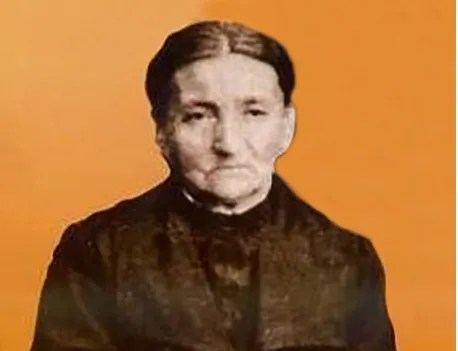
TERESA GRIGOLINI
Mission and Martyrdom
There is a woman in the history of mission who experienced three lives and as many forms of suffering. She was a sister, a wife and a mother. She crossed the African desert, experienced captivity, suffered violence and humiliation, and ultimately sacrificed her religious vocation to protect other women.
When she finally regained her freedom, she discovered that there no longer seemed to be a place for her in the world she had left behind.
Introduction – A Vocation Marked by Martyrdom
A Comboni missionary, imprisoned in Sudan, forced into a marriage that changed her life forever. This is the extraordinary story of a woman from the Verona area who endured violence, exile and misunderstanding without abandoning her faith. Ninety-five years after her death, her story continues to challenge the Church.
Her name was Teresa Grigolini. Born in the province of Verona on 18 January 1853, she died on 21 October 1931 [1]. For decades, her name remained on the margins of ecclesiastical memory, almost as though her story, too painful and complex to tell, represented an embarrassing chapter of the missionary past. Today she is remembered as a Servant of God, while her story is gradually being rediscovered.
The historian Lucetta Scaraffia has presented her as an emblematic figure of female martyrdom: a form of suffering that does not always culminate in a violent death, but may unfold slowly through the loss of freedom, the violation of the body and social exclusion.
Teresa’s life, however, is not merely the story of a tragedy. It is also a testimony to responsibility, courage and perseverance. Above all, it is the story of a woman who, although deprived of the possibility of freely choosing her own destiny, sought to remain faithful to her conscience.
The Young Woman from Verona Captivated by Comboni’s Dream
Teresa Grigolini was born in Mambrotta, a village belonging to San Martino Buon Albergo, on the outskirts of Verona, into a prosperous family that valued the education of its children and was deeply rooted in the faith.
These were the years in which Italy was completing its process of unification, while the missionary Church was turning its attention increasingly towards Central Africa. Among the leading figures of that period was Daniele Comboni, a priest from Verona who regarded education, the formation of local communities and the presence of women as fundamental elements of his evangelising work.
Comboni knew the Grigolini family and recognised the qualities of the young Teresa: intelligence, organisational ability, religious sensitivity and a determined character. Teresa, for her part, was profoundly captivated by the Comboni missionary ideal and chose to dedicate her life to Africa.
On 23 January 1874, she arrived at the community in Verona, in Via Santa Maria in Organo, to enter the newly established Institute of the Pious Mothers of Nigrizia, now known as the Comboni Missionary Sisters. In December 1874, she began her novitiate and, on 15 October 1876, became one of the first sisters to take vows according to the founder’s vision.
Teresa soon became a leading figure in the young congregation. Comboni entrusted her with important responsibilities, eventually recognising in her the model of missionary woman he wished to form: a sister capable of combining deep spirituality with practical initiative, adaptability with dedication to others.
Daniele Comboni’s Esteem for Teresa
The profound esteem in which Daniele Comboni held Teresa Grigolini emerges with particular intensity from his letters. In them, the founder recognised the young sister as one of the most promising figures in the emerging congregation of the Pious Mothers of Nigrizia.
Struck by her faith and strength of character, he described her as “an incomparable daughter, a true saint” (Writings, 5070).
He particularly admired her determined character, energy and ability to face the difficulties of mission, to the point of calling her, in an expression both affectionate and forceful, “a true gendarme of Christ” (Writings, 6604).
In Teresa, Comboni saw the fulfilment of the missionary ideal he had always envisioned: a woman capable of combining contemplation and action, spiritual depth and practical sense, authority and dedication. For this reason, speaking of her, he exclaimed: “This is exactly the type I have in mind” (Writings, 6654).
The most significant recognition came just a few weeks before the founder’s death, when Comboni described Teresa as “the strongest support of Central Africa” (Writings, 7040).
These words testify not only to the extraordinary confidence he placed in her, but also to the decisive role Comboni envisioned for her in the future of the missionary undertaking.
Towards Africa, Between the Nile and the Desert: The Journey of the First Comboni Missionary Sisters
It was 12 December 1877 when Teresa Grigolini left Verona for Central Africa. She was just twenty-four years old and was leading the first five Pious Mothers of Nigrizia destined for the Sudanese mission.
Travelling with her were Maria Caspi, Maria Giuseppa Scandola, Concetta Corsi and Vittoria Paganini. They were accompanied by Daniele Comboni himself, who had been consecrated bishop only a few months earlier and appointed Apostolic Vicar of Central Africa.
This was a historic moment for the young women’s congregation, founded only a few years before: for the first time, its sisters were preparing to establish a permanent presence in the heart of the African continent.
The departure was preceded, on 10 December 1877, by a solemn celebration in the Church of San Tommaso in Verona, during which Cardinal Luigi di Canossa blessed the missionaries and presented them with the crucifix, a sign of the mission awaiting them.
Two days later, the group left Verona and travelled to Rome, where they met Cardinal Alessandro Franchi, Prefect of Propaganda Fide, before continuing on to Naples.
On 15 December 1877, the group boarded the French steamship Erebe, bound for Alexandria, Egypt. Writing to her family about the sea voyage, Teresa said: “We were at sea for four and a half days.”
On 19 December, in the late afternoon, the group entered the port of Alexandria. The following day they reached Cairo, where they were welcomed by the missionaries and sisters already serving in the Comboni institutions.
In the Egyptian capital, the young sisters spent several weeks in preparation and acclimatisation. Comboni took advantage of the stopover to introduce them to the country’s cultural and religious realities and to cultivate important diplomatic relationships.
He also accompanied them on visits to sites of significance in Egyptian history: on 31 December 1877, they visited the Pyramids, while on 2 January 1878, they went to the Tree of the Virgin Mary and the remains of ancient Heliopolis.
These experiences opened the young sisters’ eyes to a world profoundly different from the one they had left behind in Verona.
The journey resumed along the Nile, aboard a dahabiya, a large sailing vessel specially chartered for the expedition.
Comboni had initially planned to reach Sudan via the Red Sea and Suakin, but the risk of quarantine, following reports of cholera cases in Jeddah, persuaded him to choose the river route, followed by the desert crossing.
Navigation was slow and marked by numerous unforeseen difficulties. In early February 1878, near Minya, the anchor damaged the hull and water began entering the vessel. The travellers were forced to transfer temporarily to other boats while local residents and soldiers came to their assistance.
The expedition continued through Asyut, Girga, Nag Hammadi and Luxor, where the sisters were able to admire the imposing ruins of ancient Thebes.
In the first days of March 1878, the group reached Aswan. There Teresa received devastating news: her father Lorenzo had died suddenly, shortly after her departure from Italy.
Comboni, who already knew what had happened, greatly dreaded the moment when he would have to break the news to her. Teresa sensed that something serious had occurred, but faced her loss with a strength of spirit that deeply moved the entire expedition.
The daughter’s grief was thus intertwined with the missionary’s determination, as she knew that she could not return to bid her father a final farewell.
Leaving Egypt behind, the hardest part of the journey began: the desert crossing towards Berber, an important caravan centre in northern Sudan.
The missionaries had to endure intense heat, water shortages, exhausting travel and the difficulties of a region afflicted by a severe drought. These weeks severely tested the physical and psychological endurance of the young sisters, many of whom had never experienced such extreme conditions.
Finally, on 30 March 1878, Teresa and her companions reached Berber. More than three months had passed since their departure from Verona.
Concetta Corsi described their arrival in words that convey all the joy and relief of the missionaries: “Here we are, all arrived safe and exceedingly happy after sixty-one days of travel, that is, 48 on the Nile and about 13 in the desert.”
That seemingly endless journey along the Nile and across the desert represented the first great test of Teresa Grigolini’s vocation.
The young woman from Verona, who a few years earlier had chosen to follow the ideal of Daniele Comboni, had finally reached Africa, to which she wished to dedicate her life.
She could not yet imagine that this very land, in which she placed all her hopes, would soon become the setting for one of the most dramatic episodes in the history of women’s missionary work.
1. The First Martyrdom: The Agony of the African Mission
The Africa that welcomed the first Comboni missionary sisters was very different from what they had imagined. A devastating drought had caused a severe famine, while typhoid fever, smallpox and other diseases were taking a heavy toll on the population. The missions also suffered serious losses. Living conditions were extreme: food, medicines and personnel were in short supply, while communications with the outside world were difficult and irregular. The sisters thus found themselves sharing fully in the suffering of the local populations, caught between hunger, epidemics and the constant threat of death.
For Teresa, appointed superior of the group, a severe trial of responsibility, courage and perseverance began. She had to organize community life, support her fellow sisters, become familiar with local languages and customs, and prepare for future missionary assignments. Added to the hardships of daily life were isolation, the harsh climate and the need to keep hope alive in communities constantly exposed to illness and death.
After her stay in Berber, Teresa reached Khartoum and subsequently El Obeid, in Kordofan, where she took on new responsibilities. Missionary work included education, assistance to the most vulnerable, care for the community and the formation of young women. It was not simply a matter of proclaiming the Gospel, but of bearing witness to it through a daily presence, marked by closeness, service and sharing in people’s lives.
The first four years of mission, from 1878 to 1882, thus constituted Teresa’s first martyrdom, understood in the spiritual sense as a daily offering of herself [2]. Even before the Mahdist persecution, the young sister experienced the cost of remaining faithful to her vocation: separation from her family, hardship, illness, the deaths of her companions and the apparent fragility of a work built amid immense difficulties. It was a school of sacrifice and fidelity that prepared her, without her being able to imagine it, for far more dramatic trials.
On 10 October 1881, Daniel Comboni died in Khartoum. For his missionaries, it was a devastating loss, occurring at a time of growing political instability and depriving the young communities of their founder and principal point of reference.
That same year, Muhammad Ahmad proclaimed himself the Mahdi, assuming the religious and political leadership of an insurrectionary movement against the Turco-Egyptian government. The uprising spread rapidly, overturning the political and social balance throughout Sudan.
The founder’s death and the Mahdist advance plunged the missionary communities into profound uncertainty. To the difficulties they had already experienced was now added the threat of a persecution destined to overwhelm the missions of Kordofan.
One of the Deepest Tragedies in Nineteenth-Century Missionary History
The experience of the Comboni missionaries during the Mahdiyya represents one of the most painful chapters in nineteenth-century missionary history. It brought together the destruction of Christian communities, war, hunger, forced conversions, imprisonment and violence against women. Yet, precisely amid this suffering, an extraordinary capacity for endurance, solidarity and fidelity also emerged, as documented in the memoirs of the survivors.
At the heart of this tragedy stood Teresa Grigolini, called upon to exercise her responsibility as superior under extreme conditions, in which every decision could have tragic consequences. Her personal story thus became inseparable from the fate of the communities entrusted to her care.
Sixteen Years in the Hands of the Mahdi: The Ordeal of Teresa Grigolini and the Comboni Missionaries
When, in September 1882, the forces of Muhammad Ahmad began to overwhelm the Catholic missions of Kordofan, Teresa Grigolini was twenty-nine years old. She had been living in Africa for four years, where Daniel Comboni had entrusted her with important responsibilities in leading the Pious Mothers of Nigrizia. The founder’s death in October 1881 had already left the missions in a state of profound uncertainty. Now, the insurrection against Turco-Egyptian rule threatened to destroy everything that had been built through years of sacrifice.
The first blow came on 15 September 1882, when the mission of Delen fell into Mahdist hands. The priests Luigi Bonomi and Josef Ohrwalder, the lay brothers Gabriele Mariani and Giuseppe Regnotto, and three sisters — Amalia Andreis, Maria Caprini and Eulalia Pesavento — were captured. All were stripped of their possessions and forced to follow their captors, without knowing what fate awaited them.
Violence and deprivation soon claimed their first victims. Sister Eulalia Pesavento died on 27 October, Brother Gabriele Mariani on 31 October and Sister Amalia Andreis on 11 November. They were twenty-six, twenty-nine and thirty years old, respectively. Three young lives cut short in the space of a few weeks. Their fate foreshadowed the long ordeal awaiting the other prisoners.
Meanwhile, in El Obeid, Teresa Grigolini desperately sought a way to safety. She understood the gravity of the danger and proposed leaving the city to reach Khartoum. But Father Giovanni Losi, who was in charge of the mission, preferred to wait for the fellow missionaries from Delen, unaware that they had already been captured. The decision proved fatal.
The city was now under siege. Hunger began to kill even before the weapons did. Food supplies ran out, diseases spread unchecked, and the streets filled with dying people. Teresa left a harrowing testimony in her memoirs: “The poor, who were very numerous, were the first to die.” Father Giovanni Losi, weakened by scurvy, also died on 27 December 1882, just a few weeks before the capitulation.
On 19 January 1883, El Obeid fell. Among the prisoners were the priest Paolo Rosignoli, Brother Isidoro Locatelli, and five sisters: Teresa Grigolini, Concetta Corsi, Fortunata Quascè, Elisabetta Venturini and Caterina Chincarini. Fortunata, originally from Nubia, had been redeemed from slavery and had become the institute’s first African sister [3].
Altogether, in the two missions of Delen and El Obeid, fourteen members of the Comboni family had been captured: three priests, three brothers and eight sisters. Three of them had already died by the time the survivors were brought together.
The mission, founded to bring hope and life, now found itself plunged into captivity, suffering and uncertainty about the future. For Teresa and her companions, one of the most dramatic trials of their lives was beginning.
2. The Second Martyrdom: The Great Sacrifice
If Teresa’s early years in Africa had been marked by hardship and deprivation, captivity under the Mahdists subjected her to a trial of an entirely different kind. It was no longer simply a matter of enduring hunger, illness, and isolation, but of facing religious persecution, violence, and threats to the dignity of her fellow sisters. As superior, Teresa felt responsible for their fate and tried to protect them even when every possibility of choice seemed to disappear. Her second martyrdom arose precisely from this dramatic responsibility: accepting an extreme personal sacrifice to spare the other women even greater violence.
Violence and the Demand to Convert to Islam
One of the victors’ first objectives was to obtain from the missionaries a public declaration of adherence to Islam. Those who refused were threatened, beaten, and humiliated. This was not a freely chosen religious encounter, but a policy of coercion exercised under Mahdist rule.
Father Paolo Rosignoli and Brother Isidoro Locatelli, threatened with beheading, recited the required formula [4]. The pressure on the religious sisters was even harsher: they faced not only hunger, imprisonment, and physical violence, but also the threat of being forced into marriage and sexual relations.
During the first months of captivity, the sisters’ resistance impressed even their fellow missionaries. Father Luigi Bonomi acknowledged that their courage had inspired profound admiration among the male missionaries.
The accounts describe particularly cruel torture. Fortunata Quascè was tied to a post and whipped; Teresa was struck in the face and suffered injuries to her lips. Elisabetta Venturini recounted being beaten, dragged, and tied to a tree until she lost consciousness.
In April 1884, the women were separated and placed under the supervision of families connected to Mahdist leaders. Forced to walk barefoot for dozens of kilometres, without sufficient food and under the desert sun, they continued to live with the uncertainty of possible execution or deportation.
On 12 April 1884, after being threatened with sexual violence, Concetta Corsi recited the Islamic profession of faith so that she could enter the Mahdi’s enclosure and seek protection. On learning what had happened, Teresa decided to recite it as well, so that she could join her companion rather than leave her alone.
This was not a conversion born of personal conviction. It was an act performed under extreme pressure, in which the superior placed the protection of a fellow sister before her own safety. For the Mahdist authorities, however, reciting the formula was sufficient for the women to be considered Muslims.
These events would later be recounted by Elisabetta Venturini, Father Ohrwalder, and Teresa herself, who left memoirs of her captivity. These are invaluable testimonies, allowing us to reconstruct episodes long left unspoken or recalled only through veiled allusions.
In the Omdurman Camp: European, Greek, Egyptian, and Christian Prisoners
The fate of the Combonians became intertwined with that of many others captured during the war. Among them were officials of the Egyptian government, merchants, craftsmen, soldiers, and people connected with the administrations of the conquered cities.
How many other prisoners were there? No single figure applies to the entire period from 1882 to 1898: prisoners arrived at different times, and many died, escaped, or were released before the regime fell. An official document presented to the British House of Commons on 2 June 1899 reported that, following the Battle of Omdurman, approximately 10,854 people were liberated in all, the vast majority being Egyptians, Turks, Copts, and other inhabitants of the region. Among the detainees of various nationalities were 177 non-Coptic Christians and 36 Jews, a total of 213 people; they included 94 Greeks, 12 Italians, and four Austrians. They were therefore not all Europeans [5].
One of the best-known prisoners was Rudolf Slatin, an Austrian officer who had served as governor of Darfur. Others belonged to the Greek community, which had a substantial presence in Sudanese trading towns.
The prisoner population was far from homogeneous. People of different nationalities and religions lived under differing conditions, depending on their status, the protection they secured, and the decisions of the authorities. Some were able to carry on small businesses or practice crafts, although they remained under close surveillance. Others depended entirely on the charity of acquaintances or fellow sufferers.
Hunger was a constant threat. Dwellings were often simple huts, clothing was inadequate, and medicines were almost nonexistent. Infectious diseases, epidemics, and famines were part of everyday life. Escape attempts carried grave risks and, even when successful, could lead to reprisals against those left behind.
Persecution also had a psychological dimension. The Mahdist authorities sought public gestures of religious adherence, separated prisoners, and controlled relations between men and women.
The testimonies indicate that some Europeans recited formulas of conversion to Islam to avoid punishment or obtain less harsh conditions. Others continued to refuse, paying for their resistance with further violence. In interpreting such declarations, it is essential to distinguish freely held religious convictions from decisions imposed by the need to survive.
Protective Marriages and Teresa’s Sacrifice
The most dramatic circumstances were those of the religious sisters. Once the authorities regarded them as Muslims, they could be forced to marry. To prevent their being assigned to men of the Mahdist movement, some European prisoners offered an extreme solution.
Rudolf Slatin helped arrange marriages formally recognised by the authorities, originally conceived as a form of outward protection. Some Greek merchants agreed to be named as the sisters’ husbands and to shelter them in their homes.
Teresa was entrusted to Dimitri Cocorempas, a Greek from El Obeid. Concetta Corsi was paired with Brother Isidoro Locatelli, while Caterina Chincarini found protection with another Greek man. Fortunata Quascè was also included in this arrangement.
Living together remained precarious. The men worked in the markets, while the sisters sewed clothes and performed household tasks to help support the group. As far as possible, they tried to live separately from their protectors.
Teresa organised daily life and sought to maintain ties with her fellow sisters. She wrote letters, tried to obtain assistance, and cared for the weaker women. In 1885, she managed to send a message to the outside world describing the difficult circumstances of the sisters still in Omdurman, hidden in several houses under Greek protection.
As the years passed, however, the system of nominal marriages proved increasingly fragile. The protectors demanded money, and the authorities suspected that the unions were not genuine. The risk of further violence increased.
The situation deteriorated sharply when, according to reconstructions based on the testimonies, Concetta Corsi was sexually assaulted, allegedly by Isidoro Locatelli, and became pregnant [6]. The episode revealed how fragile the arrangements devised to protect the sisters really were.
Teresa then bore the burden of the most painful ordeal. To dispel suspicions surrounding the marriages, in August 1890 she was forced to consummate her union with Dimitri Cocorempas.
This imposition transformed her life radically. The religious sister whom Daniele Comboni had considered one of the mission’s most important pillars became a wife and subsequently a mother. Three children were born of that marriage, one of whom died in childhood.
Those Who Escaped and Those Who Remained
Attempts to free the missionaries began early but failed for years. The Mahdi also rejected offers of ransom, while Church authorities and their intermediaries sought to organise escapes across the desert.
The first to succeed was Father Luigi Bonomi, who left El Obeid on 25 June 1885.
In October of the same year, Maria Caprini and Fortunata Quascè also escaped, thanks to an operation arranged with the help of people outside the camp. Teresa would have liked all the sisters to escape together, but Concetta, who was pregnant, and Caterina, who was seriously weakened, were in no condition to undertake the journey.
Teresa decided to remain at their side.
In March 1887, Brother Isidoro Locatelli managed to regain his freedom, leaving Concetta Corsi with a small child. Meanwhile, the years passed amid escape attempts, illnesses, and constant restrictions.
The great famine of 1888–1889 made conditions even worse. Teresa sought help from her family in Italy, while money and news arrived only with the greatest difficulty.
On 3 October 1891, Concetta died of typhus in Omdurman. A few weeks later, on 29 November, Father Josef Ohrwalder escaped with Elisabetta Venturini and Caterina Chincarini. Their crossing of the desert was exhausting, but they eventually reached Egypt.
For Teresa, this was another painful separation. She had watched almost all her fellow sisters depart, while she remained a prisoner, bound to a marriage she had never sought and to her responsibility for her children.
Father Paolo Rosignoli regained his freedom in October 1894, thanks to initiatives promoted by Comboni’s successor, Bishop Francesco Sogaro.
Of the mission’s members, only Teresa Grigolini and Brother Giuseppe Regnotto remained under the control of the Mahdist regime.
3. The Third Martyrdom: Abandonment
On 2 September 1898, the Anglo-Egyptian army, commanded by General Herbert Kitchener, defeated the Mahdist forces at the Battle of Omdurman. The following day brought Teresa’s long captivity to an end.
From 19 January 1883 to 3 September 1898, fifteen years and almost eight months had passed [7].
Yet the end of captivity did not mean the end of her torment. Instead, it marked the beginning of a new ordeal, a third martyrdom, perhaps the most painful of all: abandonment.
Teresa Grigolini’s story reflects some of the deepest tragedies of nineteenth-century missionary history: war, captivity, violence against women, choices made under duress, and the burden of a sacrifice that would go without full recognition for many years.
Freedom Regained, but Not for Everyone
For the surviving missionaries, the possibility finally arose of resuming their interrupted lives. Some returned to their religious communities; others rejoined their families and returned to their countries of origin.
For Teresa, however, liberation did not mean a return to the life she had lost. She was a wife and mother. She had children to raise, a husband to whom she was now bound, and personal circumstances that made her reintegration into the congregation extremely difficult.
The paradox was painful: during her captivity, she had given up her religious vocation to protect the other women; once freed, those same sisters could return to the convent, while she remained excluded.
In the memoirs she would write during her final years, Teresa described the bitterness of those days. This is perhaps one of the most painful chapters in the entire story: a woman who had endured captivity and accepted immense sacrifices to save her companions was denied a return to her religious family.
The cultural context of the time must also be considered. The story of a former nun who had married and become the mother of three children was difficult to comprehend within the ecclesiastical and social conventions of the early twentieth century.
Teresa bore the burden of circumstances she had not chosen, but which were now considered incompatible with the restoration of her former consecrated life.
Nevertheless, she did not relinquish her spiritual bond with Comboni and his religious sisters. She preserved it through prayer, memories, and the desire to continue feeling part of the congregation.
Her testimony is also striking because she does not conceal her inner rebellion. She recounts despair, incomprehension, and even the feeling that God had abandoned her.
It is a faith that passes through doubt, suffering, and a sense of injustice, without being turned into an artificially consoling story.
Motherhood, meanwhile, bound her to her new family circumstances. Biographical accounts describe a difficult marital relationship, also marked by violent behaviour on her husband’s part. Teresa nevertheless continued to care for her family and, during Dimitri’s illness, nursed him until his death in 1915.
Her story demonstrates how reductive it is to interpret sacrifice solely as a heroic choice. Teresa was also a woman deprived of the right to decide freely what happened to her body and her future. Recognising this dimension does not diminish her faith; rather, it conveys the full gravity of the circumstances in which she was forced to live.
The Return to Verona and the Pain of Exclusion
In 1918, the final year of the First World War, Teresa returned to Italy for good.
Approximately forty years had passed since her departure for Sudan. The enthusiastic young missionary had become a woman marked by captivity, motherhood, bereavements, and the hardships of family life.
On her permanent return to Italy, Teresa Grigolini was welcomed by her brother, Father Luigi Grigolini, parish priest of Mambrotta, a hamlet of San Martino Buon Albergo on the outskirts of Verona, where they had both been born. To be near her, Father Luigi had asked to leave an important city parish and be transferred to this small community in the Verona countryside. Teresa settled in the rectory, leading a secluded life devoted to prayer and works of charity, but marked by the pain of separation from her children and the impossibility of rejoining the Combonian congregation. In the rectory at Mambrotta, cared for in her final days by a sister of the Pious Mothers of Nigrizia, she died on 21 October 1931, aged 78.
Eight Lire for a Mass: A Gesture That Tells the Story of a Life
One of the most significant episodes of Teresa’s final years, preserved in the memory of the Comboni Missionary Sisters, reveals much about her inner life.
In 1926, the fiftieth anniversary of her first religious profession, made on 15 October 1876, came around.
Mother Costanza Caldara decided to visit Teresa, by then a widow, to share with her the memory of that distant day. The two women spent time together recalling their youth and their years on the mission.
As they parted, Teresa gave the sister eight lire, asking that a Mass be celebrated to mark the anniversary of her vows.
It was a simple but deeply meaningful gesture, embodying Teresa’s profound attachment to her vocation.
Half a century after her profession, despite being unable to return to the convent, Teresa continued to regard that day as a defining date in her life.
The congregation had not formally readmitted her, but she had not erased her past.
The 1926 visit also shows that, despite the institutional distance, not all her personal ties with her fellow sisters had been broken.
When her health deteriorated, a Combonian sister, Adelinda Fontana, cared for her in her final days. Thus the woman who had longed to return to her community received, at least towards the end of her life, the tangible companionship of one of her sisters.
4. After the Cross, the Resurrection
There are stories that the Church takes a very long time to understand. Teresa Grigolini’s is one of them. When she died on 21 October 1931, in the rectory at Mambrotta on the outskirts of Verona, where she had been taken in by her priest brother, Father Luigi, her extraordinary sacrifice received little recognition. The woman whom Daniele Comboni had regarded as one of the most precious pillars of the African mission, and who had endured almost sixteen years of captivity under Mahdist rule, died far from the congregation to which she had consecrated her youth and which she had hoped, in vain, to rejoin.
Teresa Grigolini’s Long Oblivion and the Surprising Parallel with the Fate of Her Founder
A long silence descended over her story. Teresa had been a nun and then, as a result of a marriage imposed by the harrowing circumstances of captivity, a wife and mother. It was a story difficult to understand and tell in accordance with the religious sensibilities of the time. Her sacrifice, made to protect her fellow sisters, almost seemed to become a fault. The victim of violence and coercion thus became a victim of incomprehension and oblivion as well.
Yet her story reveals a surprising similarity to the fate of Daniele Comboni himself. The founder, who died in Khartoum on 10 October 1881 at only fifty years of age, had also experienced misunderstanding, accusations, abandonment, and profound loneliness in the final years of his life. Nor was his rightful place in the history of the missionary undertaking he had begun immediately recognised after his death.
The most significant example concerns the very identity of the male Combonian institute. After Comboni’s death, the transformation of the original missionary institute into a religious congregation, under new leadership and with Jesuit involvement, led to a gradual weakening of references to the founder. In the new congregation’s earliest documents, Comboni was not even identified as its founder. In a circular dated 7 June 1903, Father Francesco Saverio Colombaroli, then superior general, went so far as to describe the new institute as an institution “orphaned” of a father [8].
This circumstance is recalled by Father Tarcisio Agostoni, who points out that in the early circulars issued by the superiors general, Comboni’s name did not appear with the title of founder. Even in the earliest versions of the Rules, that role was attributed to Bishop Francesco Sogaro, Comboni’s successor as head of the Apostolic Vicariate of Central Africa.
The paradox is clear: the man who had founded the Institute for the African Missions in Verona in 1867 and the Pious Mothers of Nigrizia in 1872, devoting all his energies to the evangelisation of Central Africa, risked being forgotten by the very people who had inherited his legacy.
Comboni and Teresa, the founder and one of his first spiritual daughters, therefore experienced, albeit in different ways, a fate that was in some respects similar: misunderstanding, marginalisation, and the gradual obscuring of their memory. For both, recognition would come only through a long and difficult process of rediscovery.
For Teresa, a first concrete gesture of rehabilitation came in 1995, sixty-four years after her death, when her remains were finally received into the tomb of the Comboni Missionary Sisters, from which they had previously been excluded. It was a quiet gesture, but one of enormous significance: the woman who had been unable to regain her place in the congregation during her lifetime was symbolically welcomed back into the community of sisters after her death.
This act of reconciliation was gradually accompanied by a historical and spiritual reassessment of her story. Scholarly studies, renewed attention to the testimonies of her fellow prisoners, and above all the rediscovery of her autobiographical memoirs made it possible to understand her actions in a different light: no longer as those of a religious sister who had abandoned her vocation, but of a woman deprived of freedom who had accepted an extreme sacrifice to save others.
Particularly significant has been the contribution of historian Lucetta Scaraffia, who has drawn attention to the martyrdom of consecrated women subjected to violence and the need to recognise forms of Christian witness that do not necessarily end in violent death.
And so a slow resurrection of Teresa’s memory began.
The next step came in 2012, when the first initiatives to promote the cause of beatification of Teresa Grigolini Cocorempas were undertaken. By 2013, her name was already associated with the title Servant of God, while in 2015 some Church publications explicitly referred to the process begun towards recognition of her holiness [9]. More than eighty years after her death, her story was finally beginning to be regarded not merely as a painful chapter in missionary history, but as a possible testimony to holiness.
The process of ecclesiastical recognition of Daniele Comboni is much further advanced: he was proclaimed blessed on 17 March 1996 and a saint on 5 October 2003 by John Paul II. The Church now officially recognises as the founder of the Comboni Missionaries and the Comboni Missionary Sisters the man whose founding role, for a period in the history of his own institute, had not been fully acknowledged.
The two stories are not identical, but the comparison is eloquent. Daniele Comboni had written that God’s works are born and grow at the foot of the cross. His own life seemed to confirm this conviction dramatically. The same can be said of Teresa, the sister in whom he had recognised the ideal missionary of Nigrizia, and who would bear a cross as prolonged as it was difficult to understand.
Ninety-five years after her death, the rediscovery of Teresa Grigolini does not erase the suffering she endured or the historical responsibility of those who failed to understand her. But it finally makes it possible to recognise the value of her witness and restore her rightful place in Combonian memory.
This, perhaps, is the most meaningful resurrection in her story: not the erasure of wounds, but the recognition of a fidelity that endured even when everything seemed lost. A woman long forgotten thus speaks once more to the Church and the world, reminding us that holiness does not always follow a straightforward path and that the cross sometimes takes the painful form of misunderstanding by those from whom love was expected.
Conclusion: The Contemporary Relevance of Teresa Grigolini’s Witness
Teresa Grigolini’s story illuminates an essential dimension of Christian mission: martyrdom lived as witness, which does not always find expression in violent death, but may take the form of prolonged suffering, fidelity lived in obscurity, or a life that appears to have failed. Teresa did not die at the hands of her persecutors, but she endured a long existential martyrdom: almost sixteen years of captivity, violence, an imposed marriage, the loss of her consecrated life and, after her liberation, misunderstanding and exclusion from the religious family to which she had given her youth. Her witness is all the more significant because it was not without doubts, moments of discouragement, and painful questions about God’s silence.
The Hidden Stones of the Mission: The Mysterious Plan of Providence
Her story seems to give tangible form to one of Daniele Comboni’s deepest insights. In the Rules of 1871, speaking of the missionaries of Nigrizia, the founder wrote that each should be prepared to become “a stone hidden beneath the earth, which perhaps will never come to light, and which becomes part of the foundation of a new and colossal building that only future generations will see rise from the ground” (Writings, 2701). It is an image that expresses the Gospel logic of mission: sowing without necessarily reaping, giving oneself without demanding recognition, and accepting that the fruitfulness of one’s life may remain invisible to human eyes.
Teresa truly was one of those hidden stones. She, whom Comboni had held up as a model missionary of Nigrizia, ended up being forgotten by the very religious family whose foundation she had helped to lay. As the Combonian work grew and spread throughout the world, her story remained buried beneath the weight of a tragedy that was difficult to understand. And yet, within the mysterious plan of Providence, it sometimes happens that stones seemingly destined to remain forever hidden are brought back into the light. Teresa’s gradual rediscovery, the rehabilitation of her memory within the congregation, and the launch of initiatives for her beatification seem to suggest that no life given out of love is destined to be lost in oblivion.
This does not mean attributing the violence and injustice Teresa suffered to the will of God, or seeking a spiritual justification for the responsibility of those who failed to understand her. Rather, the mystery of Providence is revealed in the possibility that even a life marked by suffering and apparent defeat may, with the passage of time, bear unexpected fruit. This is the Paschal logic of the cross and the resurrection, so deeply rooted in Comboni’s spirituality: life can spring forth precisely where everything seemed definitively lost.
The Relevance of Teresa’s Witness Today
From this perspective, the contemporary relevance of Teresa’s witness becomes clear. Her story speaks to women who, even today, suffer violence, forced marriage, deprivation of liberty, and humiliation in war zones and situations of persecution. It reminds us that a person’s dignity is not diminished by the violence inflicted upon them, and that no victim should be judged or marginalised because of the consequences of coercion. It also challenges the Church itself, inviting it to acknowledge the suffering that has so often remained hidden in its own history, to listen to victims, and not to add the burden of misunderstanding to the weight of their wounds.
But Teresa also has something to say to the mission of today, which must confront wars, persecution, poverty, and apparent failures. Her life reminds us that missionary fruitfulness is not measured solely by works accomplished or visible results. There is a quiet fruitfulness born of fidelity, of sharing the fate of the most vulnerable, and of the ability to remain beside those who suffer even when all hope seems to have vanished. Teresa did not choose the harrowing circumstances in which she was forced to live, but she tried not to abandon those entrusted to her care. It is above all in this solidarity, for which she paid such a high price, that her story retains a Gospel power that transcends time.
Ninety-five years after her death, the rediscovery of Teresa Grigolini thus takes on a meaning that goes beyond the necessary restoration of a memory unjustly obscured. It invites us to recognise, in the foundations of the mission, the lives of so many men and women whose sacrifices have remained unknown, and to understand that the history of evangelisation is made up not only of great figures and extraordinary achievements, but also of hidden fidelity, tears, and hopes preserved in silence.
Teresa, the stone that seemed destined to remain buried forever, comes to light today. And her story reminds us that, within the mysterious plan of Providence, what people consider lost can become the foundation of a new history. Perhaps this is precisely her final mission: to bear witness that, even in the most deeply wounded lives, the cross does not necessarily have the last word.
Notes
[1] Date of birth. The sources consulted disagree on Teresa Grigolini’s date of birth. The Comboni Missionary Sisters’ website gives 18 January 1853, while Santi e Beati gives 14 May 1853 (to be verified).
[2] The first martyrdom. The expression is used in a spiritual and testimonial sense, to describe the sacrifice and suffering experienced during her first years in Africa. It does not constitute canonical recognition of martyrdom.
[3] Identity of the imprisoned sisters. Historical reconstructions do not entirely agree on the list of sisters captured at El Obeid. A testimony reported by Combonifem includes Fortunata Quascè, while a 2026 publication by the Comboni Missionary Sisters names Maria Caspi.
[4] Declarations of conversion to Islam. Some missionaries and religious sisters recited formulas of adherence to Islam under threat of death or violence. Such declarations, extracted under coercion, cannot be equated with free and conscious religious adherence. This distinction is essential to an accurate historical and moral interpretation of events.
[5] Number of prisoners. The figures quoted come from the British parliamentary document The Khartoum Prisoners, dated 2 June 1899. They refer to people liberated at the end of the Mahdist regime and do not necessarily represent the total number imprisoned over the preceding sixteen years. The sources used contain no exhaustive census of Europeans detained throughout the entire period.
[6] The case of Concetta Corsi and Isidoro Locatelli. The episode of sexual violence is reported in reconstructions based on testimonies concerning Mahdist captivity. As this is a particularly sensitive matter, it is appropriate to retain attribution to the sources and avoid wording that presupposes findings beyond those historically available.
[7] Duration of captivity. Teresa Grigolini remained under Mahdist rule from 19 January 1883 to 3 September 1898, approximately fifteen years and eight months. During this long period her personal circumstances changed several times: from detention imposed by the victors to forced cohabitation with her husband, throughout under a regime that restricted her freedom.
[8] The Combonian institute “orphaned” of its founder. The reference to Father Francesco Saverio Colombaroli’s circular of 7 June 1903 is found in historical studies of the Combonian institute, particularly those by Tarcisio Agostoni. The expression “orphaned” summarises the substance of the testimony. The episode concerns the institutional recognition of Daniele Comboni’s role as founder after the missionary institute was transformed into a religious congregation.
[9] Cause for beatification. Some biographical publications date the beginning of initiatives for Teresa Grigolini’s cause of beatification to 2012. However, it has not been possible to verify with certainty, through official canonical records, the date of any formal opening of the diocesan inquiry, the name of the postulator, or the current status of the proceedings. Furthermore, the title Servant of God is not equivalent to recognition of heroic virtue or martyrdom, or to beatification.
P. Manuel João Pereira Correia, MCCJ
Castel d’Azzano, 21 October 2026
Research carried out using AI
See the bibliographical references in the Italian article
