Who do I belong to?
Year A – 29th Sunday in Ordinary Time
Matthew 22:15-21: “Give therefore to Caesar the things that are Caesar’s, and to God the things that are God’s”
In previous Sundays we heard how Jesus harshly denounced the religious and political leaders through three parables, drawing their hostility upon himself: by now they had decided to get rid of him. All they were looking for was a pretext.
1. A well-orchestrated trap
“The Pharisees went and plotted to entrap Jesus in what he said. So they sent their disciples to him, along with the Herodians.”
Herodians and Pharisees join forces, even though they are opponents, in an attempt to find a way to eliminate Jesus. The disciples of the Pharisees begin with a lengthy eulogy of the “Teacher” before putting to him the question agreed upon with the Herodians: “Tell us, then, what you think. Is it lawful to pay taxes to Caesar, or not?”
The trap was cleverly devised. If Jesus had answered “yes,” he would have risked alienating the people, who deeply resented Roman rule. If he had answered “no,” they could have accused him of being a subversive.
2. Jesus, a master of discernment
In Jesus’ reply, despite its brevity, we can discern a genuine lesson in Christian discernment and, more specifically, four valuable indications for us as well.
1) FREEDOM: “You hypocrites!”
First step: Jesus reveals himself as a free person. He is not won over by the Pharisees’ flattery and exposes their hypocrisy.
And this is precisely where we too so often stumble. We allow ourselves to be conditioned by praise or by the opinions of others, ultimately limiting our freedom and our clarity of judgment.
2) QUESTIONING: “Why are you putting me to the test?”
Jesus often answers a question with another question. Asking questions of those who challenge us is a way of involving them, making them take responsibility and inviting them to reflect.
A passive attitude in the face of problems has been one of the limitations that marked part of the Catholic laity, also as a consequence of a clericalism that, for centuries, profoundly influenced the life of the Church. The tendency sometimes to present herself as already possessing all the answers may also have contributed to the difficulty the Church experiences today in dialogue with certain areas of Western culture.
It seems to me that we must also learn to say: “I don’t know.” It means humbly acknowledging our limitations in the face of the complexity and novelty of many contemporary questions, without giving up the search, but sincerely setting out on a journey to understand them better.
3) LOOKING: “Show me the coin used for the tax”
Jesus takes a third decisive step: looking at concrete reality. He asks to see the coin used for the tax and, in doing so, catches his interlocutors off guard.
That coin, bearing the image of Tiberius and an inscription with strong religious significance, made the power of Rome visible. The fact that it was present precisely in the Temple area also highlighted an obvious contradiction, given the Jewish distrust of images that could take on an idolatrous character.
Thus, those who wanted to put Jesus to the test end up being confronted with their own contradictions.
4) REFRAMING: “Give therefore to Caesar the things that are Caesar’s, and to God the things that are God’s!”
The fourth moment consists in placing the concrete situation back within a broader horizon. An issue that is isolated and absolutized risks becoming a partial truth and, precisely for this reason, a deceptive one. Only a greater light allows us to put it into perspective and place it in its proper context.
“Give to Caesar what belongs to Caesar and to God what belongs to God” is one of the most famous sayings in the Gospel, but also one of the most enigmatic. It is often interpreted as though there were two clearly separate spheres: “earthly things” entrusted to Caesar and “spiritual things” reserved for God.
But what belongs to Caesar? Caesar is responsible for matters concerning civil life: guaranteeing order, social peace, freedom and justice.
And what belongs to God? Everything. “I am the Lord, and there is no other; besides me there is no god… I am the Lord, and there is no other!” (Isaiah 45:1, 4-6).
If the coin bears Caesar’s image and can therefore be returned to Caesar, the human being bears the image of God impressed upon him. The whole human person must therefore be returned to God. Here lies Jesus’ great claim: “Give to God what belongs to God!”
From this arises a decisive question: Who do I belong to? To a family, a profession, a social group, a people, a nation? Certainly. But Jesus reminds us that there is a belonging deeper than all the others: you belong to God.
3. Caesar’s money and Jesus’ coin
Allow me now a somewhat daring image. The money used to pay Caesar’s tax makes me think of the coin that Peter, at Jesus’ instruction, takes from the mouth of the fish to pay the Temple tax (Matthew 17:24-27). One single coin for Jesus and Peter: both of them, in some way, associated in that coin.
What symbolic image might we imagine stamped upon it? On the obverse, the image of Christ; on the reverse, that of Peter. The image of Christ on the front and, on the back, mine or yours. Two sides of the same coin! Each one of us belongs to Christ, and Christ… “belongs” to each one of us! (see 1 Corinthians 3:22-23).
For personal reflection and prayer
Today, the penultimate Sunday of October, the Church celebrates World Mission Day. Established by Pius XI in 1926, this year it marks its hundredth observance. Pope Leo XIV has chosen as its theme: “One in Christ, united in mission.” I invite you to read the Holy Father’s Message and, during this week, to return to the prayer found at its conclusion:
Holy Father, make us one in Christ, rooted in his love that unites and renews. May all members of the Church be united in mission, docile to the Holy Spirit, courageous in bearing witness to the Gospel, proclaiming and daily embodying your faithful love for all creatures.
Bless all missionary men and women, support them in their efforts, and watch over them in hope!
Mary, Queen of Missions, accompany our work of evangelization in every corner of the earth: make us instruments of peace, and grant that the whole world may recognize in Christ the light that saves. Amen.
Fr. Manuel João Pereira Correia, MCCJ
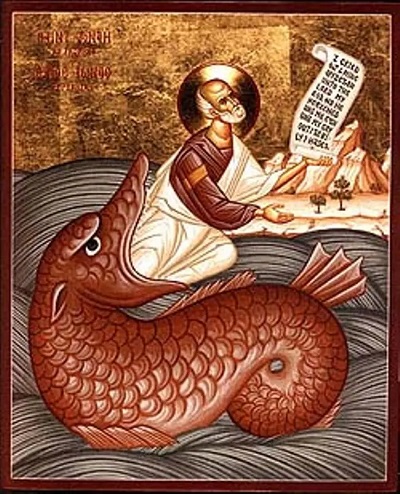
Fr. Manuel João, comboni missionary
Sunday Reflection
from the womb of my whale, ALS
Our cross is the pulpit of the Word
