From 1 September to 4 October 2026, the Season of Creation is celebrated, an ecumenical time of prayer and action for our Common Home, with this year’s theme, “Living Water”.
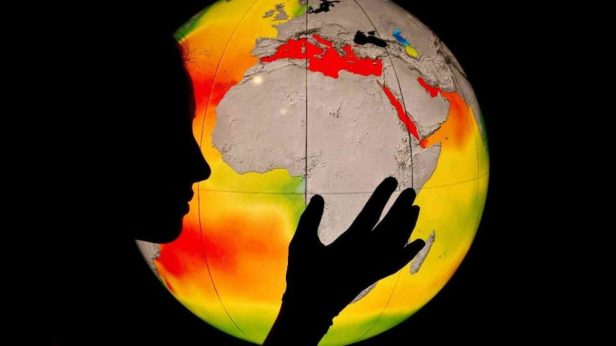
From 1 September to 4 October, Christian Churches are invited to observe the Season of Creation, a period of just over a month dedicated to prayer, conversion and action for the care of our common home. It is not simply an ‘environmental month’, but a time in which faith in God the Creator is brought into relationship with our daily choices, the economy, peace, justice and our responsibility towards future generations. It begins with the World Day of Prayer for the Care of Creation and ends on the feast of Saint Francis of Assisi, the saint of the Canticle of the Creatures and patron saint of ecology.
The roots of this initiative are profoundly ecumenical. In 1989, Ecumenical Patriarch Dimitrios I proposed that the Orthodox Church observe 1 September as a day of prayer for creation, a date which also marks the beginning of the Orthodox liturgical year. In 2007, at the Third European Ecumenical Assembly in Sibiu, the proposal was made to extend this concern into a genuine five-week ‘season’; in 2008, the World Council of Churches invited the Churches to celebrate it through prayer and action. In 2015, Pope Francis established the World Day of Prayer for the Care of Creation for the Catholic Church. Gradually, the Season of Creation has thus become a shared experience among Orthodox, Catholic, Anglican, Lutheran, Reformed and other Christian communities.
In this case, ecumenism does not consist only in discussing what unites us, but also in working together concretely to safeguard what belongs to everyone.
Over these decades, ecological awareness has undoubtedly grown. More and more people understand that the environment is not merely a backdrop to human life, but the very fabric that sustains it. Air, water, soil, climate, biodiversity, forests, seas and agricultural systems are directly linked to health, work, food security and peace. Yet, while awareness is increasing, so too is the urgency.
Climate change, the loss of biodiversity, the degradation of soil and water, and pollution are damaging ecosystems and affecting above all the most vulnerable people. The ecological crisis cannot, in fact, be separated from the social crisis: very often those who have contributed least to environmental deterioration suffer its gravest consequences.
To all this must be added the return of war. Wars kill people, destroy cities and communities, but they also devastate fields, forests, rivers, infrastructure and territories that can remain contaminated for many years. Pope Leo XIV strongly emphasises this connection: human suffering and the destruction of the balance of creation are not two separate problems, but one single cry for healing and peace rising from a wounded world.
The nuclear threat, which many had imagined had been consigned to the past, once again weighs heavily upon the future of humanity. The continuing modernisation of nuclear arsenals and growing geopolitical tensions remind us that serious care for creation must also include a commitment to disarmament, reconciliation and the building of peace.
A further obstacle is represented by economic interests, whenever immediate profit becomes the overriding criterion. The economy is indispensable to human life and can be a powerful instrument of development; it becomes destructive, however, when nature is regarded merely as an inexhaustible storehouse of raw materials and when environmental costs are transferred to society as a whole or to future generations.
Pope Leo XIV himself identifies among the roots of the present crisis the loss of a sense of limits, the desire for domination and the pursuit of immediate profit.
Alongside this comes climate and ecological denial: not only the explicit denial of problems, but also subtler forms of minimisation, postponement, disinformation or resignation. Saying that ‘there is nothing we can do’, that every intervention would be pointless, or that there will always be time to address the problem can become a way of changing nothing.
Ecological conversion, by contrast, calls for realism, responsibility and a hope capable of becoming action.
‘Living Water’: the theme for 2026
The theme chosen for the Season of Creation 2026 is ‘Living Water’, inspired by the great vision of the prophet Ezekiel in chapter 47.
The prophet sees water flowing from the Temple, becoming an ever-deeper river and, wherever it flows, bringing healing, making the land fertile, filling the waters with fish and enabling trees laden with fruit to grow. It is an image of hope born in a context of exile and loss: it does not deny desolation, but proclaims that life can flourish once again.
The symbol chosen this year therefore invites us to ‘immerse ourselves in the Living Water’: not to remain spectators on the riverbank, but to enter ever more deeply into a renewed relationship with God, with other human beings and with the whole of creation.
Water is at once a powerful spiritual symbol and a decisive material reality. It is a sign of creation, purification, baptism and new life; but it is also an essential and fragile good, distributed in profoundly unequal ways.
The 2026 theme therefore calls Christian communities to contemplate water as a gift and to defend it as a common good: protecting springs and rivers, combating pollution, avoiding waste, supporting access to safe drinking water, and understanding the relationship between the water cycle, climate, agriculture, biodiversity and peace.
‘Living Water’ is therefore not merely a beautiful biblical image: it is a programme of conversion and action.
A journey through the themes of previous years
The journey of recent years reveals a significant continuity.
In 2020, the theme was ‘Jubilee for the Earth’, with an invitation to allow the earth to rest and to reconsider economic models based on unlimited consumption.
In 2021: ‘A Home for All? Renewing the Oikos of God’, rediscovering the earth as our common home and a community of life.
In 2022: ‘Listen to the Voice of Creation’, symbolised by the burning bush.
In 2023: ‘Let Justice and Peace Flow’, inspired by the words of the prophet Amos.
In 2024: ‘To Hope and Act with Creation’, drawing on the eighth chapter of the Letter to the Romans.
In 2025, finally, the theme was ‘Peace with Creation’, inspired by Isaiah 32 and accompanied by the symbol of the Garden of Peace.
We can recognise here a true spiritual journey: from the rest of the earth and economic justice to our common home; from listening to justice; from hope to action; from peace with creation to the ‘Living Water’ of 2026.
It is a journey that links spirituality, peace, social justice and practical responsibility ever more closely.
The message of Pope Leo XIV
For the 11th World Day of Prayer for the Care of Creation, celebrated on 1 September 2026, Pope Leo XIV chose as his title the words of Isaiah: ‘They shall beat their swords into ploughshares, and their spears into pruning hooks’ (Isaiah 2:4).
The Pope begins with the gift of life. Christ came so that humanity might have life in abundance; caring for the earth that sustains life therefore becomes a concrete form of praise of the Creator.
At the heart of the message is the close connection between peace and the care of creation. War does not wound only human bodies and relationships among peoples: it leaves behind social and ecological destruction lasting for generations, contaminates essential resources such as air and water, undermines food security, and fuels poverty and new tensions.
Leo XIV takes the reflection still deeper. The roots of violence and exploitation are not merely technical, economic or political: they also touch the human heart. When the desire for domination, the loss of a sense of limits, indifference and the pursuit of immediate profit prevail, economic and social structures eventually reflect that same disorder.
Ecological conversion, therefore, cannot be reduced to a few ‘green’ gestures: it requires a conversion of the heart and, at the same time, a transformation of structures.
The destination indicated by the Pope is the passage ‘from desert to garden, from division to communion, and from violence to peace’.
Swords turned into ploughshares thus become the symbol of a civilisation capable of transforming resources intended for destruction into instruments that sustain life.
What can we do?
How can we live the Season of Creation in practical terms?
Every community can choose simple but measurable initiatives. A Sunday celebration or an ecumenical vigil can be dedicated to the theme of Living Water; a lectio divina can be organised on Ezekiel 47; a prayer walk can take place beside a river, lake or spring; a day can be devoted to cleaning a watercourse or natural area; experts can be invited to explain the local situation regarding water, climate and the environment.
Parishes and communities can also review their own water and energy consumption, eliminate waste, reduce single-use plastic, improve recycling, encourage sustainable mobility and make more responsible purchasing choices.
Children and young people can be involved through workshops, visits to springs, care for a local area, meetings with environmental associations and active citizenship projects.
The public dimension is also important. Caring for creation means becoming informed, countering denial patiently and competently, supporting policies capable of protecting water, climate and biodiversity, demanding transparency in energy choices and investments, and encouraging economic systems that do not transfer environmental costs to the poor and to future generations.
Christian communities can also ask themselves where their money is deposited and invested, choosing ethical, social and environmental criteria.
Finally, the Season of Creation can become a genuine ecumenical laboratory. A shared prayer, a meeting among Christian communities, a conference or a joint public initiative to safeguard a river, a spring or a neighbourhood can make visible a unity that is already possible through the care of our common home.
The Season of Creation does not ask us to imagine that we can save the world by ourselves, nor does it invite us to cultivate fear. Rather, it invites us to recognise the gift, listen to the cry, be converted and act.
The Living Water of Ezekiel does not arise from our self-sufficiency: it flows from God and makes fruitful what seemed barren.
Christian hope is not naïve optimism, but the decision to cooperate with the God of life. Even small actions, when shared and sustained, can become streams that join together and form a river capable of bringing life.
Prayer for the Season of Creation
Father of life,
source of every good
and breath of every creature,
we praise you for the earth entrusted to us,
for the water that quenches thirst, purifies and brings forth life,
for the sky, the seas, the rivers and the forests,
for every living being and for the human family.
Forgive us when we turn gift into possession,
when we consume without measure,
when we prefer profit to justice,
indifference to responsibility,
violence to dialogue.
Forgive us when we remain on the riverbank
and lack the courage to immerse ourselves
in the Living Water of your love.
Look, Father, upon our wounded world:
upon lands made barren, polluted waters,
species disappearing,
peoples forced to flee,
victims of war and hunger.
Deliver us from the madness of weapons,
especially the threat of nuclear arms;
turn swords into ploughshares
and the resources of war into instruments of life.
Give us a new heart,
capable of recognising limits as wisdom,
simplicity as freedom,
sharing as richness,
and care as a form of love.
Make us guardians of water,
of the earth and of every creature;
teach us to choose responsibly,
to speak truthfully,
and to work with every person of good will.
Make our Churches
places of reconciliation and hope,
where Christians of different traditions
learn to pray and act together
for our common home.
Father of life,
let your Living Water flow within us and through us.
Where there is desert, make a garden grow;
where there is division, let communion flourish;
where there is violence, let peace take root.
Make us humble and courageous fellow-workers
in your work of renewal,
so that the earth may once again sing your glory
and every creature may have life in abundance.
Amen.
