Amnesty International
Stop execution of mother in Sudan
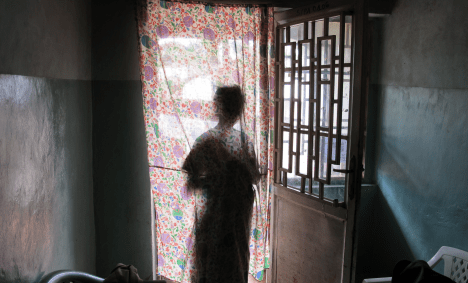 Meriam Yehya Ibrahim has been sentenced to death for ‘apostasy’, or refusing to renounce her Christian faith. Meriam is imprisoned with her newborn baby girl and her 20-month-old son.
Meriam has also been sentenced to 100 lashes for being married to a Christian man. She is a prisoner of conscience. Ask Sudan to release her.
Take Action
Gives birth in prison
When Meriam was sentenced to death on 15 May, she was heavily pregnant. Meriam gave birth in the prison hospital on 27 May. She remains jailed with her newborn baby girl, Maya, and Martin, her 20-month-old son, in Omdurman Women’s Prison in Khartoum.
Meriam has been shackled by heavy chains around her ankles since her death sentence ruling – customary practice for all prisoners awaiting execution. Her lawyers say that Meriam remained chained by her legs even while she was in labour.
Meriam desperately needs the support of her family and medical care – for her own health and the health of her new baby girl.
Two years to nurse her baby before she’s hanged
Sudan’s Criminal Code states that a pregnant woman sentenced to death must give birth and nurse her child for two years before her execution can go ahead. If Sudan does execute Meriam after this period, they will leave two young children without a mother, as well as taking away Meriam’s right to life.No date for Meriam’s execution has yet been announced.
Sentenced to death for ‘apostasy’
Sudan follows Sharia (Islamic) law in its Criminal Code, and ‘apostasy’ (Riddah, in Arabic) is punishable by death. Apostasy is the renouncing of Islamic religion, either by refusing to follow Islam, or through being a believer of an alternative religion.
Those charged with apostasy have three days to renounce their religion and follow Islam. Meriam first appeared before the court in Khartoum on 11 May. When, on 15 May, she refused to renounce her Christian faith, her death sentence was confirmed.
Sentenced to 100 lashes for marrying a Christian
Meriam was first arrested in August last year because her husband is Christian. Under Sudan’s Sharia law, marriage between a Muslim woman and a non-Muslim man is illegal, and constitutes adultery.
One of her relatives had claimed that Meriam was committing ‘adultery’ for marrying outside of Islam, and reported her to authorities. But Meriam identifies as Christian – while her father is Muslim, he was absent during her childhood and she was raised Orthodox Christian by her mother.
On 15 May, the court ruled that the allegations of ‘adultery’ stood, and agreed that Meriam should face 100 lashes for being married to a Christian. Flogging constitutes torture, and should never be used as a punishment. Moreover, ‘adultery’ is not a crime that should be punishable by the courts.
Is hanging for ‘apostasy’ common?
We don’t know of anyone who has been executed for ‘apostasy’ in Sudan since the 1991 Criminal Code was brought in. Many people have been charged with the crime but had their charges dropped or convictions overturned after renouncing alternative religions and following Islam.
Sudan continues to use the death penalty to punish its citizens – often to oppress political activity and opposition groups. We recorded at least 21 executions in Sudan last year. At least 29 people were sentenced to execution last year in official reports, although the real figure is believed to be much higher – over 100.
Sudan must drop all sentences
Meriam hasn’t committed any crime. At Amnesty, we call people like Meriam, imprisoned solely for their beliefs or identity (religious, political, etc), ‘prisoners of conscience’.
We are asking Sudan to release Meriam immediately and unconditionally.
In addition to that, we always stand against use of the death penalty – it’s the ultimate denial of human rights (the right to life and the right not to be tortured). We hope that Sudan will move towards abolishing the death penalty, and encourage a moratorium on executions. We also ask Sudan to abolish flogging as a punishment – it constitutes torture, and as such is a violation of human rights.
