The Hope of a Church that is Salt and Light
Year A – Ordinary Time – 5th Sunday
Matthew 5:13–16: You are the salt of the earth. You are the light of the world!
Last Sunday, the Lord surprised us with the Beatitudes, overturning our usual criteria for happiness. Today he addresses us directly, his disciples, and once again amazes us by revealing our deepest identity: “You are the salt of the earth. You are the light of the world!” He speaks to the group of his disciples and says, “You are” salt and light, using the verb in the present tense rather than the future. This is not an exhortation or a command to become something we are not yet, but a statement. Moreover, Jesus declares that they are “the” salt and “the” light!
To grasp the almost provocative force of such a statement, it is enough to recall that the rabbis used to say: “The Torah – the Law given by God to his people – is like salt, and the world cannot live without salt.” They also said: “As oil brings light to the world, so Israel is the light of the world.” What Jesus is saying, therefore, is paradoxical: the small and insignificant group of his disciples, with no social or religious importance, is compared to the sacred institutions of Israel, or even replaces them!
“You are the salt of the earth”
We can all sense the power of this comparison. Salt gives flavour to food; it makes it tasty. Without salt there is no flavour, no pleasure in eating. Thus, the disciple of Jesus brings flavour to the earth, taste to human fellowship, meaning to life.
Salt is also linked to intelligence. The disciple of Jesus is a bearer of knowledge, a new wisdom and insight (see Paul in the second reading, 1 Corinthians 2:1–5).
Salt was also used to prevent food from decaying. The disciple of Jesus, then, is an antidote to the corruption of society. From this property of salt also came the custom of sprinkling salt on documents as a sign of their permanence. A “covenant of salt” was definitive and could not be broken. Even God’s covenant was called a covenant of salt, or “salted”, to express its eternal character.
From the Latin root, several words related to health are connected with the term salt, such as salve, health, salvation.
Which of these meanings does Jesus have in mind when he says to us, “You are the salt of the earth”? Most probably the whole range of this symbolism.
“But if the salt loses its flavour, how can it be made salty again? It is no longer good for anything except to be thrown out and trampled underfoot.”
It seems strange to us that salt could lose its properties. There may be a reference here to a certain type of salt extracted from the Dead Sea, which easily lost its flavour. It is interesting to note, however, that the expression “if the salt loses its flavour” could be translated literally as “if the salt goes mad”. The disciple, if he or she loses their identity, “goes mad” and is no longer of any use.
“You are the light of the world”
In the Bible, light is one of the most richly symbolic realities. It appears at the beginning as the first work of God (Genesis 1:3) and is found again at the end: “They will have no need of the light of a lamp or the light of the sun, for the Lord God will give them light” (Revelation 22:5).
Only the Gospel of Matthew attributes to the disciple the prerogative of being light. Saint John, the author who most frequently speaks of light, always attributes it to Christ: “I am the light of the world” (John 8:12; cf. also 9:5). The disciples become, by reflection, “children of the light” (John 12:36). We also find this expression in Saint Paul (1 Thessalonians 5:5; Ephesians 5:8). It is clear that these two affirmations are not in opposition: the disciple will always be a reflected light of the Master’s light.
Being salt and light amid limits and weaknesses
What is our reaction to this surprising revelation of Jesus? The most spontaneous response would be joy and enthusiasm at being so closely associated with the life and mission of Jesus. Yet the weight and responsibility of such a lofty vocation can also intimidate us. And yet Jesus believes in us and trusts us, despite our limits and weaknesses.
But what would we feel if Jesus were to declare us the salt of the earth and the light of the world in front of today’s non-believers? Almost certainly, a great sense of embarrassment! How could a Church humiliated by scandals and held back by a clericalism that has distorted service into power stand up to such a comparison? A Church torn apart by internal conflicts and divided by extremisms? How can we be credible if we become salt that has lost its flavour and hide the light under the bushel of opportunism? If we lose the salt of witness and the light of prophecy?
“Do not be afraid, little flock”
Does our Church have the possibility of being reborn and, small though it may be, of becoming the salt of this earth and the light of our world? Yes, the two-thousand-year history of the Church tells us so! Yes, hope assures us of it! There are, however, three conditions.
- Accepting the need to pass through the crucible of the “small remnant” spoken of by the prophets. God acts according to the Gospel logic of smallness. In every age, when the Church tends to become “worldly” and is no longer salt and light, it must return to its origins;
- Rediscovering our missionary vocation to exist for others. The Christian and the Church exist to give meaning and flavour to the society in which we live and to shed light on the reality that surrounds us. Like salt and light, we are called to do this through a discreet presence that does not draw attention to itself;
- Relying on the word of Jesus: “Do not be afraid, little flock, for it has pleased your Father to give you the Kingdom” (Luke 12:32).
In conclusion, what does the Lord expect of us? Perhaps he is asking us to accept the salt of suffering and to place our light on the lampstand of the cross!
Fr Manuel João Pereira Correia, mccj
Fr. Manuel João, comboni missionary
Sunday Reflection
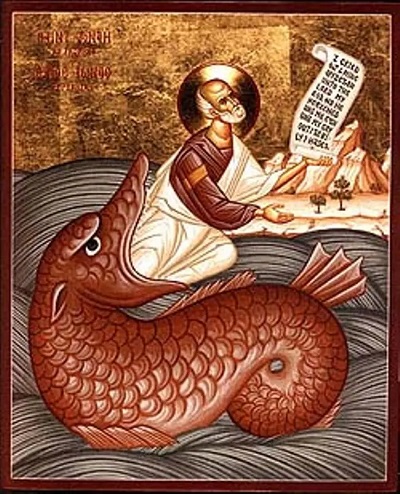
from the womb of my whale, ALS
Our cross is the pulpit of the Word
