Always Pray and Never Lose Heart!
Year C – Ordinary Time – 29th Sunday
Luke 18:1–8: “Jesus told his disciples a parable about the need to pray continually and never lose heart”.
The theme of God’s Word this Sunday is prayer. In the Gospel of Luke, prayer is one of the central and most distinctive themes. More than in any other Gospel, Luke portrays Jesus as a man of prayer and emphasises how he prays at the decisive moments of his mission. In his teaching, he insists that one must pray with persistence and trust.
“Listen to what the unjust judge says!”
“Listen to what the unjust judge says. And will not God see justice done to his chosen ones who cry to him day and night? Will he make them wait long? I tell you, he will see that they get justice, and quickly. But when the Son of Man comes, will he find faith on earth?”
Today’s Gospel invites us to reflect on how we pray. Jesus tells his disciples a parable about the necessity of always praying and never giving up. The main characters are a corrupt judge and a poor widow who finally wins her case with the only weapon she has: unrelenting persistence before that dishonest judge!
It is a rather curious parable, for it seems to compare God to a judge (and alas, how often we ourselves speak of God as a judge!), and it uses the expression “to do justice” no fewer than four times.
To avoid misunderstanding, it is important to clarify that God does not present himself as a judge, but as one who has been judged—one who, from the cross, pleads for mercy for all: “Father, forgive them, for they do not know what they are doing.” Thus, this “doing justice” can only mean exercising his mercy.
We should also note a few delicate points of translation and interpretation. In particular: “Will he make them wait long? I tell you, he will see that they get justice quickly.” An alternative translation might be: “Even if he makes them wait a long time… he will see that they get justice decisively,” though not necessarily “quickly.”
The passage ends with Jesus’ question: “But when the Son of Man comes, will he find faith on earth?” Here lies the crucial issue: we, citizens of a technological and secularised world—do we still believe in prayer? Or do we rather place our trust in money, power, our own abilities and securities, or in quicker, more practical means of achieving our aims?
A Few Irreverent Thoughts
But let us return to prayer and to the Gospel as presented in today’s liturgy. Appropriately—or perhaps not—I would like to share with you a few… irreverent thoughts!
Praying to a Snail-God!
“He will see that they get justice quickly!” Are we quite sure of that…?
I don’t know what you think, but my impression, more than once, is that God is… a bit deaf. Or perhaps he has too many files to get through! Or maybe his idea of being “quick” is somewhat different from ours. Psalm 90 tells us: “A thousand years in your sight are like a single day.” But for us human beings, it isn’t so! Our sense of time is very different. As Habakkuk says: “Though it seems to delay, it will surely come, it will not be late!” (Hab 2:3; cf. Heb 10:37 and 2 Pet 3:9). The truth is that to our eyes, God often seems like… a snail!
Biblical and spiritual writers have tried in vain to defend him, but I don’t find their explanations very convincing. The learned Saint Augustine offers one: quia mali, mala, male petimus—our prayers are not granted because we are bad (mali), or because we ask for bad things (mala), or because we ask badly (male).
With all due respect to Saint Augustine, even he doesn’t persuade me. I prefer to believe that God listens to us even when we are bad, when we ask for bad things, or when we ask badly!
So then? I am convinced that God really asks of us an act of faith and a total abandonment to his Wisdom, his Love, his Mystery. When I pray, the Father hears me—always, without fail.
But when it comes to the concrete reality of prayer, the difficulty remains: how should we pray?
Praying Like a Piglet!
I was deeply struck by something a new convert once said to the Portuguese Cardinal Tolentino Mendonça:
— “Father, I pray like a pig!”
— “What?!”
— “Yes, like a pig, because a pig eats everything. That’s what I do: I turn everything into prayer, whatever happens to me.”
I believe that until we come to this experience—praying with our whole concrete life—we haven’t yet found the true key to prayer!
Praying Like a Donkey!
We would all like our prayer to be full of light and consolation, but very often it isn’t.
We were all astonished to learn that the great Mother Teresa of Calcutta, whom one might think touched heaven with her fingertips, lived for fifty years, until her death, in complete spiritual dryness. She, who spent at least three hours a day in adoration!
Another Teresa—Thérèse of Lisieux—said in the final months of her life that she felt as though she were “at the table of sinners and atheists”, tormented by doubt and inner trials. Hardly a path of roses!
And the great Teresa of Ávila said that she prayed for years and years, and that prayer felt to her like straw—as though she were eating straw! Like a little donkey! The donkey would like to graze on the fresh grass of the meadow, but must make do with the straw his Master gives him.
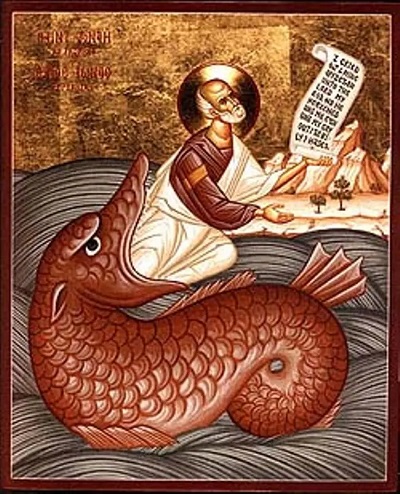
Praying Like a Fish!
You may have heard of the famous book of spirituality The Way of a Pilgrim. This pilgrim, having heard Saint Paul’s exhortation “Pray without ceasing” (1 Thess 5:17), repeated endlessly the same invocation: “Lord Jesus Christ, Son of God, have mercy on me, a sinner,” until it became part of his very breathing.
Personally, I have found great benefit in this form of prayer. In time, each person can choose their own invocation or aspiration, synchronising it with their breathing. I find that two-syllable words make this exercise simpler and more natural. For example: Father (Fa-ther), or Abba (Ab-ba), or Jesus (Je-sus), My God.… Thus I immerse and move myself, like a fish, in the Divine Ocean—breathing in his Peace, his Love, his Grace, and breathing out, expelling the impurities of the heart.
Praying Like a Dormouse!
Two difficulties make prayer somewhat painful: distraction and drowsiness. Both are occasions for practising humility, for our prayer is imperfect and poor.
For years, drowsiness made me angry with myself—until I found peace in realising that the time spent in prayer is above all a sacrifice of time. It is time we have decided belongs to God, and not to anything else. This too is “persevering in prayer” (Rom 12:12).
Looking back, I smile at the hours spent in my wheelchair, alone in the central aisle of our chapel on Via Lilio in Rome, fighting against sleep. I believe that those prayers—many of them “sleeping like a dormouse”—were also kindly heard by the Lord!
Fr. Manuel João Pereira Correia, mccj
Fr. Manuel João, comboni missionary
Sunday Reflection
from the womb of my whale, ALS
Our cross is the pulpit of the Word
