Fr. Manuel João, comboni missionary
Sunday Reflection
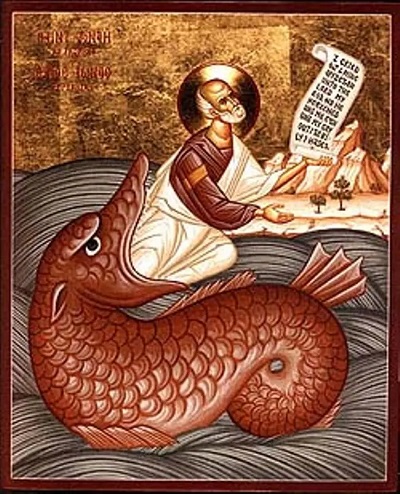
from the womb of my whale, ALS
Our cross is the pulpit of the Word
Waiting for God in the Night
Year C – Ordinary Time – 19th Sunday
Luke 12:32-48: “Where your treasure is, there will your heart be also!”
In these Sundays we are reading chapter XII of St Luke, a weaving together of sayings, teachings, and short parables, without a clear unity between them. For some of us who will hear it during the holiday season, this Gospel may seem out of place and out of time. While we are seeking a bit of rest and distraction, to forget the worries of life, this Word unsettles us, presenting themes that are too serious and uncomfortable. Perhaps that is why the Lord first tells us: “Do not be afraid, little flock, for it has pleased your Father to give you the Kingdom.”
Keeping watch in the night
This Sunday’s passage carries an apocalyptic tone of expectation, presenting the Christian life as the waiting for the Lord’s return in the “night”. Three times the invitation to be ready is repeated: “Be dressed for action and have your lamps lit”; “Be ready, for the Son of Man is coming at an hour you do not expect”. Jesus’ call to keep watch so as not to be caught unprepared at his arrival is illustrated by three brief comparisons: the master returning from a wedding banquet, the thief, and the steward of the household.
The night that alternates with the day is a strong metaphor for life. How often we feel we are in darkness, not knowing where to go, burdened by problems, with threats hanging over our lives… Or living through times overshadowed by war and injustice, by uncertainty about the future… The Word of this Sunday helps us to understand and to live in this “night”.
The night of the Exodus
The first reading (Wisdom 18:6-9) presents this night as the night of the Exodus, when all the people in waiting “had already agreed on this divine law: that they would share alike the blessings and the dangers”.
The Christian life is an exodus, a journey of liberation, often marked by temptations, by uncertainty about the choices made, by nostalgia for the past… It often becomes a long night. We had imagined a faster and less tiring crossing, and that we would soon be settled in the Promised Land. Once we reached Sinai, God said to us: “You yourselves have seen what I did to Egypt, and how I carried you on eagles’ wings and brought you to myself” (Ex 19:4). We thought, therefore, that the worst was over. But the Lord judged that we were not yet ready to enter it and that it would take “forty years” in the desert to free our hearts from the mental frameworks and habits that kept us in “Egypt”, in the “house of slavery”. That was still where our treasures lay. And “where your treasure is, there will your heart be also”.
This is why the night of our exodus will still be long. We too will cry out to the watchman of the prophet Isaiah: “Watchman, what of the night?” And the watchman will answer us, somewhat enigmatically: “Morning comes, and also the night. If you would inquire, inquire; turn, come!” (Is 21:11-12). It is up to each of us to listen to and interpret this Voice!
The night of faith
The second reading (Hebrews 11:1-19) presents the night of the believer as the night of faith: “All these died in faith without having received the promises, but from a distance they saw and greeted them. They confessed that they were strangers and foreigners on the earth.”
The definition of faith at the start of the reading is surprising: “Faith is the assurance of things hoped for, the conviction of things not seen.” That is why the night is the realm of faith. Even though we are children of light, “we walk by faith and not by sight” (2 Cor 5:7). We must accept and go through the night of faith in order to learn to “hope against all hope” (Rom 4:18).
For the believer, faith is a radical life choice. It means trusting in a promise of God, like Abraham. There are, in fact, two ways of planning life: according to our own personal project or according to a vocation shaped by a promise of God. The word “project” comes from the Latin proiectum (pro-icere, to throw forward), while “promise” comes from promissa (pro-mittere, to send forward). A project is something I plan; a promise is something God makes. What is guiding my life: my project or a promise of God?
The night of watchfulness in service
In the Gospel passage, Jesus speaks three times of blessedness: “Blessed are those servants whom the master finds awake when he comes”; “And if he comes in the middle of the night, or near dawn, and finds them so, blessed are they!”; “Blessed is that servant whom his master will find at work when he arrives.”
In Luke’s Gospel, the use of the words “blessed” and “blessed are” (from the Greek μακάριος – makários, meaning “happy”, “blessed”, “fortunate”) appears in different contexts. Jesus came to show us the way of blessedness. It is the way that leads to the Kingdom, the goal of every human being. It is a way that remains hidden and mysterious to most, whether believers or not. It appears so counterproductive that it may seem absurd. Yet it has become credible because Jesus, and others who dared to trust him, lived it out. The Gospel has recorded its course and it has become the guide for the women and men of the Way, as the Acts of the Apostles describe Christians.
The Way is unique: it is Christ, but can we speak of different paths? Perhaps so. Some seem more difficult than others. Certain ones we do not feel capable of walking. We think of the holiness of certain Christians or the “secular holiness” of certain people who heroically dedicate themselves to alleviating suffering. Unreachable. And yet, the path Jesus proposes today seems to me accessible to all. Certainly, it is still to be walked in the night of the exodus and of faith, but nonetheless within reach of the little ones, the servants. We do not need to do extraordinary things, but simply remain awake and do what is our duty: to serve! A humble service, hidden, perhaps even banal, which will not be publicised on social media nor seek “likes”, but which is taken for granted: “We are unworthy servants; we have done only what we ought to have done” (Lk 17:10). Does this not seem to you to be a version of the “little way” of the “path of simple and trusting love”, within the reach of all, traced out by Saint Thérèse of Lisieux?
Fr Manuel João Pereira Correia, mccj
