Fr. Manuel João, comboni missionary
Sunday Reflection
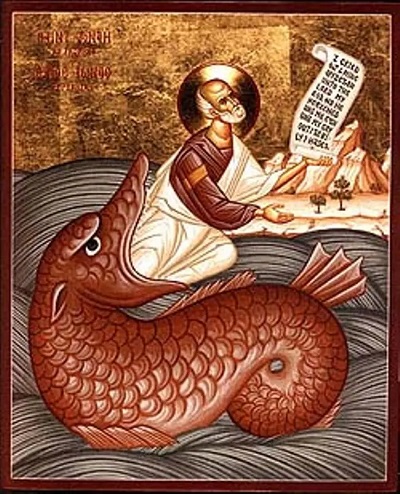
from the womb of my whale, ALS
Our cross is the pulpit of the Word
What Shall I Do?
Year C – 18th Sunday in Ordinary Time
Luke 12:13–21: “Beware of all greed”
We are journeying with Jesus, guided by the Gospel of Luke. We are heading towards Jerusalem. Some time ago, Jesus, “when the days drew near for him to be taken up, set his face to go to Jerusalem” (Lk 9:51). Along the way, the Lord meets people and teaches them. Last Sunday, Jesus spoke to us about prayer. Today, he will speak to us about the use of material possessions—a theme that is especially dear to St Luke.
1. “Someone in the crowd said to Jesus”
It all begins with someone in the crowd who asks Jesus to tell his older brother to share the inheritance with him. Jesus responds, somewhat irritated: “Man, who appointed me a judge or arbitrator over you?”
Here is just an ordinary man! Whenever an unnamed person appears in the Gospel, take notice—it is likely referring to us. In fact, this man represents many of us (and when I say “us”, I include myself!). Jesus had just said: “Are not five sparrows sold for two pennies? Yet not one of them is forgotten in God’s sight. But even the hairs of your head are all counted. Do not be afraid; you are worth more than many sparrows!” (Lk 12:6–7). But this man was thinking about something else. He was concerned because his older brother had taken possession of the inheritance and refused to give him his rightful share.
The same thing often happens with us. Jesus, the Word, speaks—but our thoughts are elsewhere. We are caught up in our worries and would rather that the Lord fix our problems than speak to us about something else.
Lord, when I come to listen to you, help me to empty my heart of every worry and concern, every feeling and emotion, every thought and desire, so that I may make room for your Word.
Someone in the crowd! Jesus was surrounded by his disciples and thousands of people (see Lk 12:1). This man was among the crowd. His position is significant. He belongs to the crowd. It makes me think that the “crowd” is where many Christians live today. Yes, they sympathise with Jesus, but they keep him and his teachings at a distance. Being close is too demanding in a society that is increasingly indifferent—or even openly hostile—to the Christian faith. Being close to Christ, even just in the way we speak, can leave us feeling exposed—like Peter, when Jesus was being judged: “Certainly this man was with him, for he is a Galilean” (Lk 22:59).
Lord, you have called me out from the crowd by name (Lk 6:13–16). Grant me, Lord, the Spirit of courage, that I may overcome fear and cowardice whenever I am called to bear witness to your name!
2. “A rich man”
As a prophet, Jesus immediately places himself on a different level and warns his listeners about the danger of wealth: “Take care! Be on your guard against all kinds of greed; for one’s life does not consist in the abundance of possessions.”
Wealth, money, and possessions may well be the greatest idols of this world. They give us a sense of security and the illusion that we can get anything we want—even happiness. It is no coincidence that St Paul, in today’s second reading (Colossians 3:1–11), warns Christians against “that greed which is idolatry.” Every day, countless lives are sacrificed to this idol on the altar of profit.
A rich man, a lucky man! To explore his teaching further, Jesus tells the parable of a rich man who happens to have an exceptionally good harvest. Who is this man? At first glance, it might not seem like us. But if we look closely, we may find him curled up somewhere in the room of our heart’s desires. It’s rare to find someone who doesn’t want to be rich.
What shall I do? I shall do this! This man, however, has a problem: his barns are too small to store his abundant crops, and he asks himself, “What shall I do, for I have no place to store my crops?” But he quickly finds a solution: “I will do this— I will pull down my barns and build larger ones.” He is a practical and decisive man, like the dishonest steward in another of Jesus’s parables (cf. Lk 16:1–8).
This question—“What shall I do?”—is a recurring one in Luke’s writings (see also 3:10,12,14; 16:3,4; Acts 2:37; 16:30). It’s a question we should ask more often. It leads us to discern what needs to be done, rather than letting situations deteriorate or allowing others to decide for us.
What strikes us in this man is his egocentrism. For him, only “I” exists: “I will tear down… I will build… I will store…” It’s just him and his possessions: “my crops… my barns… my goods…” None of us would think like this—would we? Perhaps you would say:
– “If I were rich, I’d know what to do: I’d help my family, of course, and the poor too!”
– But you are rich! Think of all the talents the Lord has entrusted to you. How are you using them?
3. “Fool!”
The rich man in the parable has no one to talk to. He “thought to himself” and spoke only to his own soul: “Soul, you have ample goods laid up for many years; relax, eat, drink, be merry.” But then, an unexpected voice breaks in: “But God said to him: ‘Fool! This very night your life is being demanded of you. And the things you have prepared, whose will they be?’”
Is this the voice of a joy-killing God? No—it is simply the voice of conscience, bringing us back to the reality of life, just as we heard in the first reading from Ecclesiastes: “Vanity of vanities! All is vanity.”
Let us keep our conscience awake. Let it cry out “Fool!” now—so that it won’t have to cry it out at the end, when the account of our life is given: “Fool, what have you done with your life?!”
A Way of Life
Jesus ends the parable by saying: “So it is with those who store up treasures for themselves but are not rich towards God.” Elsewhere, at the end of the parable of the dishonest steward, he concludes: “And I tell you, make friends for yourselves by means of dishonest wealth so that when it is gone, they may welcome you into the eternal homes” (Lk 16:9). And St Basil says to the rich man—and to us: “If you want granaries, you have them—in the homes of the poor.”
Lord, aware of how often we act foolishly in life, we humbly ask you, with the Psalmist: “Teach us to count our days aright, that we may gain a heart of wisdom” (Psalm 89).
Fr Manuel João Pereira Correia, mccj
