Fr. Manuel João, comboni missionary
Sunday Reflection
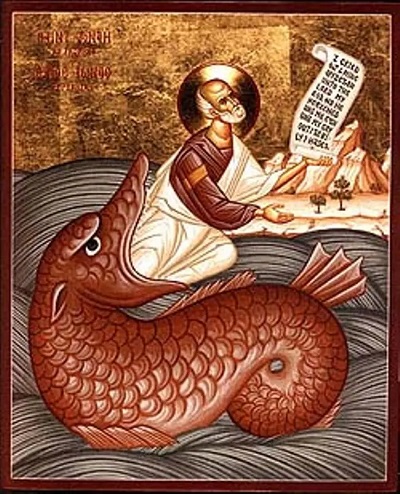
from the womb of my whale, ALS
Our cross is the pulpit of the Word
Lambs Among Wolves
Year C – 14th Sunday in Ordinary Time
Luke 10:1–12, 17–20: “I am sending you out like lambs among wolves”
Today’s Gospel tells us of the missionary experience of the seventy-two disciples sent out by Jesus “two by two, ahead of him to every town and place he was about to go”. Having already sent out the Twelve (cf. Lk 9:1–6), Jesus now sends out seventy-two more. Saint Luke is the only evangelist to record this episode. Let us reflect on five key aspects of this account.
1. Not just the Twelve, but the seventy-two
“The Lord appointed seventy-two others.”
The number 72 has a symbolic meaning: it suggests the universality of the mission. According to the so-called “table of nations” (Genesis 10, in the Greek version of the Septuagint), there were 72 nations on Earth. Some manuscripts and Jewish tradition mention the number 70 instead. The rabbis used to say that Israel was like a lamb surrounded by seventy wolves, and each year, seventy bulls were sacrificed in the Temple for their conversion.
The Twelve represent the new Israel, the twelve tribes; the Seventy (or seventy-two) symbolise the new humanity. Moreover, 72 is a multiple of 12: it also represents the totality of the disciples. Mission is not the sole responsibility of the apostles—it is the task of the whole People of God.
The Church continues to stress the urgency of missionary proclamation. Sadly, this often brings limited results. In an age of rapid and dramatic de-Christianisation of the West, we seem worried only about keeping the one remaining sheep in the fold, while assuming the other ninety-nine are lost.
2. Forerunners
“He sent them out two by two ahead of him to every town and place where he himself intended to go.”
Jesus sends them out two by two: mission is a communal task. But why send them ahead of him? Shouldn’t he go first? Yes, the Lord went before us, but now that his mission is complete, ours begins: preparing for his return.
Just as John the Baptist prepared for his first coming, we are called to prepare for his second. It is no coincidence that Saint Luke uses the title “the Lord” here—a post-resurrection title—rather than simply “Jesus”.
“His name shall be John,” said Zechariah. Today, symbolically, the Lord says to each of us: “Your name shall be John/Joanna.” A name indicates a mission. This mission rests on two essential tasks:
– To proclaim a short, clear message: “The kingdom of God is near to you”;
– To “baptise”—not with water, as John did, but by immersing people in God’s love through fraternal relationships and care for the most vulnerable: “Heal the sick”.
Perhaps today we need to reverse the order: first “baptise” everyday reality—family, work, school, society—with God’s love; then, at the right time, announce the Kingdom. As Saint Peter suggests: “Always be ready to give an answer to anyone who asks you to give the reason for the hope that you have” (1 Pet 3:15).
3. Wolves and lambs
“See, I am sending you out like lambs among wolves.”
Jesus’ instructions about the mission are startling. We understand the invitation to prayer—the soul of every mission—but why such strong emphasis on the missionary’s poverty and detachment?
The powerful imagery used by Jesus shows that mission is carried out in weakness and simplicity, following the example of the Master who “emptied himself, taking the form of a servant” (Phil 2:7). Mission requires renouncing all human power so that it is clear it is God who acts. Perhaps the temptation to seek power is at the root of the Church’s most serious scandals and sins.
Jesus sends us out poor—rich only in our trust in God—like lambs among wolves. Yet there is a strong temptation to become wolves ourselves, using the enemy’s weapons when the opportunity arises.
Today’s readings reflect the often difficult and dramatic context of mission. Isaiah speaks of mourning before comfort; Paul speaks of the cross and bearing the marks of the Lord; the Gospel speaks of wolves, snakes, scorpions, the power of the enemy, and the possibility of rejection.
And yet, Jesus does not send us to be slaughtered. He gives us his authority: “I have given you power to tread on snakes and scorpions, and over all the power of the enemy; nothing will harm you.” Thus the apostle foreshadows the eschatological times when “the wolf shall live with the lamb” (Is 11:6).
4. Peace
“Whatever house you enter, first say, ‘Peace to this house!’”
In the challenging context of mission, Jesus calls us to bring peace. This is a central theme in all the readings this Sunday.
Through Isaiah, God promises: “I will extend peace to her like a river.” Unfortunately, this river today seems dry. Peace is both a gift and a responsibility. Now more than ever, we urgently need “children of peace”, as Jesus says. But are we, his disciples, truly people of peace in our hearts, in our words and in our actions?
5. Joy
“The seventy-two returned with joy.”
Joy is the other great theme linking today’s readings. It is the fruit of peace. Christian joy is not fleeting or deceptive like the world’s joy, nor is it a superficial lightness that ignores suffering and injustice.
The joy of the Christian often goes hand in hand with suffering and persecution. This joy—the joy of the beatitudes—is a gift, but it requires “the courage of joy” (Benedict XVI). It shows itself in the deep peace of the heart, like the calm of the sea in the depths, even when a storm rages on the surface.
This is the “complete joy” that Jesus left us as a legacy at the Last Supper. A joy that is guaranteed: “No one will take your joy away from you” (Jn 16:22).
Fr Manuel João Pereira Correia, mccj
