Fr. Manuel João, comboni missionary
Sunday Reflection
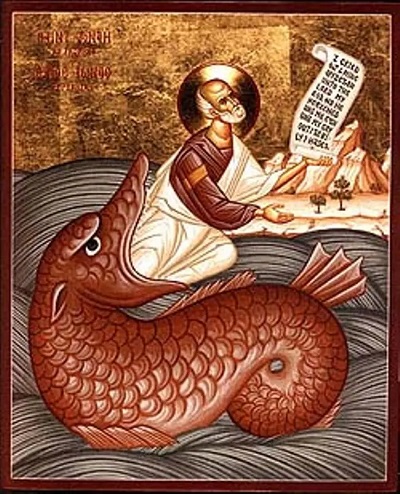
from the womb of my whale, ALS
Our cross is the pulpit of the Word
The Mystery of the Lord’s Presence in the Eucharist
Year C – Solemnity of the Most Holy Body and Blood of Christ
Luke 9:11-17: “Give them something to eat yourselves”
Sixty days after Easter, on the Thursday following Trinity Sunday, the Church celebrates the Solemnity of the “Most Holy Body and Blood of Christ” (Missal of Paul VI), also known as the Feast of “Corpus Christi” (Missal of Pius V). It is one of the three most solemn Thursdays of the liturgical year: Holy Thursday, Ascension Thursday, and Corpus Christi Thursday. For pastoral reasons, in many countries, Corpus Christi is transferred to the Sunday following Trinity Sunday. Although the Easter season has already concluded, this chronological reference establishes a link between this feast and Easter, as well as the Solemnity of the Holy Trinity.
The origins of this feast date back to the 13th century. Born in Belgium, it was extended to the entire Church by Pope Urban IV in 1264, also prompted by the Eucharistic miracles of Bolsena and Lanciano. Through these prodigious signs, the Lord wished to strengthen the Church’s faith in His real presence in the sacrament of the Holy Eucharist, at a time when some were beginning to doubt it. There are many Eucharistic miracles (136 documented), and several of them are quite recent. Blessed Carlo Acutis, an adolescent who died at 15 (1991–2006) and will soon be canonised, was an enthusiastic promoter of these miracles. He was a great lover of the Eucharist, which he called “the highway to Heaven”.
The richness of the story of the multiplication of the loaves
Today’s Gospel passage is one of the best known: the account of the multiplication of the loaves and fishes. It appears in all four Gospels. Matthew and Mark recount it twice, so it appears six times in total. This indicates how important the evangelists considered this miracle.
Each evangelist, taking the miracle as a backdrop, presents particularities, enriches it with biblical allusions, and highlights or adds elements, often symbolic (consider the numbers: 5 loaves + 2 fish = 7: totality; 5,000 men: the number of believers, cf. Acts 4:4; groups of 50: order, possibly referring to Exodus 18:21-25; 12 baskets: the number of the tribes of Israel, totality). This explains the divergences in details and the apparent inconsistencies. What mattered to the evangelists was not historical precision, but the catechetical message for their respective communities.
Thus, the miracle becomes like a “parable”, not only referring to the Eucharist but also to a new vision of the world: where bread is shared fraternally, seated and organised in groups, meaning with order and dignity; where all can eat their fill and nothing is wasted. This is a way of presenting the Kingdom of God (cf. Isaiah 25:6-9).
The multiplication of the loaves invites us to move from an economy of “buying”, where everyone must fend for themselves, to one of “giving”: “Give them something to eat yourselves!” Otherwise, we end up devouring each other: “They eat up my people’s bread as though they were eating bread” (Psalm 14:4).
To celebrate the Eucharist without embracing this divine plan, perhaps considering it utopian, is to be unfaithful to the Lord’s command: “Do this in memory of me.” The divorce between the Eucharist and the sharing of food brings upon our Masses the stern warning of St Paul: “When you come together, it is not the Lord’s Supper you eat” (1 Corinthians 11:20).
After the Eucharist, the Christian should echo the cry of John Paul II during his visit to Peru, when, before a million poor people gathered on the outskirts of Lima on 5 February 1985, after commenting on the Gospel of the multiplication of the loaves, he exclaimed forcefully at the end of the gathering: “Hunger for God: Yes! – Hunger for bread: No!”
From the manger of Bethlehem to the table of the Eucharist
The Eucharist is, above all, the mystery of a unique Presence of Jesus in his Church and in the world, expressing his desire to remain forever with us. The whole life of Jesus reveals his longing to dwell among us always.
All the Gospels underline this. Matthew begins by announcing Jesus as Emmanuel (“God with us”) and concludes with the risen Jesus declaring: “I am with you always.” Mark introduces him at his baptism in the Jordan, standing in solidarity with his brothers, and follows him to the cross shared with criminals. Luke recounts his birth in Bethlehem (“house of bread”) and states that Mary “placed him in a manger” (Luke 2:7) and, as the risen one, he makes himself known in the breaking of bread (24:35). John says: “The Word became flesh and dwelt among us” (1:14).
This desire leads the Lord to become a pilgrim who knocks at the door of each of our hearts: “Behold, I stand at the door and knock. If anyone hears my voice and opens the door, I will come in to him, dine with him, and he with me” (Revelation 3:20). This is the profound message of the Eucharist!
A suggested prayer
Praise and thank the Lord for the gift of the Eucharist with this concluding hymn from the Jewish Passover:
“Even if our mouths were filled with songs like the sea is filled with water,
our tongues with hymns as numerous as the waves,
our lips with praises as vast as the firmament,
our eyes shining like the sun and the moon,
our arms outstretched like the wings of the eagles of the sky,
and our feet swift like those of the deer,
we could not thank You, O Lord our God, nor bless Your Name, O our King,
for even one of the thousands of thousands and myriads of favours, wonders, and miracles
You have performed for us and for our fathers throughout history…
Therefore, the limbs You have given us,
the breath and spirit You have breathed into us,
the tongue You have placed in our mouths,
may they give You thanks, bless, praise, glorify, and sing Your name, O our King, for ever…”
Fr. Manuel João Pereira Correia, mccj
