Fr. Manuel João, comboni missionary
Sunday Reflection
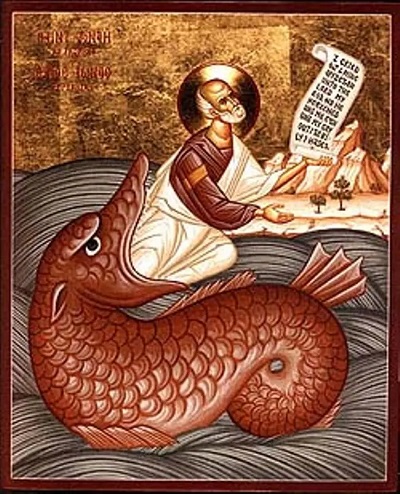
from the womb of my whale, ALS
Our cross is the pulpit of the Word
The Ascension:
A Feast of Farewell and Sending Forth!
Year C – Easter Season – 7th Sunday – Ascension
Luke 24:42–49: “You are witnesses of these things”
We are celebrating the Paschal mystery, which encompasses the five climactic moments of the Lord’s life: Passion, Death, Resurrection, Ascension, and Pentecost. The Ascension concludes the symbolic forty-day period during which the Risen Lord appeared to His disciples: “After His suffering, He presented Himself alive to them by many convincing proofs, appearing to them over the course of forty days” (Acts 1:1–11, first reading). The “forty days” do not represent a chronological timeframe. In fact, in the Gospel — unlike the Acts of the Apostles — St Luke compresses the resurrection appearances and the Ascension into one single day, Easter Day, to emphasise that exaltation is inseparable from resurrection. The periods he indicates — forty days to the Ascension and fifty days to Pentecost — are “theological times”, a literary refinement rich in biblical symbolism.
In many countries, this solemnity, which falls on the Thursday of the sixth week — 40 days after Easter — is moved to the following Sunday to allow for greater participation by the faithful.
The Ascension, the Cinderella of Christian Feasts?
The Feast of the Ascension was not celebrated until the 5th century. It was considered part and parcel of the glorification of the Risen Jesus (Philippians 2:9–11). Indeed, the Ascension is the other side of the Resurrection — the lifting up and exaltation of Christ.
The Waldensian pastor and theologian Paolo Ricca (+2024) wrote that the Ascension has become “the Cinderella of Christian feasts”. Indeed, it is a celebration that the Church has historically undervalued, perhaps because of the sorrowful aspect associated with Jesus’ definitive departure. However, it must be said that “this farewell has nothing of a goodbye: the sadness, like the old leaven, is swept away by Easter…; the Ascension leaves in the hearts of the apostles ‘great joy’. The anguish at the Lord’s departure took place chronologically before the Passion; then the disciples were sorrowful, like a woman whose hour has come (…) Here, the joy of seeing Him again at Easter is implied, and the Paschal joy is not disturbed by His ascent into heaven” (H.U. von Balthasar).
The Ascension brings us a joyful message of double presence. On one hand, the Lord Jesus, “lifted up into heaven”, still guarantees His presence on earth, among His own. St Augustine said: “Christ did not leave heaven when He came down to us, and He did not leave us when He ascended into heaven.” On the other hand, though we are still on earth, we are already with Him in heaven, where He — as “the great high priest in the house of God” — intercedes for us. Our true home is in God, but through the Incarnation, God’s dwelling place is now humanity. The Ascension reveals “the new and living way He opened for us through the curtain, that is, through His flesh” (Hebrews 10:20–21, second reading), and that Jesus is the true “ladder of Jacob” connecting heaven and earth (John 1:51).
The Ascension: A Feast of Mission
I would like to highlight the missionary dimension of the Ascension, which is not always sufficiently emphasised. Generally, we view Pentecost as the “feast of mission”, with the outpouring of the Spirit, the birth of the Church, and the beginning of apostolic preaching. This is all true. However, we must not overlook the fact that the missionary mandate is given on the day of the Ascension. Today, therefore, is the feast of the Church’s sending forth! The Ascension is both the culmination of Jesus’ earthly mission and the starting point of the Church’s mission. Jesus’ vertical movement into heaven corresponds to the Church’s horizontal movement into the world. Jesus completes His mission on earth and becomes “invisible” in order to give space, visibility, and responsibility to His disciples’ mission on earth.
Mission as Seen from the Ascension
Today’s Gospel passage from Luke offers some insights into mission:
- The PURPOSE of mission: “In His name, repentance and forgiveness of sins will be preached to all nations.” It is striking that St Luke considers the call to repentance and the remission of sins as the two core aspects of mission. This contrasts with much of today’s cultural sensitivity. The challenge the Church faces is how to proclaim this dual message concretely as good news.
- The RECIPIENTS, PLACES, and AGENTS of mission: The preaching is to be directed “to all nations”, i.e., everywhere; the mission knows no borders and excludes no one. But it begins “from Jerusalem” and moves outward — what Pope Francis likes to call a Church that goes forth. Jerusalem as the starting point ensures continuity — not without tensions (see the Council of Jerusalem in Acts 15) — between the old and the new Israel. The historical Jerusalem is the point of departure, but the heavenly Jerusalem is the final goal toward which mission journeys. The protagonists of the mission are not only the Eleven, but all disciples of Christ, as a community — for the sending is collective.
- The MANNER of mission: “You are witnesses of these things.” The evangelist particularly stresses the missionary nature of witness. This witness is made possible by a new understanding of the Word: “Then He opened their minds to understand the Scriptures” (Luke 24:45), and by the power of the Spirit: “And now I am sending upon you what my Father promised; but stay in the city until you have been clothed with power from on high” (24:49). Joy and praise are the first forms of testimony: “Then they returned to Jerusalem with great joy, and they were continually in the temple blessing God” (24:52–53). These are well-known ideas, but how much do these fundamental dimensions of mission — the Word, the Spirit, Joy and Praise — weigh in our actual planning and activity?
- Mission under the sign of BLESSING: “While He was blessing them, He withdrew from them and was carried up into heaven.” The final act of Jesus on earth is one of blessing. Mission takes place under this blessing, which is the source of praise and joy. Without it, we are easily tempted by grumbling, discouragement, and sadness — in other words, by a spirit of curse.
Mission Rekindles the Hope of Awaiting
According to the Acts of the Apostles, the two angels at the Ascension tell the apostles: “This Jesus, who has been taken up from you into heaven, will come in the same way as you saw Him go into heaven.” The Ascension carries with it the hope of Christ’s return to take us with Him.
One of the Church’s tasks in mission is to keep this hope alive and to help the Church keep the flame of faith burning as we await the return of the Bridegroom. Regarding Christ’s return, the Gospel poses one of its most unsettling questions: “But when the Son of Man comes, will He find faith on earth?” (Luke 18:8).
Fr Manuel João Pereira Correia, mccj
