Fr. Manuel João, comboni missionary
Sunday Reflection
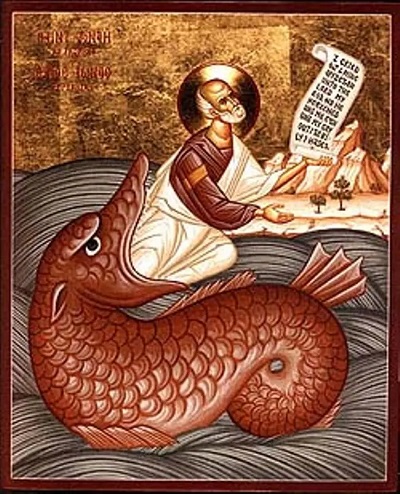
from the womb of my whale, ALS
Our cross is the pulpit of the Word
The Believer: Radiation of God’s Shekinah
Year C – Easter Season – 6th Sunday
John 14:23-29: “We will come to him and make our dwelling with him.”
We are approaching the feasts of the Ascension and Pentecost. Today’s Gospel, like last Sunday’s, is taken from the long farewell discourse Jesus gave at the Last Supper. When Jesus announced his imminent departure, sadness filled the room. The disciples were overwhelmed with confusion, fear, and anxiety. Jesus reassured them, urging them not to be afraid (cf. Jn 14:1,27), and promised that their sorrow would be turned into joy (Jn 16:20,22).
The Gift of Peace and the Paraclete
Jesus seeks to strengthen the unity of his group of disciples. Last Sunday, the Lord gave them – and us – the commandment of love. Today, he gives his peace: “Peace I leave with you; my peace I give to you.”
Note well: Jesus does not wish them peace – he gives it to them! The very peace that was his own, he now passes on to us. A peace so deep and strong that not even persecution can destroy it.
Jesus also promises another gift: the Holy Spirit. “The Advocate, the Holy Spirit, whom the Father will send in my name, will teach you everything and remind you of all that I have said to you.”
Several times during this discourse, Jesus reaffirms his promise to send the Spirit (cf. Jn 14:16–17; 14:26; 15:26; 16:7–11; 16:13–15), each time adding further details about the Spirit’s mission, which is to continue the work Jesus began.
It is the Holy Spirit who gives strength and stability to the peace of the Christian, because he is our Advocate – Paraklētos in Greek – which means “one who stands beside”, our defender and consoler. If that small, disoriented band of uneducated disciples went on to shake the world, there can be no other explanation than the power of the Holy Spirit!
The Anguish of an Absence
The farewell discourse revolves around Jesus’ imminent departure, which deeply unsettles the disciples. Four of them ask him questions. The number four is symbolic of universality and wholeness. These four – Peter, Thomas, Philip and Jude – represent all of us. The questions they ask are our questions too, the ones we would have posed then and still pose now.
We are living through a critical phase, a transitional era still in flux – a challenge that excites some and unsettles others. Many believers in Western culture experience this as an “ecclesial winter”, a “dark night” of faith. The atmosphere in that upper room on the eve of Christ’s death can symbolically reflect our current experience, marked by a seeming “eclipse” of God.
1. Peter: Generosity and Fragility. Peter is the first to ask a question. Upon hearing of Jesus’ departure, he says: “Lord, where are you going?” Jesus replies, “Where I am going, you cannot follow me now; but you will follow later.” Peter persists: “Lord, why can’t I follow you now? I will lay down my life for you!”
Peter represents the sincere and generous disciple, who loves the Lord but is blind to his own weaknesses (cf. Jn 13:36–38). How many times have we made similar promises, only to act cowardly at the critical moment? But the Lord is not scandalised by our frailty. He waits patiently: “You will follow me later.”
2. Thomas: Willpower and Uncertainty. Jesus then says: “I go to prepare a place for you… and you know the way to the place where I am going.”
Thomas, the practical and determined disciple, responds: “Lord, we do not know where you are going; how can we know the way?” We, too, often wish the Lord would be more clear with us. Surrounded by many enticing paths, we feel disoriented.
Jesus answers: “I am the Way, the Truth and the Life. No one comes to the Father except through me” (Jn 14:2–6). The Father is the destination, and Jesus is the way – by his example and teaching.
3. Philip: Idealism and Realism. Jesus adds: “If you know me, you will know my Father also. From now on, you do know him and have seen him.”
The group must have looked puzzled. Surely Jesus spoke often of the Father, even saying he and the Father were one (Jn 10:30). But had they really seen the Father?
Then Philip intervenes: “Lord, show us the Father, and we shall be satisfied” (Jn 14:8–10). Philip strikes me as the good-hearted, idealistic, simple disciple. We too would sometimes prefer to “see” without intermediaries.
But Jesus insists: we must encounter the Father through the Son. “Whoever has seen me has seen the Father… Believe me that I am in the Father and the Father is in me.”
4. Jude: Pragmatism and Impatience. The fourth disciple to speak is Jude, not Iscariot – perhaps Jude Thaddeus or a relative of Jesus. When Jesus says he will reveal himself to the disciples, Jude asks, surprised: “Lord, how is it that you will reveal yourself to us, and not to the world?”
Jude represents the pragmatic and impatient disciple. His question is valid: the disciples already believed – shouldn’t Jesus be revealing himself to those who didn’t?
His relatives had said something similar earlier: “If you are doing these things, show yourself to the world” (Jn 7:3–5). That’s what many of us still say today. We worry about the decline in believers, the marginalisation of faith, the loss of Gospel values in society. Wars and injustice abound… and God remains silent!
The Surprise of a New Presence
Today’s Gospel passage contains Jesus’ response to Jude.
He begins with an astonishing revelation: “If anyone loves me, they will keep my word, and my Father will love them, and we will come to them and make our home with them.”
The One whom the heavens could not contain; who once only visited his friends Abraham, Jacob and Moses; who was present in the Ark of the Covenant; who agreed to dwell (Shekinah) in the Temple; who in later times became Emmanuel, God-with-us… now takes another step closer, establishing his Shekinah – his dwelling – in the heart of the believer!
This is something extraordinary – mysterious, intimate and profound – and perhaps we have not fully grasped it. Saint Paul understood it well when he wrote that we are temples of God (cf. 1 Cor 3:17 and 6:19; see also 2 Cor 6:16; Eph 3:17; Rom 8:11).
Perhaps it feels too great to believe. Or maybe we are afraid of being labelled pious, inward-looking or overly spiritual. And yet, there is no more beautiful and revolutionary “Gospel” than this: the heart of the believer – moved by love and active faith – becomes a kind of web of communion and interaction between humanity and God.
But let’s not imagine that God demands a five-star welcome! He only asks for a simple, open heart: a table, a cloth, and a fresh flower; some bread and a jug of fresh water (or better still, a bottle of wine!) on the table; a few chairs; and the door ajar, inviting the passer-by.
It is up to each of us to find creative and concrete ways of expressing this – in actions, in lifestyle. Then we shall truly become radiations of the Shekinah, the dwelling-place of God, and witnesses of the Resurrection!
Fr Manuel João Pereira Correia, MCCJ
