6th Sunday of Easter – Year C
John 14:23-29
First Reading
Acts of the Apostles 15:1-2,22-29
The early Church community determines, with the help of the Holy Spirit, not to impose the requirement of circumcision on Gentile Christians.
Responsorial Psalm
Psalm 67:2-3,5,6,8
A prayer that all the nations sing praise to God.
Second Reading
Revelation 21:10-14,22-23
The vision of the splendor of the heavenly Jerusalem is described.
Gospel Reading
John 14:23-29
Jesus promises his disciples that the Father will send the Advocate, the Holy Spirit.
23 Jesus replied:
If anyone loves me, they will obey me. Then my Father will love them, and we will come to them and live in them. 24 But anyone who doesn’t love me, won’t obey me. What they have heard me say doesn’t really come from me, but from the Father who sent me.
25 I have told you these things while I am still with you. 26 But the Holy Spirit will come and help[d]you, because the Father will send the Spirit to take my place. The Spirit will teach you everything and will remind you of what I said while I was with you.
27 I give you peace, the kind of peace that only I can give. It isn’t like the peace that this world can give. So don’t be worried or afraid.
28 You have already heard me say that I am going and that I will also come back to you. If you really love me, you should be glad that I am going back to the Father, because he is greater than I am.
29 I am telling you this before I leave, so that when it does happen, you will have faith in me.
To understand the full force of verses 23 and 24 you must go to the previous verse, which is not included in this Sunday’s reading, where one of the apostles asks Jesus why he will not Holy Spirit teachershow himself to the whole world. Jesus’ response is to explain that following him involves an inner relationship which cannot be bypassed.
The second half of verse 24, and verses 25 and 26, show us Jesus facing the fact that much of his teaching was unfinished, and still more was misunderstood.
In verse 27 Jesus speaks of how he shares his inner peace with his followers.
In verse 28 he expresses how he is experiencing his imminent death.
In verse 29 he returns to the theme of the existing relationship between the disciples and himself, and contrasts this with how they will experience him after his death and resurrection.
Background on the Gospel Reading
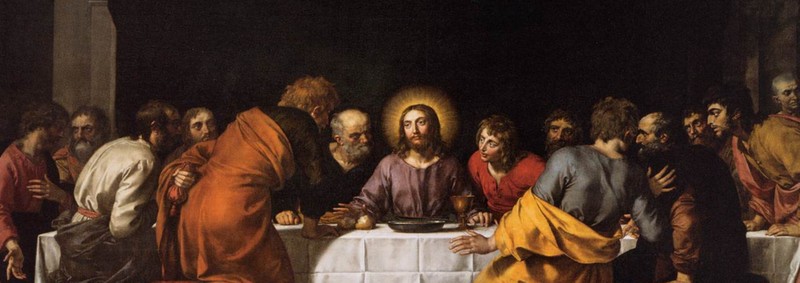
This portion of John’s Gospel comes near the end of the first of four chapters that make up Jesus’ long farewell discourse at the Last Supper. This section of chapter 14 actually sums up the themes of the opening of the discourse: the Christian’s life is not shaped by Jesus’ absence but by God’s abiding presence; God’s presence overcomes anxiety about God’s absence; and the present holds in it the seeds of a fresh future shaped by love, not fear.
These verses also contain a glimpse of some of the other themes of the farewell discourse: Jesus’ relationship with the Father and the disciples’ relationship to Jesus connect the disciples to the Father as well. Jesus promises to send an Advocate or intercessor who will remind the disciples of everything that Jesus taught them and bring them peace.
Jesus is preparing his disciples in advance for his absence so that they will continue to believe in him and not feel all alone after his return to the Father. After the initial excitement of his Easter appearances, Jesus will remain with his followers in a very different way throughout the centuries.
As our celebration of the Easter season is coming to an end, the liturgy reminds us that Jesus remains with us through the Holy Spirit, who teaches us everything we need to know, reminds us of all that Jesus taught, and brings us peace.
Abide With Me — John 14:23-29
Kathleen Rushton
Farewell Discourse
After Judas left the supper, a new atmosphere fell among those gathered as Jesus began his discourse (Jn 13:31–16:33). Early Christians would have recognised the genre as a farewell address by a well-known leader about to die, in which he expressed concern for the well-being of the group and for individuals after his death. In his farewell address, Jesus followed this pattern. He stressed that relationships were to continue, and that although good things would happen there would also be hard times ahead. And he encouraged his followers to practise all he had taught them.
A Dangerous World for Believers
The evangelist is not just recording what happened at the supper in Jerusalem in the month of Nisan in the early 30s CE. He is telling the story of the life and death-resurrection of Jesus and its significance for a community in another time and place — most likely the community in the Roman city of Ephesus in the early 90s. That community lived in troubled times. Many Palestinian Jews, displaced and exiled when the Romans destroyed their temple in Jerusalem and the city in 70 CE, were living in poverty. Their identity and religion had been bound closely to the Temple and its cult at a deep level, and they were adapting to their new reality.
The social context of the Mediterranean, ruled by Rome, was more complex than the tensions between Jews and Christians. Many Christians suffered for their belief in Jesus. As Sjef van Tilborg wrote: “readers of the Johannine story enter into a dangerous world” where they needed to confront city life daily committed to Jewish-Christian values within their multicultural and cosmopolitan world.
Troubled
John 14 begins and ends the discourse with: “Let not your hearts be troubled (tarassō)” (Jn 14:1; 14:27). In between this advice is a familiar Johannine textual pattern. Jesus makes a statement which provokes misunderstanding, then someone asks him a question or makes a statement and Jesus elucidates further. In this section three disciples, Thomas (Jn 14:5), Philip (Jn 14:8) and Judas (not Iscariot) (Jn 14:22), ask Jesus a question and he responds to each question in Jn 14:23-31.
The word tarassō is used in John to refer to the state of trouble because of the approach of death. The man waits to enter the pool when “the water is stirred up” (Jn 5:7). Jesus “was greatly troubled in spirit and deeply moved” by the death of his friend Lazarus (Jn 11:33). When speaking about his own death, Jesus said “my soul is troubled” (Jn 12:27). After foretelling his betrayal, Jesus “was troubled in spirit” (Jn 13:21). Jesus, in his humanity, experienced what he knows his disciples are feeling about the hard times ahead.
Network of Relationships
John’s Gospel portrays a web of close relationships: God to Jesus and Jesus to God; Jesus and the Holy Spirit; God to the world; Jesus to disciples and disciples to Jesus; Jesus and disciples to the world; disciples among themselves; and the relationships between groups in God’s new family. These relationships are expressed in many ways which include “abiding”, “believing” and the presence of the Holy Spirit.
“Abide”
Jesus assures his discples that if they love him and keep his word, “we [Jesus and the Father] will come to them and make our home (mone) with them” (Jn 14:23). Jesus uses the word mone “home” earlier when he declares: “In my Father’s house there are many dwelling places (mone)” (Jn 14:2). This noun comes from the verb “to abide” (menein) which is found 40 times in John and is translated as stay, continue, remain, endure, live or dwell. But those translations obscure the power of the poetic image of “home”.
“Abiding” suggests a community interrelated, mutual and indwelling. Jesus speaks of “the Father who dwells (menein) in me” (Jn 14:10). Later, he assures his disciples that the Spirit of Truth “abides (menein) with you” (Jn 14:18). Jesus stresses that he is saying “these things to you while I am still (menein) with you” and he speaks of the coming of the Holy Spirit (Jn 14:25).
Here we find Jesus speaking of his relationship not only with the Father but also with the Advocate to come. That Jesus knows hard times are ahead reminds the disciples they will always have the community of God with them. Throughout John we find references to the relationship of God within Godself. Later in 325 CE at the Council of Nicaea, the Church proclaimed the concept of the Trinity — a single God manifested in three co-eternal persons, Father, Son and Holy Spirit. This year we celebrate the 1,700th anniversary of that Council.
“You may believe”
Jesus warned of hard times to come so that “when it does occur, you may believe (pisteuein)” (Jn 14:26). Although faith and belief permeate John’s Gospel, those nouns themselves do not occur in the text because Johannine faith is about action. In the Middle East at the time, the words faith, belief, fidelity and faithfulness named relationships which bound one person to another. They were expressed in action and revealed the authenticity of the sentiments in a person’s heart.
Holy Spirit
Several times in his discourse, Jesus refers to going away and leaving the disciples. But he assures the disciples that they will not be alone because he will ask the Father to give them another Advocate, the Holy Spirit of Truth (Jn 14:16–17, 25–26). After his leaving, people will come into his new family, his home, because the works of God will continue both “through the Holy Spirit” and “through the work of the disciples”.
Our Work as Pilgrims
As we work as pilgrims of hope, actively bound to one another in these times of world chaos, we might take Jesus’s words to heart: “Let not your heart be troubled.” We can walk together in the faith legacy of the teachings of 1,700 years of the Council of Nicaea; 60 years of Vatican Council II and 10 years of Laudato Si’, conscious of the “not yet” and of our contribution for co-creating God’s home among us in the world.
Tui Motu Magazine. Issue 303 May 2025
https://hail.to
The Spirit always draws new things from the Gospel
Fernando Armellini
A hasty reading of today’s Gospel can give the impression of finding ourselves facing a series of unrelated sentences and the problems of our lives. The passage, however, is not at all confusing or abstract; it is only very dense. Let’s put it in simple terms.
Let us first clarify the sentence of v. 25: “I told you all this while I was still with you.” We are at the Last Supper and is at least surprising to hear Jesus say: While I was still with you. It is clear that here it is not the historical Jesus who is speaking, but the Risen Lord that turns to the Christian communities of the time of John, subjected to the test by persecution, troubled by defections, infidelity, incipient heresies and, above all, disappointed by the failure, the expected return of the Lord. Framed within this perspective we now pass to an examination of the passage.
The initial statement: “If anyone loves me …” should be seen in context. One of his disciples—Judas (not Judas Iscariot)—addressed a question to Jesus: “Lord, how come you have to show yourself to us and not to the world?” (v.22).
In Israel, everyone expected a Messiah who, performing spectacular miracles, amazed the whole world. Faced with the humble and resigned attitude with which Jesus has always presented himself—he did not cry, did not make his voice heard in the streets (Mt 12:19), nor want his miracles disclosed—the apostles often posed the question that was formulated by Judas, on behalf of all, at the last Supper.
Even the relatives of Jesus who lived in Nazareth have never understood his absurd pursuit of concealment. One day they told him: “Don’t stay here; go instead to Judea and let your disciples see the works you are doing. Anyone who wants to be known doesn’t work secretly. Since you are able to do these things, show yourself to the world” (Jn 7:3-4).
The Christians of the communities of Asia Minor, at the end of the first century, do not understand the reason why the Lord does not come back on the clouds of heaven to manifest resoundingly who he is and what he is capable of doing.
To these doubts and uncertainties, Jesus answers: “Whoever loves me will keep my word, and my Father will love him and we will come to him and make our home with him” (vv. 23-24). Jesus wants to manifest, together with the Father, not through miracles, but by coming to dwell in the disciples.
We must be careful not to materialize this statement. To understand it, it is necessary to refer to another phrase uttered by Jesus at the Last Supper. Responding to Philip he says: “The Father who dwells in me is doing his own work. Believe me when I say that I am in the Father and the Father is in me; at least believe it on the evidence of these works that I do” (Jn 14:10-11).
Jesus brings as proof of his unity with the Father the works he does. He does not refer to miracles, as perhaps we tend to think. He does not appeal to miracles to prove to be “one” with the Father; he refers to everything he does.
His gestures are always and only works of love; they tend to liberate man from all slavery to which he is subjected: those of sin, disease, superstition, religious and social discrimination. But this work of liberation is the same that, according to the Old Testament, the Lord has done on behalf of his people. Israel knew his God as the protector of the last, the weak, the foreigners, orphans, and widows. If Jesus performs these same actions it means that God is in him and he in God.
What does it mean then that Jesus and the Father dwell in us? It means that, after listening to the word of the Gospel, we receive the life of God, His Spirit and we are led to do the same works of Jesus and the Father, we becoming in turn liberators of people. For this, it is not difficult to recognize if and when Jesus and the Father are present and operating in a person.
In the next verse, Jesus promises the Holy Spirit, “the Helper … will teach you all things, and remind you of all that I have told you” (v. 26).
There are two functions of the Spirit. Let’s start with the first, to teach.
Jesus said it all; he did not leave out anything. Yet there is the need that the Spirit continues to teach. Jesus was not able to explain all the consequences and the practical applications of his message. In the history of the church—he knew it—ever new situations would arise; complex questions would come up. Consider, for example, how many real problems now wait for a light of the Gospel (bioethics, interreligious dialogue, difficult moral choices … ).
Jesus assures that his disciples will always find an answer to their questions, an answer according to his teaching if they know how to listen to his word and keep themselves in harmony with the promptings of the Spirit present in them. They must have a lot of courage to follow his instructions because, often, he will ask for changes of routes so much unexpected as radicals. But the Spirit will not teach anything other than the gospel of Jesus.
In the light of other passages of Scripture, this verb to teach acquires a deeper sense. The Spirit does not instruct as a professor at school does when he explains the lesson. The Spirit teaches in a dynamic way, becomes an inner impulse, irresistibly induces in the right direction, stimulates the good, leads to making choices consistent with the Gospel. “He will guide you into the whole truth”—explains Jesus at the Last Supper (Jn 16:13)—and, in his first letter, John explains this: “You received from him an anointing, and it remains in you so you do not need someone to teach you. His anointing teaches you all things; it speaks the truth and does not lie to you, so remain in him and keep what he has taught you” (1 Jn 2:27-28).
The second task of the Spirit is to remember. There are many words of Jesus that, despite being in the Gospels, run the risk of being forgotten or unmentioned. It happens, especially with those evangelical proposals that are not easy to assimilate because they are contrary to the “common sense” of the world.
An example: until a few years ago, many Christians still distinguished between just and unjust wars, and even spoke of “holy wars,” approved of the use of arms to defend their rights, supported the legitimacy of the death penalty for criminals. Today, fortunately, those who think this way are less and less.
How is it that the disciples of Christ should have forgotten for so long the clear words of the Master prohibiting all forms of violence against the brother and sister? Yet it happened. Here then is the Spirit intervening to remember, to remind the disciples of what Jesus said: “Love your enemies, do good to those who hate you … To the one who strikes you on the cheek …” (Lk 6:27-29). For many centuries Christians have been able to plug their ears to the calls of the Spirit, but today those who try to justify the use of violence find themselves always alone and more pressed by the voice of the Spirit who…reminds him of the Master’s words.
I insisted on non-violence, but the examples of “forgetfulness” of the words of Jesus could be multiplied and would be appropriate that, in the light of the Spirit, each one would try to make an exercise of memory.
Jesus bequeathed to his disciples the commandment of love; now he also leaves his peace: “Peace be with you, I give you my peace; not as the world gives peace do I give it to you” (v.27). Jesus utters these words when the Roman Empire is at peace, there are no wars, and all people are subject to Rome. Yet this is not the peace that he promises. This is the peace of the world, based on the strength of the legions, not justice. It is peace that approves slavery, marginalization, oppression of the vanquished, and the arrogance of the powerful. The peace promised by Jesus is brought about when among people new relationships are established, when the will to compete, to dominate, to be the first gives way to service, selfless love for the last ones. Christian communities are called to be the place where everyone can see the beginning of this peace.
The last part of the passage (vv. 28-29) is rather enigmatic: it is not easy to see why the disciples should rejoice at the departure of Jesus and why he claims that the Father is greater than he. We begin to explain the joy. We note first of all that it can only be proven by those who “love” Jesus. “If you loved me” it means: if you were in tune with my feelings, if you shared my thoughts and my projects, you would rejoice because I am going to carry out the mission that Father has entrusted to me. The Master’s death scares the disciples because they have not been enlightened by the Spirit; they do not realize that his gesture of infinite love will begin the new world, characterized by “his peace.”
The statement about the inferiority of Jesus to the Father is explained by the language used by the rabbis. They spoke of superiority and inferiority to distinguish the envoy from the sender. As long as he is in the world and he has not carried out his mission, as long as he does not return to the Father, Jesus is “the inferior,” that is, the one sent by the Father.
Fernando Armellini
Italian missionary and biblical scholar
https://sundaycommentaries.wordpress.com
The Spirit of Love, motivating force
and guarantee of the mission
Romeo Ballan, mccj
Jesus foretells his Apostles about the Easter gifts, the fruits of his passion and resurrection. In the first place, the gift of a new love (Gospel): a love that is ‘total immersion’ in the Holy Trinity, that comes to live, to take up its dwelling in the one who believes and loves (v. 23); a love that becomes the source of the new life. Then there is the gift of peace: the peace that Jesus gives, a much different peace from what the world has to offer, a peace that is stronger than any disturbance and gives reassurance in every difficulty (v. 27). And above all, there is the gift of the Consoler, “the Holy Spirit”, as teacher and repository of the things that Jesus has taught (v. 26). It is a promise that affects very closely the pilgrimage of the Church throughout history: Jesus could not have explained all the consequences and the application of his message, so he ensures the friendly presence of a sure guide, even in the face of new problems, of unexpected events, of the development of human sciences… We can think of today’s manifold challenges: fundamentalism, bioethics, globalisation, dialogue between religions, ecology and so on. The Spirit always intervenes as light, power, forgiveness and consolation, because it is an oil of gladness, a gift of love.
The new choices that the community of those who believe in Christ will have to make throughout the centuries, with the guidance of the Holy Spirit, cannot be in contradiction with Jesus’ message; indeed, they will be a development, a creative depth of understanding, an application that responds to the needs of the many different people, times and places. A storm arose immediately, and was a question of life or death for the Church, only around 50 years after Christ, a few decades from the historical time of Jesus’ life on earth. The Acts of the Apostles (1st Reading) tell of the quarrels and animated discussion between two groups: on the one side the converts from Judaism, who wanted to impose certain Jewish practices on pagan converts even before they were baptised; Paul and Barnabas, on the other side, saw in such impositions the risk of blocking the grace of Christ, and argued for the immediate admittance of pagans into the Christian community, without Judaic impositions. (v. 1-2).
Very wisely, the debate was taken up to the highest level: to the involvement and discernment of the Apostles in Jerusalem. Three tendencies emerged in the Council of Jerusalem: the open line of Paul and Barnaba, the somewhat hesitant line of Peter, and the practical advice of James, Bishop of Jerusalem, who mediated between Paul and those who wanted to impose Jewish practices, with a reasoning based on pastoral criteria, with one or two temporary concessions (v. 29), as can be seen from the first conciliar document of the Catholic Church (vv. 23-29).
The presence of the Holy Spirit can be recognised in all this difficult process: in the quest for a stronger communion with the leaders of the Church, in the discussion thrown open to all in the search for a community decision, in the attention given to each speaker, especially to Peter, in the choice of credible witnesses to be sent to the brothers in Antioch. The presence of the Spirit is forceful above all in the clear affirmation of salvation offered to all through Christ, thus making access to the Gospel easier for pagans, with no extra obligations imposed. This decision is the result of a happy, though difficult, acting together: “It has been decided by the Holy Spirit and by ourselves…” (v. 28).
“The historical journey of the Church has not always been in a straight line, as the Council of Jerusalem shows. Some qualities are very important, such as the dynamism that stops the Church from falling into nostalgia, fidelitythat stops the Church from going off-line, the patiencethat holds the Church back from frenzy, prophecy that lets the Church recognise and understand the signs of the times, toleranceand dialoguethat hold off the problem of fundamentalism, hope that allows the Church to get over hesitation and uncertainty. But above all, faith in the Spirit must dominate, as the last and living guide of the Church” (G. Ravasi). The conciliar method was tested, and remains valid in every age, as a course for communion and mission!
