Fr. Manuel João, comboni missionary
Sunday Reflection
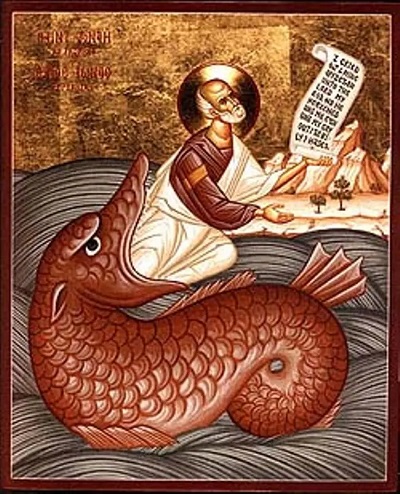
from the womb of my whale, ALS
Our cross is the pulpit of the Word
The True Newness Is Love
Year C – Easter Season – 5th Sunday
Readings: Acts 14:21-27; Psalm 144; Revelation 21:1-5;
John 13:31-35: “I give you a new commandment: love one another.”
With the final two Sundays of the Easter season, we enter the immediate preparation for the feasts of the Ascension and Pentecost. These are the Sundays of farewell. This Sunday’s Gospel and that of next week present excerpts from Jesus’ farewell discourse to his disciples during the Last Supper. It is his testament before the Passion and death.
Why revisit these texts during Eastertide? The Church follows the ancient tradition of reading, during this period, the five chapters of the Gospel of John that recount the Last Supper (chapters 13–17), where Jesus presents the meaning of his death and his “Passover”.
Moreover, since it is a legacy, a will is only opened after death. Jesus leaves his possessions, his inheritance, to us, his heirs. His greatest bequest is the commandment of love—the theme of today’s Gospel.
1. One word links today’s three readings: NEW or NEWNESS
- In the first reading, from the Acts of the Apostles, we hear about the newness that Paul and Barnabas share with the Church in Antioch, which had sent them on mission: “how God had opened a door of faith to the Gentiles.”
- In the second reading, from Revelation, John sees “a new heaven and a new earth” and “the holy city, the new Jerusalem, coming down out of heaven from God”, and hears a Voice saying: “Behold, I make all things new.”
- In the Gospel, Jesus gives us “a new commandment.”
We live in a society where boredom is widespread, especially among young people. We need constant stimulation, novelty, to make our days more exciting and attractive. Sadly, we often confuse newness with variety. The novelties presented to us are often recycled versions of the old, which age instantly, leaving us disappointed and dissatisfied.
On the other hand, true newness frightens us because it shakes up our principles and our lifestyle. It demands that we be “born again”, as Jesus said to Nicodemus (John 3:3).
This is true not only for each Christian, but also for every Christian community and the entire Church. Faithfulness to Tradition must not disguise the temptation to cling to the past, to old and outdated traditions. The frequent criticism that the Church is stuck in the past should prompt us to question our openness to the renewing breath of the Spirit.
Listening to and welcoming the Word—which proposes newness—requires great openness of mind and heart. The danger lies in closing ourselves off to what is new, which always brings some disruption to our lives. Even worse is when this Word sounds “old” to our ears simply because we’ve heard it so many times! Let us pray, then, that the Lord may make us “new wineskins” ready to receive his “new wine”!
2. A NEW GLORY
“When Judas had gone out [from the Upper Room], Jesus said: ‘Now the Son of Man has been glorified, and God has been glorified in him.’”
When we hear today’s Gospel, our attention naturally turns to the “new commandment”, but that newness is introduced by something else—something incomprehensible, shocking, and even scandalous, because it seems to overturn our perception of reality.
When Judas leaves to betray him, instead of expressing sorrow and pain, Jesus speaks of “glorification”—and he does so five times. Jesus links his own glory, and that of God, to Judas’s betrayal! What kind of glory is this? The glory of being lifted up on the cross, for the cross is the supreme expression of God’s love.
Judas represents the mindset of the “victorious” Messiah; Jesus, instead, reveals himself as the “defeated” Messiah. The true Messiah follows the logic of love. “This is why the Father loves me: because I lay down my life to take it up again” (John 10:17), said the Good Shepherd in last Sunday’s Gospel.
This inverted vision of reality hits us hard in a world constantly chasing after “vain glory.” Let us ask ourselves: what kind of glory do I seek in my thoughts, desires, fantasies, and motivations? The kind of glory we pursue reveals whether we have faith or not. Jesus tells us: “How can you believe, when you accept glory from one another and do not seek the glory that comes from the only God?” (John 5:44).
3. A NEW COMMANDMENT
“My little children, I am with you only a little longer. I give you a new commandment: love one another.” (See also John 15:12 and 15:17).
What makes this commandment new?
– It is new because it is neither spontaneous nor natural; it doesn’t arise from instinct.
– It is new because it is rooted in selfless giving, not reciprocity.
– It is new because it abolishes the old “eye for an eye, tooth for a tooth” ethic.
– It is new because it surpasses the wisdom of the old commandment: “You shall love your neighbour as yourself” (Leviticus 19:18).
– It is new because now the standard of love is Jesus: “As I have loved you, so you also should love one another.”
– It is new especially because it will never grow old. What exists in time eventually ages. But what belongs to the “new heavens and new earth” will never age, because it shares in the eternity of God.
– It is new because it is final and definitive—eschatological, belonging to the end times. Faith and hope will pass away, but only love will remain (1 Corinthians 13:13). For love is the very essence of God: “God is love” (1 John 4:8).
And thus, there is no longer any sense in separating love for God and love for our brothers and sisters, or speaking of “vertical” and “horizontal” love—because love is one.
This kind of love will be the supreme mark of the disciple of Jesus:
“By this everyone will know that you are my disciples: if you have love for one another.”
4. How can we RECEIVE this NEW LOVE?
They say you can’t command the heart. So how can we acquire this love? By contemplating it in the Eucharist, where this love is celebrated. “Let us keep our eyes fixed on Jesus” (Hebrews 12:2). By gazing lovingly and tenderly at the Crucified One, where this love was poured out. Or, in the words of Saint Daniel Comboni, addressing his missionaries:
“Always keep your eyes fixed on Jesus Christ, love him tenderly, and strive to understand ever more deeply what it means that a God died on the cross for the salvation of souls. If, with living faith, they contemplate and savour the mystery of such great love, they will rejoice in the chance to lose everything and to die for Him and with Him.” (Writings, 2721–2722)
Fr. Manuel João Pereira Correia, mccj
