Fr. Manuel João, comboni missionary
Sunday Reflection
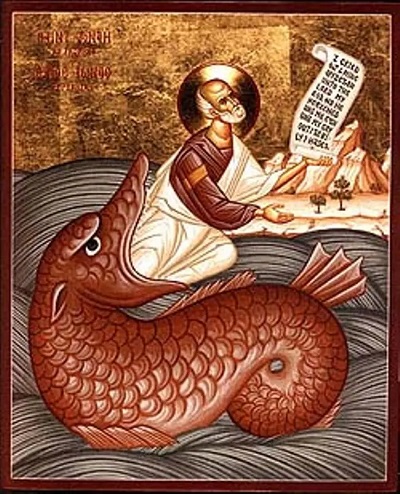
from the womb of my whale, ALS
Our cross is the pulpit of the Word
The Good, Beautiful, and Strong Shepherd
Year C – Easter Season – 4th Sunday
John 10:27–30: “No one shall snatch them out of my hand”
We are now at the fourth Sunday of Easter. Every year on this Sunday, we read a passage from chapter 10 of the Gospel of John, in which Jesus, through an allegory, presents himself as the Good Shepherd. For this reason, it is known as “Good Shepherd Sunday”.
1. The GOOD Shepherd
The allegory of the shepherd requires, first of all, the effort to place ourselves in a context far removed from our own time in order to grasp Jesus’ message. Indeed, no one really wants to be a “sheep” or part of a “flock” — and yet, in many ways, that is precisely what we are! Only today, “shepherds”, “sheep”, and “flocks” go by different names: leaders, sports idols, media gurus, influencers, fans, supporters, populists…
In any case, this is a rather strange shepherd, for no one would normally give their life for a sheep. And yet this shepherd becomes a lamb himself, offering his life as food for the flock: “The Lamb at the centre of the throne will be their shepherd and will guide them to springs of the water of life” (Revelation 7, second reading).
In conjunction with the Gospel of the “Good Shepherd”, today the Church also observes the World Day of Prayer for Vocations, instituted by Pope Paul VI in 1964. The theme this year, proposed by Pope Francis (whose message was signed on 19 March while he was in hospital at the Gemelli), is: “Pilgrims of hope: the gift of life.” Pope Francis begins his message with these words: “On this, the 62nd World Day of Prayer for Vocations, I wish to extend to you a joyful and encouraging invitation to become pilgrims of hope by generously offering your lives as a gift.”
To give one’s life generously is the ultimate sign of love: it is what the Good Shepherd did, and it is the same calling for all who walk in his footsteps.
Last Sunday, we heard Jesus ask Simon Peter three times: “Feed my lambs”, as a sign of love. Jesus entrusted Peter with his own messianic title of Shepherd (Jn 21:15–19). Yet with the solemn “Follow me” (Jn 21:19), Jesus made clear that Peter’s task would always be vicarious.
“There will be one flock, one shepherd” (Jn 10:16). Peter, shepherd under the Shepherd, was called to tend the flock entrusted to him, giving his life like Jesus — becoming himself a sacrificial lamb. Peter did this. So did Francis. And so too must Pope Leo.
The image of the shepherd is rooted in a long and rich biblical tradition (especially in the Prophets and the Psalms), which the New Testament takes up anew: Jesus is “the great Shepherd of the sheep” (Hebrews 13:20). It is no surprise, then, that the earliest artistic depiction of Jesus found in the catacombs is that of the “Good Shepherd”, centuries before the crucifix. The Good Shepherd is “the gentle version of the Crucified One”. Gentle in image only, for the essence is the same (D. Pezzini).
2. The BEAUTIFUL Shepherd
“I am the Good Shepherd!” It’s worth noting, however, that the Greek adjective used by the evangelist is not agathós (good), but kalós, meaning beautiful. So, the literal translation would be: “I am the beautiful shepherd.”
This offers us a different angle on goodness: goodness makes a person beautiful, and beauty radiates their inner goodness (Plato). Jesus is the epiphany not only of goodness but of beauty.
God is Love because he is Beauty, and he is Beauty because he is Love.
“Beauty and goodness intertwine. […] In the Old Testament, the adjective tôb appears 741 times, and its meaning shifts between ‘good’ and ‘beautiful’, showing how ethics and aesthetics are two sides of the same reality.” (Gianfranco Ravasi)
The world needs beauty. “Often humanity loses sight of true beauty; it becomes enthralled by what is flashy, turning beauty into spectacle, a commodity, surrendering to what is instantly consumable. Transfigured and crucified beauty redeems us from the seduction of the fleeting.” (Lucia Antinucci)
3. The STRONG Shepherd
Today’s Gospel passage is very short, just four verses, and is not directly linked to the allegory of the Good/Beautiful Shepherd. We are in Jerusalem during the Feast of Dedication. It is winter, and Jesus is walking in the Temple. His adversaries gather around him and challenge him: “How long will you keep us in suspense? If you are the Christ, tell us plainly.” Jesus replies: “You do not believe because you do not belong to my sheep.” (Jn 10:22–26)
We are, then, in a context of conflict and tension. In fact, the scene ends with the “Jews” attempting to seize and stone Jesus (Jn 10:31,39).
We often associate the figure of the Good Shepherd with the tender image of the shepherd carrying the lost sheep on his shoulders (Lk 15:4–7). There is, no doubt, a connection — but today’s passage presents a far more dramatic context. Jesus speaks of laying down his life (an expression repeated in chapter 10), of fighting off ravenous wolves, and of confronting thieves and robbers.
What we need is a strong shepherd. A shepherd like David, able to face lions and bears to protect his flock (1 Sam 17:34–37).
This is the aspect that today’s Gospel highlights: “I give them [my sheep] eternal life, and they shall never perish. No one shall snatch them out of my hand.”
Jesus adds the reason why we are secure in his hands: “My Father, who has given them to me, is greater than all, and no one can snatch them out of the Father’s hand. The Father and I are one.”
We often feel besieged by problems that steal our peace and joy. Sometimes, we feel as though we are living in a society of “thieves and robbers”, where everyone looks out for themselves, and we grow distrustful. At other times, we feel as though we are being hunted by ravenous wolves — living in fear and anxiety.
The strong Shepherd reassures us that, if we follow him, nothing and no one can snatch us from his hand. Faith — trust in him — allows us to cry out with St Paul:
“Who will separate us from the love of Christ? Trouble? Hardship? Persecution? Famine? Nakedness? Danger? Sword? … No, in all these things we are more than conquerors through him who loved us. For I am convinced that neither death nor life, neither angels nor demons, neither the present nor the future, nor any powers, neither height nor depth, nor anything else in all creation will be able to separate us from the love of God that is in Christ Jesus our Lord.” (Romans 8:35–39)
Fr Manuel João Pereira Correia, mccj
