Fr. Manuel João, comboni missionary
Sunday Reflection
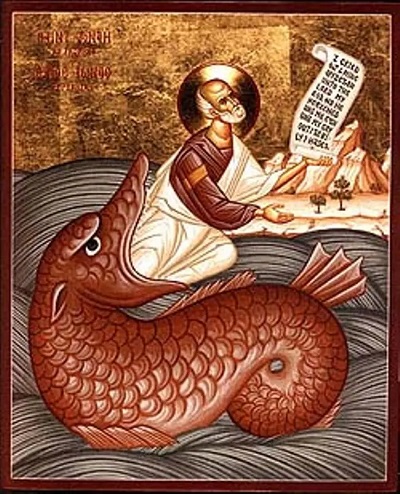
from the womb of my whale, ALS
Our cross is the pulpit of the Word
“Tell us, Mary: what did you see on the way?”
Year C – Easter Sunday
John 20:1-9: “He must rise from the dead”
“Death and Life have confronted each other
in a prodigious duel.
The Lord of Life was dead;
but now, alive, He triumphs.”
(Easter Sequence)
We have reached the Lord’s Easter, walking the path set out by the Church, our mother. After Lent, we entered the Paschal Triduum. What we have lived through in these three days has remained engraved in our hearts. We have seen Love kneeling at our feet. Then we saw Him mocked, blasphemed, and crucified. Finally, we held Love, dead, in our arms, and, crying and beating our breasts, we buried Love. It seemed that the greatest love story had come to an end. Yet we had forgotten that love never dies. It is a seed full of the power of life that, falling to the ground, bears much fruit. And today, Easter day, life bursts forth from the tomb!
Easter is the unexpected triumph of Life, which makes certain Hope come to life. Easter is the morning star that illuminates the deep night and opens the way to the midday sun. Easter is the explosion of spring that inaugurates the time of beauty, the season of colours, song, and flowers. Easter is the beginning of the new creation!
Mary, the woman of dawn
But let us allow Mary Magdalene to tell us about Easter. She, the woman of the glorious dawn, the first announcer of Christ’s resurrection. Mary Magdalene – as all the evangelists agree – holds a firsthand testament, the firstfruits of womanhood, “the apostle to the apostles,” as the ancient Fathers of the Church call her. She is the perfect image of the Church, the passionate bride who spends the night searching for her Beloved. Her passionate love for the Master kept her heart awake throughout the long night of the great “Passover”; “I sleep, but my heart is awake” (Song of Songs 5:2). And because love kept her awake, the Beloved first revealed Himself to her.
It is to her we wish to ask: “Tell us, Mary: what did you see on the way?” Tell it with the fire of your passion. Let us behold in your eyes what your heart has seen! Because the testimony of an apostle is of no value if it is not lived with your very passion!
“Tell us, Mary: what did you see on the way?
‘The tomb of the living Christ, the glory of the risen Christ, and His angels as witnesses, the shroud and His garments. Christ, my hope, is risen: He goes before His own into Galilee.’
Yes, we are sure: Christ is truly risen.”
(Easter Sunday Sequence).
Mary, the lover
What characterises Mary Magdalene? A great love! She is a woman passionately in love with Jesus, who refuses to accept the prospect of losing Him and clings to that lifeless body as her last opportunity to touch “the one her heart loves” (Song of Songs 3:1-4). If the “beloved disciple” (possibly the apostle John, according to tradition) is the prototype of the disciple, Mary Magdalene is, in some ways, his female counterpart (without overshadowing the figure of the Virgin Mary). Mary Magdalene is the “preferred disciple” and the “first apostle” of the Risen Christ. She, called twice by the generic name “woman,” represents the new suffering and redeemed humanity, the Eve converted by the Love of the Bridegroom, that love lost in the Garden of Eden and now recovered in the new garden (John 19:41) where her Beloved had descended (Song of Songs 5:1).
Remaining and weeping
Mary Magdalene’s vocation is driven by love and, at the same time, by faith. Both faith and love are necessary: faith gives strength to walk, love gives wings to fly. Faith without love does not take risks, but love without faith can lose its way at many crossroads. Hope is the daughter of both.
It is love and faith that urge Mary Magdalene to stay near the tomb, to weep and hope. Even though she does not fully understand why. Unlike the two apostles Peter (a figure of faith) and John (a figure of love), who move away from the tomb, the woman, who unites both dimensions, “remains” and “weeps.” Her remaining is the fruit of faith, her weeping is the fruit of love. “Remaining” because her faith perseveres in seeking, not discouraged by failure, questioning (the angels and the gardener), just like the Beloved in the Song of Songs. She hopes against all hope! Until, finding the Beloved, she throws herself at His feet, embracing them in a vain attempt to never let Him leave again (Song of Songs 3:1-4).
Today, we, disciples and friends of Jesus, on the contrary, easily capitulate in front of the “tomb,” walking away. We lack the faith to hope that from death, emptiness, and defeat, life can rise again. We no longer have “faith in miracles,” there is no longer space in us to hope in a God who can raise the dead. We hasten to close those “tombs” with the “great stone” (Mark 16:4) of our unbelief. Our mission then becomes a desperate struggle against death. A task doomed to failure, because death has reigned since the beginning of the world. We end up settling for the work of mercy of “burying the dead” (with or without embalming), forgetting that we have been sent to raise them up (Matthew 10:8).
To face the tomb is the Rubicon crossing of the apostle, his crossing of the Red Sea (Exodus 14-15). Without removing the stone of our unbelief, to face and overcome this terrible enemy, we will not see the glory of God: “Did I not tell you that if you believe, you will see the glory of God?” (John 11:40).
We do not like to weep, no doubt because we love little. “Weeping is characteristic of the feminine genius,” said Pope John Paul II. Perhaps women are more capable of love. “Where your treasure is, there your heart will be also” (Matthew 6:21). Mary Magdalene’s heart is always in that garden, where she said farewell to the Master, and this is why she is there, weeping. Our hearts forget our dead too quickly; preoccupied with the “many things to do,” we do not have time to remain and weep with those who suffer!
The boldness to remain and weep is not sterile. To Mary Magdalene’s tears, the angels respond, not by returning the corpse she asks for, but by announcing that “the One she loves” is alive! But her eyes need to see and her hands to touch the Beloved, and Jesus finally yields to the insistence of Mary’s heart and goes to meet her. When He calls her by the name “Mariam,” her heart trembles with emotion at recognising the Master’s voice.
Being called by one’s own name: this is the deepest (unspoken) desire we carry within us. Only then will the “person” reach the fullness of their being and the awareness of their identity; until that moment, they will have walked in the dark! Only then can they say, with the fire of a heart in love, “I have seen the Lord,” and on that day, like Mary, we too will become witnesses of the Risen One.
“Yes, we are sure: Christ is truly risen!”
Wishing you a holy and joyful Easter!
P. Manuel João Pereira Correia, MCCJ
