Fr. Manuel João, comboni missionary
Sunday Reflection
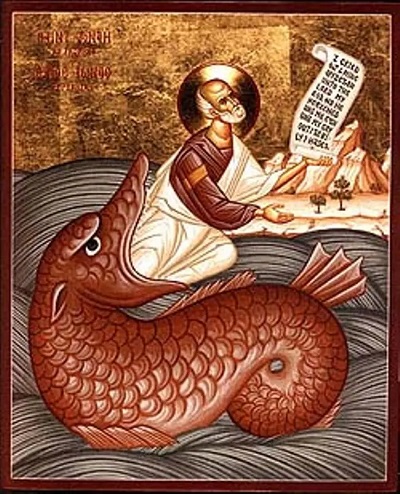
from the womb of my whale, ALS
Our cross is the pulpit of the Word
Let us rejoice!
Year C – Lent – 4th Sunday (Laetare)
Luke 15:1-3, 11-32: We must celebrate and rejoice!
The fourth Sunday of Lent has a particular character in the Lenten journey, one focused on joy. It is called “Laetare” Sunday (“Rejoice”), from the first word of the liturgy: “Rejoice, Jerusalem, and all you who love her, gather together. Exult with joy, you who were in mourning. Thus, you will rejoice and be satisfied with the breasts of her consolation.” (Isaiah 66:10-11)
The Gospel offers us the most well-known and beautiful of Jesus’ parables: the parable of the prodigal son. In reality, at the centre we find the figure of the benevolent and merciful father. This parable is found in chapter 15 of the Gospel of St. Luke, the “chapter of the lost”: the lost sheep in the desert, the lost coin in the house, the younger son who went far away, and the older son who is “lost” despite staying at home. This chapter is entirely dedicated to God’s mercy. One of the distinctive elements of St. Luke’s Gospel is precisely the emphasis placed on divine mercy, and chapter 15 can be considered a “Gospel within the Gospel,” with the parable of the Merciful Father as its climax.
The context of the parable is given in the opening verses of the chapter (vv. 1-3): “Now the tax collectors and sinners were all gathering around to hear him. But the Pharisees and the teachers of the law muttered, ‘This man welcomes sinners and eats with them.’ Then Jesus told them this parable.” Jesus therefore speaks to the Pharisees and the teachers of the law, those who considered themselves righteous and criticised his openness towards sinners, seeing him as permissive and lax.
To respond to this mentality, Jesus tells three parables. The first two, shorter ones, feature a man and a woman: a shepherd who, having lost one of his hundred sheep, sets out to search for it (vv. 4-7) and a woman who, having lost one of her ten coins, searches carefully in her house until she finds it (vv. 8-10). Both rejoice when they find what was lost and invite their friends and neighbours to rejoice with them. Jesus concludes both parables with a surprising statement: There is joy in heaven over one sinner who repents.
The contrast between the man and the woman, between what is outside and inside the house, between sinners and the righteous… emphasises the universality of God’s mercy, which unites the earth and heaven in joy.
The third parable is the one in today’s Gospel: the parable of the Merciful Father. A careful reading of the parable allows us to better understand the heart of God the Father and His unconditional love for every person.
A reading of the parable with a focus on the Father
When reading or listening to the parable, our attention is generally drawn to the behaviour of the two sons: we compare ourselves to them, trying to understand which one we relate to more, whether it is the younger one who went away or the older one, “lost” even though he stayed at home.
Today, I invite you to reread the parable with your gaze fixed on the Father. The sons remain sons, but they are called to inherit from their father and mother, becoming the soul of the house and the family. Otherwise, who will welcome the lost son or daughter when they return? If they find a cold and empty house, they will feel doubly lost. Today, our society has an extreme need for fathers and mothers who are able to “stay at home” to welcome those who return.
“While he was still a long way off, his father saw him and was filled with compassion for him; he ran to his son, threw his arms around him and kissed him.” The parable uses five verbs to describe the father’s welcome to the younger son, who, “coming to himself,” decided to return home: see, have compassion, run, embrace, and kiss.
Is our welcome characterised by these five verbs? What are our feelings and actions towards those who have made mistakes?
Then the father said to his servants, “Quick! Bring the best robe and put it on him. Put a ring on his finger and sandals on his feet. Bring the fattened calf and kill it. Let us have a feast and celebrate.”
Thus, the father fully rehabilitates his son: with the robe, he restores his dignity; with the ring — the family seal — he makes him a co-owner of the household’s goods; with sandals on his feet, a privilege of free people, he reaffirms his status as a free son. The feast is the supreme sign of welcome.
The Father’s attitude is a great challenge for us, for our families, for Christian communities, and for the Church. We are often reluctant to trust again those who have betrayed our trust. Before rebuilding a broken relationship, we impose tests, keep a hard face, because we fear being deceived or hurt again. We sin through excessive caution and lack the boldness of love. How difficult it is to truly be children of this Father with too good a heart, too compassionate, too… naïve!
At this point, the older son arrives, who does not share the father’s behaviour and refuses to join the feast. What does the father do? “So his father went out and pleaded with him.” The father pleads, does not scold, does not command, does not get angry, but seeks to convince the older son to share his feelings. The father wants to repair the relationships because he does not want to lose any of his sons.
Reconciliation with the Father is not enough. It is necessary for the brothers to reconcile with each other. Today in the Church, there are great tensions, often due to intolerance and a lack of respect for those who think differently. In today’s second reading (2 Corinthians 5:17-21), St. Paul says: “God reconciled us to himself through Christ and gave us the ministry of reconciliation.” In a sense, this ministry of reconciliation is entrusted to each of us. Pope Francis keeps repeating that there is room for everyone in the Church. However, until our hearts become like that of the Father and the Church has a motherly heart, this will not be realised.
Beyond the parable
In conclusion, it seems appropriate to turn our gaze to Christ, who has revealed the heart of the Father to us. He embodies the true spirit of the older brother. Leaving the House of the Father, he took with him the riches of the Father, which he squandered with prostitutes, tax collectors, and sinners, only to return later with a multitude of brothers and sisters who were lost and whom he had found. The Father said of him: “You are my Son, whom I love; with you I am well pleased.” (Luke 3:22).
Fr. Manuel João Pereira Correia, MCCJ
