Fr. Manuel João, comboni missionary
Sunday Reflection
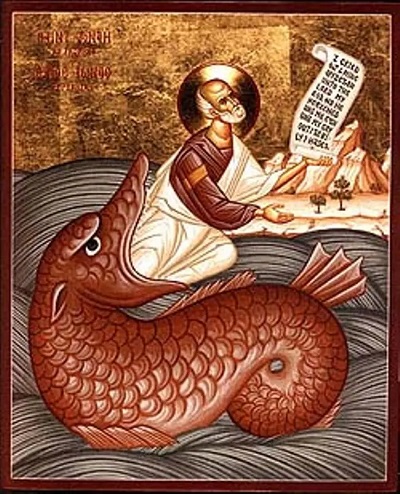
from the womb of my whale, ALS
Our cross is the pulpit of the Word
From the Face to faces
Year C – Lent – 2nd Sunday
Luke 9:28-36: “It is good for us to be here”
Our Lenten journey consists of several stages—six to be precise, as many as the Sundays of Holy Lent.
Every year, Lent presents us with the passage of the Temptations on the first Sunday and the passage of the Transfiguration on the second. These two Gospels are fundamental in the Lenten journey, almost as if to remind us that the Christian life does not exist without temptation, but neither does it exist without moments of light and transfiguration.
This year, we read from St Luke. The version of Jesus’ Transfiguration in Luke’s Gospel (9:28-36) has some unique features compared to the parallel accounts in Matthew (17:1-8) and Mark (9:2-8). There are three main peculiarities in Luke’s account:
- The context of prayer. Luke emphasises that the Transfiguration takes place during prayer: “Jesus took Peter, John, and James with him and went up onto the mountain to pray. As he was praying, the appearance of his face changed” (Lk 9:28-29). This is a typical theme in Luke, who often presents Jesus in prayer before significant events.
- The theme of dialogue. Only Luke specifies the content of the conversation between Jesus, Moses, and Elijah: “They spoke about his exodus, which he was about to fulfil in Jerusalem” (Lk 9:31). The use of the term “exodus” is very significant: it recalls Israel’s liberation from Egypt and foreshadows Jesus’ Passion, Death, and Resurrection as a new liberation.
- The disciples’ sleep. Only Luke reports that Peter, John, and James fall asleep: “Peter and his companions were overcome with sleep, but when they awoke, they saw his glory” (Lk 9:32). This episode anticipates their sleep in the Garden of Gethsemane (Lk 22:45), creating a parallel between the Transfiguration and the Passion.
An Experience of Beauty and Light
We have heard in the Gospel the account of what happened on the mountain. It was an exhilarating experience of beauty and light; a Trinitarian epiphany (Jesus, the Voice of the Father, and the Cloud and Shadow, symbols of the Holy Spirit); a meeting between the human and the divine; a dialogue between the Word (Christ), the Torah (Moses), and the Prophets (Elijah); a sacred fear in entering the luminous cloud; an encounter with the Voice proclaiming: “This is my Son, the Chosen One; listen to him!” Here, we are given a foretaste of the experience of Jesus’ Resurrection and of our own blessedness!
The source of this light and beauty is the face of Christ. “The appearance of his face changed,” says Luke. “His face shone like the sun,” says Matthew (17:2). We all seek that face, as the psalmist says: “Your face, O Lord, I seek!” (Psalm 26:8). That face reveals our deepest identity, our true face, hidden behind so many masks and disguises. Encountering Christ transforms us, leaving us transfigured, with a radiant face, just as Moses’ face shone when he came from God’s presence (Exodus 34:35).
Only those who have contemplated the beauty of that Face can also recognise it in the “Ecce Homo” and in all the faces scarred by suffering and injustice.
A Mirror of the Lord’s Glory
The Transfiguration is not only the mystery of Jesus’ metamorphosis but also of our own transformation and that of the entire reality surrounding us. Whatever is touched by his light responds by revealing its inner beauty and deep harmony. The Christian life itself is a continuous experience of transfiguration, leading ultimately to the final transfiguration of the Resurrection, as Paul announces in today’s second reading: “The Lord Jesus Christ… will transfigure our humble body to be like his glorious body” (Philippians 3:20).
The Greek verb used here for ‘transfiguration’ or ‘metamorphosis’, metamorphein, is very rare in the New Testament. It appears only here, in the Gospel accounts of the Transfiguration (Matthew 17:2; Mark 9:2), and twice in Paul’s writings (Romans 12:1-2; 2 Corinthians 3:18), always in the passive form.
Particularly striking is the apostle Paul’s statement in 2 Corinthians 3:18: “And we all, with unveiled faces, reflecting as in a mirror the glory of the Lord, are being transformed into the same image, from glory to glory, by the Spirit of the Lord.” This is a beautiful text, one to be treasured in the heart. Here, it is the Christian’s face that is bathed in the light of Christ’s face and reflects his glory like a mirror. This light is not a fleeting event; it works within us as a metamorphosis. We become what we contemplate. If we fill our gaze, imagination, and soul with images of superficial and fleeting beauty, we will find ourselves exposed and even disfigured. If we nourish our hearts with true beauty, we will reflect it within ourselves.
The Mystery of the Face and of Faces
The mountain of the Transfiguration has two sides: the ascent to the mountain, to contemplate the Lord (luminous experiences of prayer), and the descent into the valley, into our daily lives with its dullness and ugliness. These are the two faces of life that we are called to reconcile. The face of Christ, “The most beautiful of the sons of men” (Psalm 45:3), is that of the Transfiguration and the Risen One, but also that of the Suffering Servant of Yahweh, who “had no beauty or majesty to attract us to him, nothing in his appearance that we should desire him” (Isaiah 53:2).
It is easy to say, with Peter: “Lord, it is good for us to be here!” It is much harder to reach the point of saying, like the British Catholic writer G.K. Chesterton, standing beside a dying friend, as he gazed upon the pale face of death: “It was good for me to be there!”
I recall an episode recounted by my confrère, Fr Alex Zanotelli, which took place in the slums of Korogocho, Nairobi. When he asked a young woman, who was dying of AIDS, who God was for her, after a moment of silence, she replied: “God is me!”
This is the goal and mission of the Christian: to recognise and bear witness to the Beauty of God in the realities of life, even in its most dramatic moments.
For personal reflection this week: reflect on how to cultivate moments of exposure to the light of Christ’s face.
Fr Manuel João Pereira Correia, mccj
