Fr. Manuel João, comboni missionary
Sunday Reflection
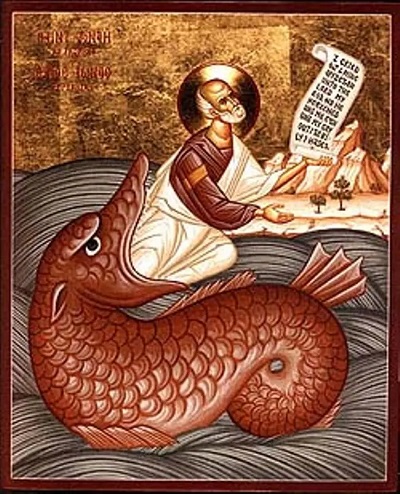
from the womb of my whale, ALS
Our cross is the pulpit of the Word
Lent: The Ecological Conversion of the Spirit!
Year C – Lent – 1st Sunday
Luke 4:1-13: “Man shall not live by bread alone”
With the imposition of ashes last Wednesday, we have entered the holy season of Lent. This period returns every year and may seem like a mere repetition, much like the changing of the seasons, but in reality, it is always different, as it never finds us in the same condition as the previous year and brings new grace to each of us.
The word Lent comes from the Latin quadragesima, meaning “fortieth day” before Easter, thus indicating the duration of this liturgical period. The forty days are counted from Ash Wednesday to Palm Sunday, which marks the beginning of Holy Week. There is a symbolic link between these two moments: the ashes used in the rite of Ash Wednesday are obtained (if possible) from the burning of the blessed palm branches from the previous year.
Technically, the days between Ash Wednesday and Palm Sunday number 39 according to our way of counting, but 40 according to the biblical calculation, which includes both the first and the last day of the series. Another method of counting excludes the Sundays – which always have a Paschal connotation – and ends Lent on Easter Sunday.
The number forty has a strong symbolic value in the Bible. We find this number in several significant episodes: the forty years of Israel’s journey through the desert, the forty days of the prophet Elijah’s march to Mount Sinai, the forty days given to Nineveh for conversion, and the forty days Jesus spent in the desert between his baptism and the start of his public ministry.
1. From Ashes to Fire!
The liturgy makes us begin Lent with a very strong sign: the imposition of ashes! Ashes symbolise our reality: a life that has burnt out, reduced to a residue of vanished dreams and hopes, immersed in a monotonous routine, marked by needs and duties, with nothing that can spark lasting enthusiasm and joy, capable of withstanding the trials of our existence. Perhaps the fire still smoulders beneath the ashes, but without sustenance, it is fading and on the verge of being extinguished. We need a strong and decisive breath of wind to sweep away the ashes and rekindle the fire. This is the work of the Spirit, who in this holy time acts intensely to lead us to the New Fire of the Easter Night!
2. The Sunday of Temptations
The Gospel of the first Sunday of Lent always presents us with the episode of Jesus’ temptations, according to the three synoptic Gospels. Immediately after his baptism, which marks a decisive turning point in his life and mission, Jesus is led by the Spirit into the Judean desert, near the Dead Sea. There, Satan, the “adversary”, awaits him.
This year, we read Saint Luke’s version. After experiencing Trinitarian intimacy, Jesus is “driven out” to face the harshness of life, in profound solidarity with humanity. The Holy Spirit does not keep believers “safe”, perhaps in a “fortress church” protected from all risk, but thrusts them into the midst of the world, at the heart of the battle against evil.
Today, along with Jesus, we too are led by the Spirit into the desert to face temptation. Lent is a spiritual training ground where, with Christ, we learn how to unmask the serpent, avoid its deadly traps, and defeat it.
3. The Three Cardinal Temptations
Jesus is subjected to three temptations: those of Bread, Power, and Prestige. They represent the summary or root of all the temptations of human life. That is why we can say they are the three cardinal temptations, the hinges of every temptation. They concern the three fundamental areas of our relationships: with material goods, with others, and with God.
The sacred text says that Jesus was “tempted by the devil”. The word “Devil” (from the Greek diábolos and the Hebrew satan) means “the one who divides”. This is the ultimate goal of the tempter: to divide us! To divide us internally, separate us from one another, and distance us from God.
How does he carry out his plan? He presents himself as an advisor, suggesting to Jesus the most efficient and quickest method to become a successful Messiah, the King of kings that the people expected.
The tempter tries to push Jesus to escape his human condition and take advantage of the privileges and powers of his divine nature: “Are you hungry? Tell this stone to become bread!” But Jesus refuses to cheat. How many times has the devil also suggested to us that we should exploit our position to gain privileges?
The devil even presents himself as Jesus’ collaborator, offering him power and glory over all the kingdoms of the world. But to accept, Jesus would have to adopt diabolical methods: impose himself by force, use violence, trample others, ally himself with the powerful… How many times, throughout history, has the Church fallen into this trap! How many times have we also, “for a greater good”, resorted to the wrong means! As long as a dominating power exists, there will be injustice, and the Kingdom of God cannot be realised!
The third temptation is the highest and takes place in Jerusalem, the city where Jesus will conclude his life. To put God to the test, as Israel did in the desert: “Is the Lord among us or not?” (Exodus 17:7). How many times have we also put God to the test, asking for signs or interventions to solve our problems? At heart, this means instrumentalising God, reducing Him to an idol.
4. The Ecology of the Spirit
Overcoming these three temptations means undertaking an authentic and profound ecological conversion: re-establishing a healthy and correct relationship with the earth, with people, and with God. The three Lenten practices can help us in this journey:
- Fasting reminds us that the earth is not just a “commodity”. Creatures have their own value, life, and beauty, which must be respected. They do not exist to be devoured by our voracious and insatiable appetite.
- Charity reminds us that the authentic relationship with others is one of love and service, as witnessed by Jesus. Every dominating power is diabolical.
- Prayer invites us to renew our personal relationship with God in loving gratuity and filial trust.
For Personal Reflection
- Prepare your Lenten programme. Keep it simple, as a constant reminder to make the most of this “strong time” of grace.
- Read and meditate on the Pope’s message for Lent: click here.
Fr. Manuel João Pereira Correia, mccj
