Fr. Manuel João, comboni missionary
Sunday Reflection
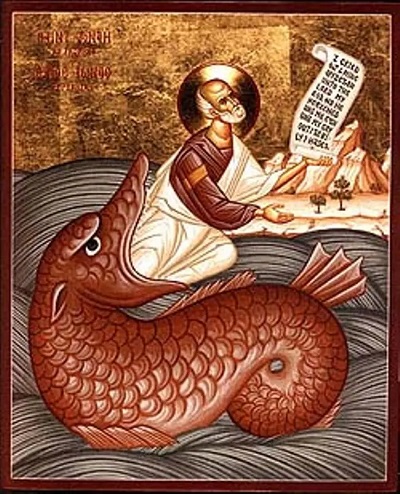
from the womb of my whale, ALS
Our cross is the pulpit of the Word
Where Do We Sink Our Roots?
Year C – Ordinary Time – 6th Sunday
Luke 6:17,20-26: “Blessed are you who are poor… But woe to you who are rich!”
Today’s Gospel presents the Beatitudes in Saint Luke’s version. The text consists of four blessings and four warnings, marked by four “blessed are you” and four “woe to you.” Jesus declares blessed the poor, the hungry, the afflicted, and the persecuted; and he warns those who are rich, well-fed, laughing, and praised by others.
On one hand, Jesus’ words fascinate us, but on the other, they cause us some discomfort, as they propose values that deeply clash with our current way of thinking. Who can truly say they are poor and hungry? Perhaps afflicted and persecuted, at times. Saint Matthew “spiritualises” them: “Blessed are the poor in spirit,” “Blessed are those who hunger and thirst for righteousness”… However, Saint Luke “materialises” them without compromise.
Our spirit perceives the truth and beauty of this new vision of life, embodied in the very person of Jesus, but our mind immediately starts to relativise it, considering it unrealistic, while our unconscious quickly tries to suppress it. It is truly a grace to allow ourselves to be challenged by this word. Indeed, there is a great temptation to say, as elsewhere in the Gospel: “This teaching is difficult; who can accept it?” (John 6:60).
In this word, as in many others in the Gospel, we see the fulfilment of what the prophet Jeremiah said: “Is not my word like fire – declares the Lord – and like a hammer that breaks a rock?” (Jeremiah 23:29). Elsewhere, he says that the word, deep within the heart, causes a great internal pain (Jeremiah 4:29). What better wish, then, than to leave Sunday Mass with “a deep pain in the stomach”? It would be a sign that we are on the right path. The alternative, in fact, is to walk away sad, like the rich young man! Listening to this word heals us and saves us from the danger of leading a meaningless life.
The Context of This Gospel
Saint Luke tells us that Jesus withdrew to the mountain alone and spent the entire night in prayer. Jesus is the Master of prayer because he teaches from his own experience. The evangelist highlights that Jesus always prayed before making major decisions. The story continues by stating that, in the morning, Jesus called all his disciples to himself and chose twelve of them, whom he called apostles (Luke 6:12-13).
Then, Jesus comes down with his disciples and stops on a level place. While in Saint Matthew’s Gospel, Jesus delivers his sermon on the mountain, a symbol of closeness to God, Saint Luke places him on the plain, a symbol of closeness to the people, where he can be easily reached by everyone. Indeed, “a large crowd of his disciples and a great number of people” had come from all over “to hear him and be healed of their diseases.” The whole crowd sought to touch him, “because power was coming out from him and healing them all” (Luke 6:17-19).
In this vast scene of humanity, Jesus, lifting his eyes towards his disciples, proclaims the Beatitudes. The Lord looks up because he speaks from below. God is humble and does not place himself above us.
Some Key Points
Blessed are you who are poor, for yours is the kingdom of God.
Blessed are you who hunger now, for you will be satisfied.
Blessed are you who weep now, for you will laugh.
Blessed are you when people hate you… because of the Son of Man.
We note that:
- This literary form of blessings and curses already appears in Sacred Scripture (see the first reading from Jeremiah and Psalm 1). The rabbis in Jesus’ time also used it.
- While Saint Matthew presents the Beatitudes in a wisdom tradition, stating them in the third person plural: “Blessed are the poor,” Saint Luke adopts a prophetic, more direct style, addressing his disciples in the second person: “Blessed are you who are poor.”
- Each beatitude is followed by a reason, but what is the fundamental justification for these paradoxical statements? Jesus does not glorify or idealise poverty. Poverty, hunger, affliction, and persecution are negative realities to be opposed. The good news is that God does not tolerate these injustices, which are so widespread in our world, and he takes up the cause of the poor. Jeremiah, in the first reading, states that true blessedness comes from trust in the Lord: “Blessed is the one who trusts in the Lord, whose confidence is in him.”
- In the first beatitude, Jesus uses the verb in the present tense: “Blessed are you who are poor, for yours is the kingdom of God,” whereas in others, he uses the future tense. How can this be explained? The Beatitudes have both a present dimension and a future projection towards their full realisation. Paradoxically, then, even in the experience of suffering, joy can be found. A striking example is that of the apostles Peter and John who, after being flogged, “left the Sanhedrin rejoicing because they had been counted worthy of suffering disgrace for the Name” (Acts 5:41).
In a symmetrical structure, Jesus then presents four warnings, the four woes:
But woe to you who are rich, for you have already received your comfort.
Woe to you who are well-fed now, for you will go hungry.
Woe to you who laugh now, for you will mourn and weep.
Woe to you when everyone speaks well of you…
We note that:
- While Saint Matthew’s version of the Beatitudes contains only blessings (eight plus one directed specifically at his disciples), in Luke’s version we find only four, but with the addition of four “woe to you” statements, in contrast to the blessings.
- The word “woe” was used in prophetic language to introduce messages of misfortune. However, Jesus’ “woes” are not curses, but expressions of sorrow and compassion. They could be translated as “Alas for you.” While the beatitudes sound like congratulations to the “blessed,” the “woes” carry a tone of lament.
- Why does Jesus warn the rich? It is not a class-based perspective. In reality, wealth is often associated with injustice, which causes poverty and suffering.
For Personal Reflection
The Beatitudes are the path Jesus proposes to happiness, for a life that is beautiful, fruitful, and meaningful. The prophet Jeremiah compares this life to a tree that is always green and full of fruit, whose roots stretch towards the river. In contrast, a life not rooted in God is like a barren shrub in the wasteland, incapable of seeing good when it comes. Everything depends, then, on where we sink our roots. Where do mine sink?
Fr. Manuel João Pereira Correia, mccj
