Fr. Manuel João, comboni missionary
Sunday Reflection
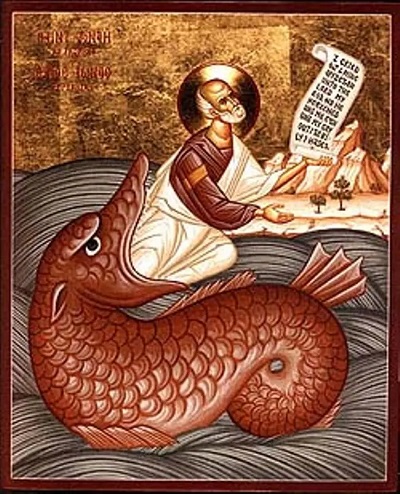
from the womb of my whale, ALS
Our cross is the pulpit of the Word
Today, we too have been baptised
Year C – Christmas Cycle – Feast of the Baptism of the Lord
Luke 3:15-16, 21-22: “You are my Son, the Beloved”
The Feast of the Baptism of the Lord acts as a bridge between the Christmas festivities and Ordinary Time in the liturgical year. On the one hand, it concludes the Christmas season; on the other, it inaugurates Ordinary Time, of which this feast represents the first Sunday.
All the Gospels recount the baptism of Jesus: the first three, called synoptics (Matthew, Mark, and Luke), explicitly, while John mentions it indirectly. This event is described as a true “Trinitarian epiphany”. After centuries without prophets, during which the heavens seemed closed, God finally responds to His people’s plea: “Oh, that you would rend the heavens and come down!” (Isaiah 63:19). At Jesus’ baptism, the heavens open, the Holy Spirit descends upon Him, and the Father makes His voice heard.
This liturgical year, cycle C, the liturgy presents the account of the baptism according to St Luke, which stands out for two particularities. Firstly, the scene of Jesus’ baptism is not directly described but takes place anonymously, with Jesus mingling among the crowd being baptised. Secondly, St Luke highlights that the opening of the heavens, the descent of the Spirit, and the divine voice occur while Jesus is praying, after His baptism.
The profound meaning of the Lord’s baptism
Today, accustomed as we are to hearing it, we may not realise how scandalous it was for the first Christians that Jesus, the one without sin, began His mission by being baptised by John the Baptist in the waters of the Jordan.
Why was Jesus baptised? We can identify three main reasons:
- Jesus is “there” where He perceives God is at work. Hearing the echoes of the Baptist’s voice, He leaves Nazareth and goes to “Bethany across the Jordan, where John was baptising” (John 1:28).
- Jesus comes not as a privileged figure, but in solidarity with His brothers and sisters. Sin is not only an individual matter but also has a collective dimension. Jesus, in His solidarity, takes on this burden of ours.
- Jesus manifests from the very beginning of His mission the choice to be among sinners. He allows Himself to be counted among them, even to the point of dying between two criminals.
Today, on the Feast of the Baptism of the Lord, we also celebrate our baptism. On this day, the heavens are torn open for us, the Spirit comes to dwell in our hearts, and the Father makes His voice heard, saying to each of us: “You are my beloved Son!”; “You are my beloved Daughter!”.
Points for reflection
1. The people’s expectation
The people of God were waiting for the arrival of the Messiah, but their expectation had waned after three centuries without prophets. John the Baptist reignited this expectation, directing it, however, towards “the one who will baptise with the Holy Spirit and fire”.
Today we live in a world that seems to have stopped expecting, disappointed by so many frustrated hopes, unfulfilled promises, and broken dreams. As Christians, we are called to rekindle hope, both ours and that of society, by opening ourselves to the action of God’s Spirit. Christians know that humanity’s deepest aspirations – peace, justice, and a genuine sense of life – find their ultimate answer in God. But this awareness challenges us: are we truly people of hope? What do we concretely place our trust in?
2. The humility of God
St Luke presents Jesus in line with sinners who go down into the waters of the Jordan. “God made Him who knew no sin to be sin for us, so that in Him we might become the righteousness of God” (2 Corinthians 5:21). God does not save us from afar: He draws near, He is Emmanuel. Jesus reveals Himself as deeply in solidarity with His brothers and sisters, to the point of scandalising the self-righteous. He will be called “the friend of sinners”.
The Messiah bears a new title, which particularly honours us: He is the friend of sinners. He is our friend! Never before has a God revealed Himself in this way. A humble God is the greatest scandal for the “religious man”. It is inconceivable to think that He who sits in the heavens on high could descend to dwell among us. Our conversion begins with changing our idea of God. In which God do I believe? This is the question we should often ask ourselves.
3. The prayer of Jesus
In St Luke, the Trinitarian manifestation occurs while Jesus is praying, as it will during the Transfiguration. For the evangelist, prayer is a central and recurring theme in Jesus’ life and ministry. His public life does not begin with a miracle or a speech but with baptism and prayer. Jesus does not pray to “set an example” but out of an intrinsic need as both Son and man.
Baptism constitutes our deepest identity: being children of God. It is not a mere juridical act of belonging, as the baptismal register might suggest, but a living and transformative reality. This reality is beautiful but also fragile and needs the humus of prayer to grow and develop. It is in prayer that the grace of Baptism is revisited and brought to fruition.
A new beginning
Today Jesus begins His ministry, sustained by the Father’s revelation and the sweet presence of the Spirit, like a dove finding its nest in His heart. We too are called to restart, returning to daily life after the Christmas festivities, with a new awareness and renewed trust in the grace of our baptism.
To remember this grace, begin each day by symbolically immersing yourself in the regenerating waters of baptism with the sign of the cross.
Fr. Manuel João Pereira Correia, mccj
