Fr. Manuel João, comboni missionary
Sunday Reflection
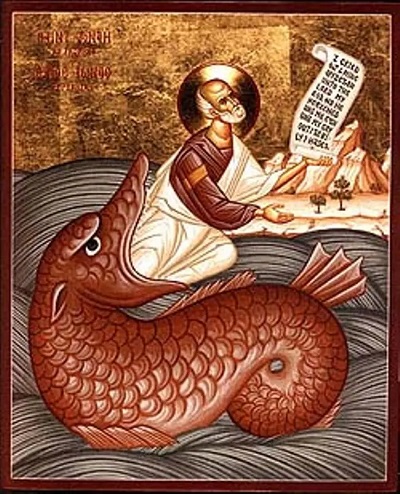
from the womb of my whale, ALS
Our cross is the pulpit of the Word
Advent, the season of joy
Year C – Advent – 3rd Sunday
Luke 3:10-18: “What must we do?”
The third Sunday of Advent is called “Gaudete Sunday,” after the first word that opens the celebration: “Rejoice in the Lord always; again I say, rejoice. The Lord is near!” (Entrance antiphon, cf. Phil 4:4-5). In the penitential atmosphere that characterises the Advent season, this Sunday brings us a special invitation to joy.
The journey of Advent is a guided path. The liturgy offers us three guides: the prophet Isaiah, John the Baptist, and the Virgin Mary. They are three “teachers” who take turns as we approach Christmas. Isaiah is the messianic prophet par excellence because he announces the arrival of the Messiah. He is the one who fuels waiting and hope. John the Baptist, on the other hand, calls us to conversion to prepare for the arrival of the Messiah. Finally, the Virgin Mary teaches us how to welcome him: by conceiving him in our hearts.
The liturgy places the figure of John the Baptist at the centre of the second and third Sundays of Advent, according to the narrative of Saint Luke, the Gospel that will guide us throughout this liturgical year “C.” John echoes the cry of the prophet Isaiah in the desert: “A voice crying in the wilderness: Prepare the way of the Lord!” (Luke 3:1-6, second Sunday). The Gospel passage of this third Sunday presents the reaction of the crowds to his preaching: “What must we do?”
I would like to develop my reflection around two words that encapsulate the message of this Sunday: Joy and Conversion. At first glance, joy and conversion might seem distant, but upon reflection, we discover that they harmonise perfectly. Joy arises from conversion (as shown in the parables of mercy in Luke 15) and, at the same time, conversion springs from joy (as in the story of Zacchaeus, in Luke 19:8).
JOY that gives flavour to life!
This third Sunday – as we mentioned – is characterised by a strong, firm, and decided invitation to rejoice because the Lord is near.
In the first reading, the prophet Zephaniah insists on urging the people of God to rejoice: “Shout for joy, daughter of Zion, sing joyfully, Israel, rejoice and exult with all your heart, daughter of Jerusalem!… Do not fear, Zion, do not let your hands grow weak! The Lord your God is in your midst, a mighty saviour.”
We too are in dire need of encouragement, especially in a context marked by widespread pessimism about the future.
The Responsorial Psalm takes up a text from Isaiah that invites us to express joy through singing: “Sing and rejoice, for great in your midst is the Holy One of Israel.”
In the second reading, Saint Paul strongly reiterates the invitation to joy: “Brothers, rejoice in the Lord always; again I say, rejoice… The Lord is near!”
If we look around, there is little to rejoice about, trapped as we are in an increasingly tangled web of problems and threats to life. What is the Christian’s joy? It is certainly not a carefree or noisy joy. This type of joy is superficial and fleeting, often concealing an inner emptiness and acting as a sedative.
The Christian’s joy, on the other hand, arises from a unique experience: God’s closeness, the feeling of being loved, the knowledge that the Lord is in our midst. “We have come to know and believe in the love that God has for us. God is love” (1 John 4:16).
In conclusion, Advent is a favourable time to rediscover the source of the fresh and abundant water of joy that springs from God’s heart.
CONVERSION that makes joy blossom
But what about John the Baptist? Can we consider him a witness to joy? His austere persona and the severity of his message do not immediately seem associated with the image of a messenger of joy. Yet, John’s figure is far from estranged from joy. On the contrary! He is an evangeliser, that is, a bearer of joyful news. Saint Luke summarises his preaching by stating: “John preached the good news to the people” (Luke 3:18).
John was the first to be “evangelised” by the coming of the Messiah, even in his mother’s womb. Elizabeth, his mother, indeed says during Mary’s visit: “As soon as the sound of your greeting reached my ears, the baby in my womb leaped for joy” (Luke 1:44). John himself would declare that he is the friend of the bridegroom who “rejoices greatly at the bridegroom’s voice,” and concludes: “This joy of mine is now complete” (John 3:29).
John’s austerity and frankness make his message all the more credible. Indeed, the crowds, moved by his teaching, ask him: “What must we do?” Even tax collectors and soldiers approach him to be baptised, asking: “And we, what must we do?”
The prophet’s response surprises us for two reasons. Firstly, John does not propose “religious” requests, such as going to the Temple, praying, or offering sacrifices. Instead, he invites us to practise acts of social justice, sharing, and respect for people. Moreover, it is surprising because he does not ask tax collectors and soldiers to abandon their profession but to carry it out with honesty.
We often interpret conversion in the manner of Paul, like the famous “fall from the horse.” The Lord, however, adjusts to our pace, walks beside us, and, with patience, educates us toward a change in our lifestyle. He does not (usually!) adopt the “all or nothing” strategy. He knows well our fragility and fear of drastic measures. Deep down, we are like little birds shivering on a winter’s day, longing for some comfort and a gentle touch, but too frightened to accept God’s outstretched hand towards us.
“Be careful, Lord, not to ask too much of us, not to demand too much, not to believe too much in us!… Be careful with me, Lord, be calm and gentle, be patient with me and with my heart, still too frightened” (Alessandro Deho’).
Fr. Manuel João Pereira Correia, mccj
