Fr. Manuel João, comboni missionary
Sunday Reflection
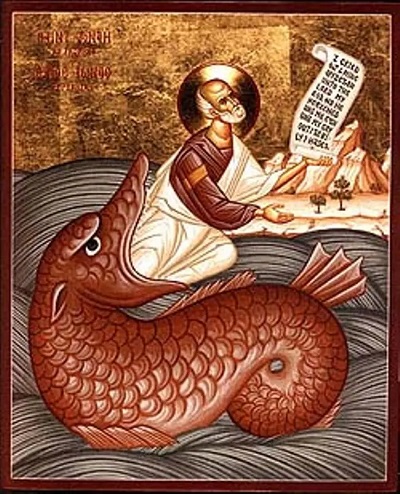
from the womb of my whale, ALS
Our cross is the pulpit of the Word
Year C – Advent – 1st Sunday
Luke 21:25-28,34-36: “Be vigilant at all times, praying”
The miracle of hope
With the first Sunday of Advent, we begin the liturgical year “C,” during which the evangelist Luke will be our guide. Over the course of about twelve months, we will relive the mysteries of the Lord’s life. While the civil year is marked by specific rhythms and events, the Christian year is defined by the mysteries of Christ’s life, which give depth and meaning to history. Whereas the civil year tends to follow a circular pattern characterised by repetition, the Christian year takes on a spiral form: it does not simply repeat but invites us to a progressive deepening. A new year brings the grace of new beginnings and the opportunity to resume life with renewed zeal.
Each liturgical cycle begins with the season of Advent. Advent, from the Latin Adventus, means “coming,” the coming of Christ. But which coming does it refer to? Naturally, we think of Christmas, as we prepare to celebrate the memory of Jesus’s birth. However, the new liturgical year links back to the conclusion of the previous one: the proclamation of the return of the Lord as King of the universe, Judge of humanity, and Omega of history. That is why, in today’s Gospel, we hear the conclusion of Jesus’s eschatological discourse according to the Gospel of Luke: “They will see the Son of Man coming in a cloud with power and great glory.” This same passage was proclaimed in the Gospel of Mark two Sundays ago and is now presented in Luke’s version.
Advent primarily evokes the Christian attitude of looking towards the future. God comes from the future! A future we should not fear but long for, because it does not represent an end, but the end purpose—the fulfilment of our lives and the realisation of divine promises: “When these things begin to happen, stand erect and raise your heads, because your redemption is at hand.” On the first Sunday of Advent, the Church’s final invocation continues to resonate as it awaits its Bridegroom: “Maranatha! Come, Lord” (Revelation 22:20).
Advent is structured around four Sundays leading us to Christmas. It is the second of the so-called “strong seasons,” paralleling Lent, which prepares us for Easter. The four Sundays of Advent symbolically recall the 40 days of Lent. However, there is a significant difference between Advent and Lent: while Lent is marked by a penitential character, Advent is dominated by joyful expectation.
Christians live in the “in-between,” between two comings: Christ’s coming in the flesh and His return in glory. However, in this “in-between,” there is also a third coming, one that manifests in the present. As Saint Bernard said in a famous sermon on Advent: “We know a threefold coming of the Lord. A hidden coming lies between the other two that are manifest. (…) Hidden, however, is the intermediate coming, in which only the elect see Him within themselves, and their souls are saved by it. In the first coming, He came in the weakness of the flesh; in this intermediate coming, He comes in the power of the Spirit; in the final coming, He will come in the majesty of glory. Therefore, this intermediate coming is, so to speak, a path that connects the first to the last.”
Points for Reflection
“Be on guard!”: the trumpet of Advent
“Be on guard that your hearts do not become drowsy from carousing and drunkenness and the anxieties of daily life, and that day catch you by surprise.” How strong and timely this warning from Jesus is! It is like a trumpet trying to awaken our consciences, often dormant, if not entirely numbed. How many of us are truly aware of the situation we live in, deliberately pursued by powers—not so hidden—that manipulate the world’s destiny? They want to keep us asleep, unable to see the direction we are heading and indifferent to rampant injustice. Today, those who are awake and free are often regarded as a “threat.” Well, the Word of God, in this time of Advent, is the trumpet that wants to awaken us before it is too late!
“Be vigilant at all times, praying!”: the alarm clock of Advent
Staying awake is not easy. It is easy to succumb to sleep or slide into lethargy. To remain vigilant, Jesus recommends praying at all times. Prayer awakens us and sharpens our senses, making us ready to perceive the Lord’s coming, who visits us in ever-new and often unexpected ways. Advent invites us to reset the “alarm clock” of prayer. This does not necessarily mean increasing the time spent in prayer but rather learning to “live in prayer.” How can this be done? A very simple way is to frequently repeat the invocation “Maranatha”—Come, Lord!—until these words echo constantly within the walls of our hearts.
Advent and the miracle of hope
Advent prayer especially nourishes hope. To hope, in the situation we find ourselves in today, is a true miracle. Only prayer can obtain this grace. Indeed, how can we hope in the face of a world that often appears like the valley full of dry bones described by Ezekiel? (Ezekiel 37). What was an image of God’s people in the past could well be our reality today. “They say: ‘Our bones are dried up, our hope has vanished, we are lost.’” God asks the prophet, “Can these bones come to life?” Yes, they can. “Prophesy over these bones and say to them: ‘Dry bones, hear the word of the Lord.’”
The prophet is Christ who comes, but every Christian is also a prophet by vocation. This is the grace to ask for in Advent: to awaken and spread hope.
Fr. Manuel João Pereira Correia, mccj
