Fr. Manuel João, comboni missionary
Sunday Reflection
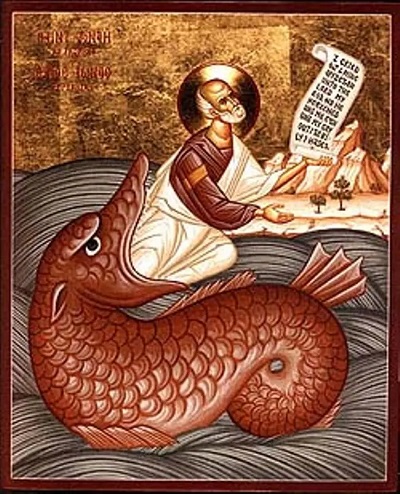
from the womb of my whale, ALS
Our cross is the pulpit of the Word
34th Sunday in Ordinary Time (B)
Jesus Christ, King of the Universe
John 18:33-37: “I am a king!”
The Great Mockery of God
Today, the last Sunday of the liturgical year, we celebrate the Solemnity of Our Lord Jesus Christ, King of the Universe. This feast was introduced by Pope Pius XI in 1925, during a historical period marked by the difficulties and turbulence of the post-war era. Pope Pius XI was convinced that only the proclamation of Christ’s kingship over all peoples and nations could ensure peace. With the liturgical reform following the Second Vatican Council, the feast was placed at the end of the liturgical year as its natural conclusion.
The Gospel text is taken from St. John’s account of Jesus’ interrogation before Pilate, the Roman procurator. The narrative revolves around the theme of Jesus’ kingship. At the heart of the story is the parody of Christ’s royal coronation, with the crown of thorns and the purple robe, staged by the soldiers. The term “king/kingdom/kingship” (in Greek basileús/basileía) appears fourteen times throughout the account, with an additional mention of Caesar. This kingship is claimed by Jesus, used sarcastically by Pilate and the Roman soldiers, and rejected by the Jews.
This Johannine literary finess presents the episode as a true “epiphany,” a revelation of Christ’s kingship. Furthermore, it highlights the sense of freedom Jesus conveys throughout the narrative, in contrast to Pilate’s uncertainty and fear. In the end, the judged reveals himself as the true Judge (Jn 19:8-11).
In this way, the Psalms are fulfilled: “All who see me mock me” (Ps 22:8); “But you, Lord, laugh at them; you scoff at all nations” (Ps 59:9); “The One enthroned in heaven laughs; the Lord scoffs at them […]: ‘I have installed my king on Zion, my holy mountain'” (Ps 2:4-6). Our (not-so-secret) desire to “sit on a throne” (of any kind) appears, in God’s eyes, as a sad farce. St. Paul, reflecting on God’s actions in Jesus’ life, concludes: “What is foolish in the eyes of the world, God chose to shame the wise; what is weak in the world, God chose to shame the strong” (1 Cor 1:27).
The resurrection of the Crucified King reveals what was hidden from our eyes: the Lord reigns from the throne of the cross. “Therefore, God exalted him to the highest place and gave him the name that is above every name, that at the name of Jesus every knee should bow, in heaven and on earth and under the earth” (Phil 2:9-10). From the third day, the “revenge” of all the oppressed and defeated of history began.
Points for Reflection
The readings proposed by the liturgy help us to delve deeper into some aspects of Christ’s kingship as proclaimed in the Gospel.
1. First Reading (Daniel 7:13-14): “I saw one like a Son of Man coming with the clouds of heaven.” Kingship and HUMANITY.
To this Son of Man “dominion, glory, and kingship were given.” His kingship is universal, stable, and eternal. This mysterious figure appears after Daniel sees four great, terrifying beasts coming out of the sea, symbol of powers hostile to God. These four mythical beasts represent the previous empires: oppressive, bloodthirsty, and arrogant.
This “vision” of the prophet illuminates Pilate’s gesture of presenting Jesus to the crowd, saying, “Here is the man!” (19:5). Only humble power, expressed in service, makes us truly human. Any other kind of power is… beastly!
We all wield some power over others: through our social, work, community, or ecclesial roles. But how do we exercise it? All power can be exercised in God’s name if lived in the style of Jesus: “I am among you as one who serves.” This is the kingship of Christians, received in baptism: a kingship that liberates and humanizes. Otherwise, it becomes power inspired by the Beast, which enslaves!
2. Responsorial Psalm (Psalm 92): “The Lord reigns, he is robed in splendor.” Kingship and HUMILITY.
The Psalmist celebrates God’s kingship. Wherever God reigns, his majesty shines, his strength is manifest, and a new order is established, where justice permanently dwells. His kingship is humble. God does not need to flaunt or impose his power. He is “The One Who Is.” His kingship is revealed precisely in humility. This is why the Magnificat of the Virgin Mary is the most beautiful hymn of praise to God’s kingship!
3. Second Reading (Revelation 1:5-8): “Jesus Christ is the faithful witness, the firstborn from the dead, and the ruler of the kings of the earth.” Kingship and TRUTH.
Jesus is the Witness. The Gospel makes it explicit: “For this I was born and for this I came into the world: to bear witness to the truth.” Unfortunately, the liturgy omitted Pilate’s reaction to Jesus’ statement: “What is truth?” This question, often rhetorical and tinged with sarcasm, becomes a shortcut we also use to avoid confronting an uncomfortable truth. We prefer to relativize everything to justify convenient truths.
What is truth? What would Jesus have answered to Pilate? “I am the Way, the Truth, and the Life!” (John 14:6). What is truth? “The transparency of love!” answers Maurice Zundel, Swiss theologian and mystic (1897-1975).
How can we live and honor Christ’s kingship? By becoming transparency of God’s love in the world around us.
Fr. Manuel João Pereira Correia, MCCJ
