My generation retains the memory of an annual preaching on the ultimate and definitive realities, known as the “novissimi.” Death, judgement, and therefore the definitive outcome, hell or heaven, stood before each of us as events capable of evoking fear, or at least awe. Especially the singing of the *Dies irae* (“Day of wrath, that day…”), which resonated during the liturgies for the dead, described the universal and personal judgement to which we would be summoned. What was the day of death if not first and foremost the day when each of us was called to stand in judgement before God? And it must be said that it was especially the holiest people who feared this judgement; how much more, then, should ordinary Christians dread it… Yes, even due to this often-taught anguished fear, the discourse on judgement has been discredited.
Thus, for years, silence has reigned on this topic, leading many to turn to other interpretations of ultimate realities: the widespread belief in reincarnation, to give just one example, seeks to fill the void left by ecclesial preaching. Yet the theme of judgement in Christianity cannot be evaded; it is crucial to understanding the true face of God. The preaching of judgement is part of the Gospel, the good news, and as good news – certainly costly, just like grace – judgement must be confessed, remembered, and prepared for by every believer. However, there is a strangeness, a contradiction in many Christians: on the one hand, they interpret tragic events as God’s punishing judgement, while on the other hand, they give no weight to the words they proclaim every Sunday at Mass: “The Lord Jesus Christ will come again, in glory, to judge the living and the dead.” In truth, God does not punish us while we are alive: in that case, we would indeed be “forced” to act according to his will, without the freedom that belongs to our human dignity. God does not punish us here on earth, but it remains true that we already reap here and now the fruits of our actions. God places before us the way of good and the way of evil (cf. Dt 30:15; Jer 21:8), and if we walk the way of evil, we encounter evil and death.
This is true, but God reserves the right to intervene on the day of judgement, and for now, he remains patient, awaiting our conversion (2 Pt 3:9, 15). At the end of history, there will come the “day of the Lord”: the Lord himself will come and must judge, discern what we have done, whether by obeying his Word or by opposing it to the point of rejecting it.
In the prophets, the anticipation of judgement goes hand in hand with the expectation, just mentioned, of the “day of the Lord” (*yom YHWH*), two realities intertwined with one another. For Amos (mid-eighth century BC), who is the first to attest to the expression “day of the Lord” in this sense, judgement takes on the meaning of punishment for an unfaithful and idolatrous Israel. For this reason, he strongly declares: “Woe to you who long for the day of the Lord! Why do you long for the day of the Lord? It will be darkness, not light!” (Amos 5:18). From a vision concerning the people of God, the expectation of this day then takes on more universal features. The prophet Isaiah, for example, a few decades later, writes: “The Lord will judge between the nations and arbitrate for many peoples… There will be a day of the Lord Almighty against all who are proud and lofty… The pride of men will be brought low, human arrogance will be humbled; the Lord alone will be exalted on that day” (Isaiah 2:4, 12, 17-18).
A clearer understanding begins to emerge of one dimension of judgement, which will be greatly developed in prophetic and wisdom literature: the day of judgement is awaited as the restoration of justice, accomplished by the Lord in favour of those who have been victims in history, the “voiceless,” deprived of the possibility of a life worthy of the name. It is striking to note the abundance of statements and invocations on this subject found in the Psalms: “The Lord will judge the world in righteousness, and the peoples with equity” (Psalm 9:8-9); “Judgement comes from God, who brings one down, he exalts another” (Psalm 75:7); “God arises to judge, to save all the afflicted of the earth” (Psalm 76:9); “Rise up, O God, judge the earth, for all the nations are your inheritance!” (Psalm 82:8)… Yes, judgement is absolutely necessary for history to have meaning, and for our actions to find their objective truth before God, who desires the restoration of justice. What sense would the life of each of us, of history, have if everyone – the slave who died oppressed and without dignity, as well as the wealthy oppressor who persecuted the poor – shared the same fate, the same reward?
What would be the meaning of God’s presence if each of us, regardless of the life-denying choices made, were to find the same outcome as others who spent their lives doing good? If God exists, there must be a judge who wills the ultimate restoration of justice, the victory of good over evil, of life over death. Even an atheist philosopher like Adorno understood this when he said that true justice would require a world “in which not only present suffering would be annulled, but also what is irretrievably past would be revoked,” glimpsing as the definitive fulfilment of justice and liberation for all an unheard-of event that could only be the resurrection of the dead. Closely linked to this vision of judgement is the doctrine of personal retribution, taught by the prophets (see Ezekiel 18:1-32; 33:10-20), and summarised in a psalm: “You, Lord, reward everyone according to what they have done” (Psalm 62:12). These words resonate widely in the New Testament (cf. Romans 2:6; Revelation 2:23; 22:12), and are echoed by Jesus himself: “For the Son of Man is going to come in his Father’s glory with his angels, and then he will reward each person according to what they have done” (Matthew 16:27).
Throughout his life, however, Jesus refuses to carry out judgement, countering the impatience of those who claim to be righteous and thus want to root out the weeds in history, at the risk of uprooting the wheat as well: “Let both grow together until the harvest. At that time, I will tell the harvesters: First collect the weeds and tie them in bundles to be burned; then gather the wheat and bring it into my barn” (Matthew 13:30). Conversely, Jesus announces with apocalyptic imagery the coming of the day of judgement, especially in his eschatological discourse (cf. Mark 13 and parallels). As a Jewish believer, he confesses that this world and creation are moving towards an end, towards the “day of the Lord” (which, in the New Testament, becomes “the day of our Lord Jesus Christ”: 1 Corinthians 1:8), a day of salvation and judgement. This occurs according to the precise plan of the God who is Lord of history and time, who desires to establish his kingdom of justice and peace, inaugurating the new heavens and the new earth he has prepared (cf. Isaiah 65:17; 2 Peter 3:13; Revelation 21:1). All this will coincide with the glorious coming of the Son of Man: “Then they will see the Son of Man coming in clouds with great power and glory” (Mark 13:26; cf. Daniel 7:13-14).
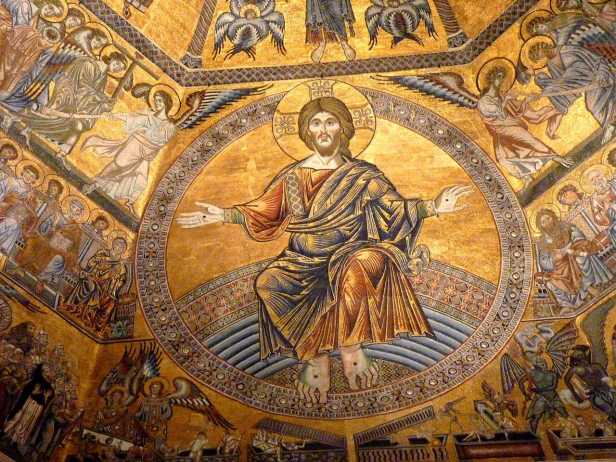
At the same time, Jesus acknowledges his ignorance of the precise hour of the day of judgement: “But about that day or hour no one knows, not even the angels in heaven, nor the Son, but only the Father” (Mark 13:32). While Jesus does not know the hour, he does announce the criterion for judgement: concrete, fraternal love. He reveals this in an extraordinary passage, the final judgement according to Matthew (Matthew 25:31-46). “When the Son of Man,” that is, Jesus himself, the Son of God, “comes in his glory, all the nations will be gathered before him.” Using an image drawn from the prophet Ezekiel, Jesus declares that the Son of Man “will separate the people one from another as a shepherd separates the sheep from the goats. He will put the sheep on his right and the goats on his left.” The judgement, both universal and personal, does not occur at the end of a trial: only the sentence is presented, because our life, here and now, is the site of a very particular process. To awaken this awareness in us, Jesus describes the symmetrical and dual dialogue between the King/Son of Man and those who are respectively at his right and his left.
To the first group, called “blessed by my Father,” he gives the inheritance of the kingdom, saying: “For I was hungry, and you gave me something to eat; I was thirsty, and you gave me something to drink; I was a stranger, and you invited me in; I needed clothes, and you clothed me; I was ill, and you looked after me; I was in prison, and you came to visit me.” Yes, the poor who lack what is necessary for a dignified life are a “sacrament” of Jesus Christ, for with them, the Son of God has chosen to identify: whoever serves the needy serves Christ, whether they are aware of it or not. More than that, for us Christians, the poor are also a “sacrament of the world’s sin” (Giovanni Moioli), of the injustice that reigns on earth, and our attitude towards them measures our ability to live in the world as the body of Christ. Indeed, when we see a person oppressed by poverty, we should interpret this situation as the fruit of injustice, for which we too bear responsibility.
This awareness should lead us to become neighbours to those who suffer, to struggle against the need that oppresses them; and when we have worked to eliminate their need—or even as we work—the poor become for us a sacrament of Christ, even if we will only discover this at the end of time… On the last day, all of us, Christians and non-Christians alike, will be judged solely on love, and we will only be asked to account for the service we have provided to our brothers and sisters, for our love, especially towards the most needy, the least, the victims of life. Thus, the judgement will reveal the profound truth of our daily lives, whether or not we have lived in love in the present: the judgement is decided here and now! The day of judgement, says the Apostle John, is “the day in which we have confidence” (cf. 1 John 2:28; 4:17), because “God is greater than our hearts, even when our hearts condemn us” (1 John 3:20).
