Enzo Bianchi – The Last Things (1) DEATH
Dying, the ultimate obedience that makes us more human
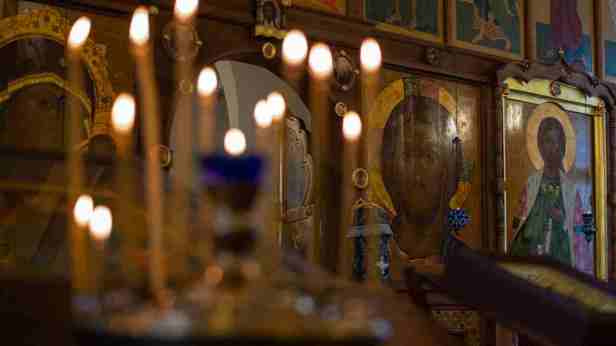
Death, judgement, hell, heaven: such was the answer in the Catechism to the question about the “last things” – those ultimate realities awaiting every person. In these days of remembering the dead, we would like to try to understand death as both a human and Christian event, knowing that we now live in a cultural atmosphere that wishes to ignore death. This observation is almost commonplace: death is repressed, it has become the only truly “obscene” reality, meaning it is not to be seen, contemplated, or considered. Today, we want to avoid witnessing death, which nonetheless continues to be present in our family and relational lives; above all, we wish to avoid thinking about our own death, which is the only certain event that lies ahead.
A suggestion from André Comte-Sponville to his reader in a book meant to impart “wisdom” to all is noteworthy: “Reader, courage! You have all the time in the world for death. First, dedicate yourself to living!” It is no coincidence that the vocabulary of death is seldom used. There is a sort of reticence to say “dead” or “death”; instead, we prefer to say: “He’s gone. He’s passed over. He’s no longer with us”… This happens even in funerals, which are still called Christian, but often, especially when it concerns someone important or a public tragedy, they become “events” with a tinge of spectacle. In these, instead of embracing the mystery of death, we speak of the deceased, we address them as if they were still alive, almost trying to resuscitate the corpse, sometimes playing their words or – if they were a singer – a song they performed. Thus, death is erased from our lives and from the perspective that is essential in the search for meaning and direction in life.
What appears absurd is that alongside this removal of death, we find its sensationalisation in the media. In these, death seems to reign, in a flow of images that display it, exhibit it, dwell on it to deliver an impactful “news story” about catastrophes, wars, torture, murders… We don’t want to see death, and yet we slow down in the car to look at the aftermath of an accident and see the victims. By becoming accustomed to staged images of death, we think we can distance ourselves from the possibility of our own death. In short, even for the Christian, there is a temptation to silence the last things, to forget them, and among them particularly, death.
Nevertheless, death continues to have the final word over us, at least in the visible reality, it remains a goal, an endpoint that awaits us: it is the only direction (sense) in life that we cannot change, because life always moves towards death. In this view, Martin Heidegger went so far as to say that man “lives for death.”
My generation still received from the great Christian tradition the spiritual advice to practise dying, to prepare for the final event, to live death. Death was a subject of meditation, not morbid or painful, but something to be considered as the “hour” that awaits us, the hour of God’s judgement on each of us, the encounter with the face of God we have long sought. In memoria mortis, there was a sadness, the sadness of having to die; there was the fear of God (different from terror!), for His judgement, which is mercy but also justice; there was the consolation for the definitive encounter with the Lord, eternal life.
In the memory of death, it was above all necessary to practise thinking that one’s own death must be “an act”. This was difficult for me to understand as a child, but with maturity, I later grasped it. For a Christian, death cannot be a passive event: one cannot simply let oneself die, but it is absolutely necessary to make an act out of that final event to which no one can escape. Certainly, in faith, and perhaps even with doubts and in anguish, but one must be able to say to the Lord: “Father, the life you gave me, for which I thank you, I now return to you punctually, I offer it to you as a living sacrifice (cf. Rom 12:1), hoping only in your mercy.”
In this way, death becomes an act, and one dies in obedience, perhaps embracing the words of those who accompany the dying, who – if wise – know how to say at the right moment: “Depart, go to the Father, in the name of the Father who created you, in the name of the Son who redeemed you, in the name of the Holy Spirit who sanctified you.”
Perhaps this making of death an act is what forgives us our sins, as Mark the monk (late 5th – early 6th century) boldly claimed. Perhaps it is the ultimate opportunity for the “obedience of faith” (Rom 1:5; 16:26) for the Christian, who thereby confesses faith in the infinite mercy of God.
In order to enable this to happen, it would be necessary that those who are unwell be informed, if they wish, of their situation as a man or woman on the threshold of death, at the end of life. It is a delicate process, not always to be done, not for every case and every person, but only when there is a certain maturity of faith, when the dying believer wishes to be aware of the approaching encounter with the Lord. Death, therefore, becomes “action,” a punctual act, a true act of “adoration” to the Creator, of recognising oneself as a creature loved by God and returning to God who is love forever (cf. 1 Jn 4:8,16; 1 Cor 13:8).
In this faith, one confesses not to be the owner of one’s own life, not to decide its end, but to accept it, returning one’s breath, one’s spirit to God (cf. Ps 31:6; Lk 23:46). It must be remembered that Christians are not asked to suffer, nor to accept physical suffering as if it were willed by God. God does not ask us even to atone for our sins through physical torment, for only He knows how to restore the justice that we have offended and violated by our sins. That is His task, not ours: let Him be the Lord in our life and in our death.
For this reason, physical sufferings must be avoided as much as possible for the dying patient so that they may face the hour of death by simply responding to what makes them fully human and fulfils God’s will: to live illness and death while continuing to love those who remain and to accept being loved in turn. Nothing more.
This is the last and ultimate commandment: to love to the end, to the utmost (cf. Jn 13:1), as much as is possible for a human being. Life is a gift from God, indeed it is God’s gift par excellence, and this gift must be acknowledged and returned to Him who is our Father. Yes, today, in the event of death – we must say it – Christians’ faithfulness to their Lord is at stake: Christians know, because in baptism they were immersed in the Lord’s death, they are “co-dead with Christ,” that with Christ they will rise again (cf. Rom 6:4-5,8; Col 2:12), and that this télos lies before them as a promise for those who persevere, even if they fall into sin, in following the Lord.
For this very reason, they will not judge others who do not have the light of faith, although, for the path of humanisation that pertains to all, they will show and say that death can be an act, the peak act of the humanisation experienced throughout life. Plato already spoke of the need for meléte thanátou (Phaedo 81a), the “practising of death,” and the entire Christian tradition has reflected and indicated in what this can consist.
Death cannot be deprived of the act of dying, and each of us must have the courage to say to oneself: “I will die.” Upon reaching old age, one must think more about death, an event that may be the last great act of our life. None of us can foresee our own death, whether it will be sudden or after a long illness, whether in the peace and gentleness of those who die without great physical suffering or in the torment of those who suffer pains barely eased by medicine. None of us can know, despite any declarations on the subject, whether we will die in doubt or in faith. It is no coincidence that in the simplest and best-known prayer among Catholics, the Hail Mary, we ask (and do so repeatedly in the rosary): “Pray for us sinners, now and at the hour of our death.” To imagine someone interceding for us in death like a mother, interceding before the Christ whom we meet, is a good exercise to feel death as sister and to praise God “for our sister bodily death.”
