Fr. Manuel João, comboni missionary
Sunday Reflection
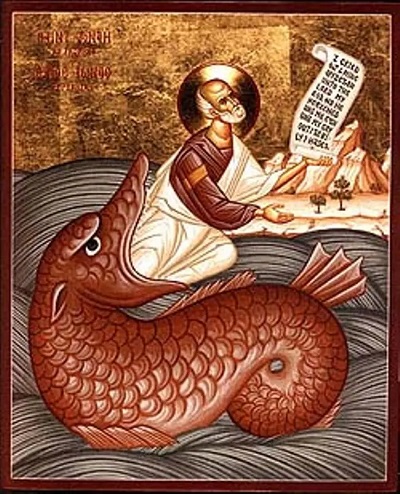
from the womb of my whale, ALS
Our cross is the pulpit of the Word
32nd Sunday in Ordinary Time (B)
Mark 12:38-44: The poor widow has given all she had
A widow in the spotlight
This Sunday’s Gospel is set in the same context as last Sunday. We are in Jerusalem, in the Temple, where Jesus is teaching a “large crowd who listened to him gladly” (Mk 12:37), arousing the anger of the religious authorities who had already decided to kill him. It is still the third day since his arrival in Jerusalem, one of the longest, and most intense days of Jesus’s ministry, according to Mark’s Gospel. This is the last time Jesus visits the Temple and addresses the crowd; three days later, he will be killed.
The context of this teaching is therefore very particular and gives exceptional weight to Jesus’s words. What he says and does in this moment has the air of a spiritual testament.
The passage is divided into two parts. In the first, Jesus addresses the crowd, warning them against the behaviour of the scribes (verses 38-40). In the second, he addresses his disciples to draw their attention to a poor widow who donates all she possesses to the Temple treasury (verses 41-44).
“Beware of…”
“Beware of the scribes!” The scribes were the experts in the Torah, the teachers of the Law, theologians, and jurists of the time. But what does Jesus reproach them for? “They like to walk around in long robes, receive greetings in the marketplaces, have the best seats in the synagogues, and places of honour at banquets.” This is a very strong criticism aimed at a category of people generally respected.
Jesus denounces those who live only by appearances: outwardly, they seem perfect, but inwardly, they may be false. If this attitude is to be condemned in society, it is even more so in the Church. Rather than serving God, these people use God for themselves: “they pray at length to be seen”; and instead of serving their neighbour, they exploit them, even “devouring the houses of widows.” This is the exact opposite of what Jesus taught us last Sunday: to love God and love one’s neighbour.
Let us not, however, think of the scribes of the past, but of those of today. Let us not look to external scribes but to those within us. For what the scribes loved, we too often love: to appear, to present a good image of ourselves, to occupy the first places, to be respected and honoured, to be in some way in the spotlight. There are many of these scribes, teachers or models, both in society, promoted by the media, and in the Church. The path of appearance is slippery and can easily lead from pretense to falsehood, and from falsehood to corruption. “Sinners, yes; corrupt, never,” as Pope Francis would say.
“Look towards…”
In the second part of the text, the scene changes. “[Jesus], seated opposite the treasury, watched how the crowd threw in coins. Many rich people threw in large amounts.” The verb “throw” appears seven times in the text, emphasising the repetitive and abundant act of giving. In the Temple, there were thirteen boxes designated for collecting offerings, each for a specific purpose, except the last one, the thirteenth.
In front of each box, an attendant would verify and announce aloud the amount donated. With the approach of Passover, the number of pilgrims increased, and a river of gold and silver coins, clinking, flowed into the coffers of the Temple, the largest bank in the Middle East!
“But a poor widow came and threw in two small coins, worth a penny.” The widow was among the categories of vulnerable people to be protected according to the Scriptures: the orphan, the widow, and the foreigner. This woman, poor and widowed, throws everything she possesses into the thirteenth box: two small coins. It is almost nothing, but it is everything to her. It was little, but it represented all she had to live on.
“So, calling his disciples to himself, he said to them: ‘Truly, I tell you, this poor widow has put more into the treasury than all the others.’” The Master “calls his disciples to him” for the last time and places this widow in the spotlight for his final teaching: – Look at her! Here is what I meant when I said, “You shall love the Lord your God with all your heart, with all your soul, with all your mind, and with all your strength.”
Another widow, the protagonist of the first reading, is the poor widow of Zarephath, a pagan woman who offers to the foreigner, the prophet Elijah, the last handful of flour she had kept for herself and her son before dying. Here is what it means to “Love your neighbour as yourself.”
Points for reflection
– The widow of the Gospel prophetically anticipates what Jesus will do three days later, giving his life to the Father for us. He, who was rich, became poor to enrich us (2 Corinthians 8:9) and emptied himself to die as a slave on the cross (Philippians 2:7-8).
– The generosity of this widow also represents that of the Virgin Mary who, at the foot of the cross, offers her only son. Moreover, it announces the present condition of the Church, from whom the Bridegroom has been taken away (Mark 2:18-19).
– Finally, the poor widow reminds us of our radical poverty. Widow/er, etymologically, means to be deprived, lacking, destitute. In this sense, we all live in a state of “widowhood.” Beyond the satisfaction of daily needs, we often experience the absence of something essential to fully accomplish our existence. It is important to become aware of this profound absence. Saint Augustine expresses this with his famous prayer: “You have made us for yourself, Lord, and our hearts are restless until they rest in you.” Paradoxically, to fill this emptiness, Jesus and his Gospel invite us to give our lives as a gift: “Whoever loses his life for my sake and for the Gospel’s will save it” (Mark 8:35).
Fr. Manuel João Pereira Correia, mccj
