Fr. Manuel João, comboni missionary
Sunday Reflection
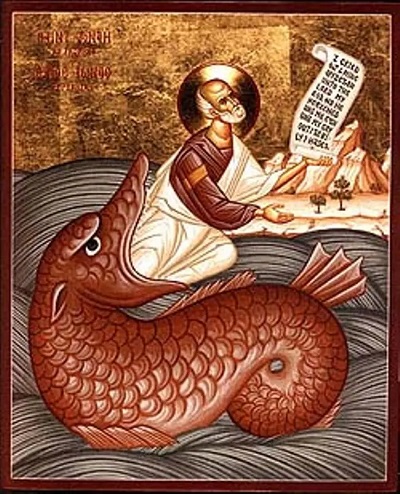
from the womb of my whale, ALS
Our cross is the pulpit of the Word
XXIX Sunday in Ordinary Time (B)
Mark 10:35-45: “But it shall not be so among you!”
Descending and immersing: the Christian vocation
The Gospel of this 29th Sunday invites us to reflect on another fundamental aspect of our personal and social life. After addressing the themes of marriage and wealth, today it is about power. These three subjects — affections, goods, and relationships — form a triad that, in a certain sense, embraces our entire existence.
The three issues are dealt with in the central part of the Gospel of Mark (chapters 8-10). These are three catecheses of Jesus, directed primarily at the Twelve, regarding the specificity of the disciple’s conduct.
The context of these teachings is particularly significant: three times, Jesus announces his passion, death, and resurrection. However, each time, the disciples react with misunderstanding, adopting attitudes that deeply contrast with the message Jesus seeks to convey. The episode of the request of James and John, narrated in today’s Gospel — to sit one at Jesus’ right and one at his left — is emblematic in this sense. Perhaps out of respect for these two “pillars” of the Church, Luke omits the story, while Matthew attributes this request to their mother (20:20-24).
The moment when this episode takes place is quite particular. The group was going up to Jerusalem. “Jesus walked ahead of them, and they were amazed; those who followed were afraid.” And, once again, for the third time, Jesus announces with more detail what is about to happen to him in Jerusalem. He uses seven verbs, heavy as boulders: he will be handed over (to Jewish authorities), condemned, handed over (to the pagans), mocked, spat upon, scourged, killed… But after three days, he will rise again (Mark 10:32-34).
In this dramatic context, James and John, the sons of Zebedee, whom Jesus calls “Boanerges” (sons of thunder), come forward to make a request: “Teacher, we want you to do for us whatever we ask of you.” They do not ask for a favor but make a demand: “Grant us to sit, one at your right hand and one at your left, in your glory.” A bold request made in front of the whole group, revealing their expectations of an earthly messianism. While walking, they are already thinking about sitting. While Jesus speaks of suffering and death, they are thinking of glory. We can imagine their motivations: they were among the first to be called, part of the privileged group (Peter, James, and John), and perhaps they were even cousins of Jesus, sons of Salome, probably the sister of Mary. Jesus answers them with sadness: “You do not know what you are asking!”
Then Jesus continues with a touch of irony: “Can you drink the cup that I drink, or be baptized with the baptism that I am baptized with?” In other words, are you ready to share in my fate of suffering? They reply confidently, “We can.” In part, their request will be fulfilled. James will be the first apostle to be martyred in the year 44, and according to some traditions, John will also die a martyr. But as for sitting at the right and left of his “throne of glory” (which will be the cross!), that place was already reserved for others: the two criminals who would be crucified with Jesus.
The other disciples, hearing all this, become indignant. It is understandable, as some time before, they had argued about who was the greatest among them! At that point, Jesus calls them together and patiently gives a catechesis on power: “Whoever wants to become great among you must be your servant (diakonos), and whoever wants to be first must be the slave (doulos) of all. For the Son of Man came not to be served, but to serve and to give his life as a ransom for many.” Jesus, the ‘Son of Man,’ reveals an unprecedented and astonishing face and name of God: the Servant! The one who will strip himself and kneel before each of us to wash our feet.
Reflections
We are all children of Zebedee!
There is a desire to excel in each of us. Thirst for power, ambition in society, careerism in the Church: who can say they are immune? But the Lord does not ask us to occupy the very last place — He reserved that for Himself — but to take on a role of service, in the family, at work, or in the Church, with humility and generosity, without expectations. In this service, we will find Jesus as a companion, and this will truly make us “reign” with Him. Sometimes, this choice will lead us to be “crucified” as well, but in those moments, we will begin to know “the breadth, the length, the height, and the depth… of the love of Christ” (Ephesians 3:18-19).
Descending and immersing.
Every word of Jesus places us before a choice. As Pope Francis said: “We are faced with two opposing logics: the disciples want to emerge, Jesus wants to immerse himself.” To the worldly logic, “Jesus contrasts his own: instead of elevating oneself above others, coming down from the pedestal to serve them; instead of emerging above others, immersing oneself in the life of others.” (Angelus, 17.10.2021). With baptism, we chose this logic of service. We are called to come down from a position of comfortable disengagement and immerse ourselves in the life of the world, in situations of injustice, suffering, and poverty. If society is moving away from God, our mission is to go out and reach the “crossroads of the streets” to bring the King’s invitation to all, as the Pope reminds us in his message for World Mission Day, which we celebrate today.
P. Manuel João Pereira Correia, mccj
