Fr. Manuel João, comboni missionary
Sunday Reflection
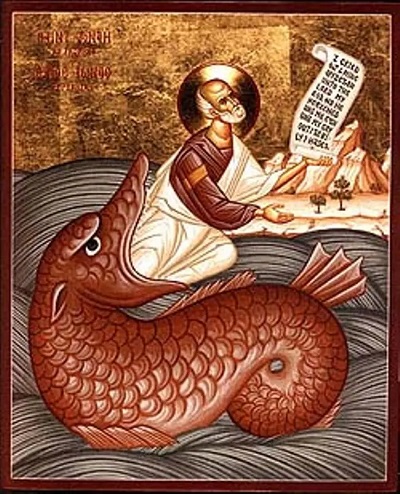
from the womb of my whale, ALS
Our cross is the pulpit of the Word
27th Sunday in Ordinary Time (B)
Mark 10:2-16 (10:2-12): “What God has joined together, let no man separate”
CHRISTIAN MARRIAGE: A COUNTERCULTURE?
The main theme that emerges from the readings of this 27th Sunday is marriage. The Pharisees, trying to test Jesus, ask Him, “Is it lawful for a man to divorce his wife?” Divorce was a common practice in the Middle East and throughout the Mediterranean. Even the Law of Moses (Torah) allowed it at the husband’s initiative, “if she finds no favor in his eyes” (Deuteronomy 24:1-4). The Mosaic law nevertheless aimed to protect the woman to some extent, obligating the man to write a certificate of divorce, thereby allowing the woman to remarry.
As for the grounds for divorce, there were two rabbinic schools at the time with very different opinions. The school of Hillel interpreted the law in a lenient manner, allowing a man to divorce his wife for any reason. The school of Shammai, stricter in approach, permitted it only in the case of adultery. Jesus does not side with either rabbinic debate. He believes Moses made this concession due to the hardness of the human heart. However, God’s original plan for the couple was different. God created them male and female, and the two become one flesh. Jesus concludes by saying: “So they are no longer two, but one flesh. Therefore, what God has joined together, let no one separate!”
At home, the disciples ask Jesus about this again. Jesus reaffirms the indissolubility of marriage, equating the responsibilities of both man and woman. In Matthew’s parallel account, the apostles react with astonishment to this statement of Jesus, saying: “If this is the situation between a husband and wife, it is better not to marry” (Matthew 19:10). Marital life has never been easy!
Points for Reflection
1. An Epochal Change
Over recent decades, we have witnessed a profound shift in the perception of sexuality, gender identity, and sexual orientation, challenging the social institution of the family. In this context, discussing marriage and the union between couples becomes quite challenging, balanced between two extreme positions: the traditional stance anchored in patriarchal culture and gender ideology. Between these two positions lies a broad field of debate, which for a Christian should not be one of criticism or judgment, but of respect and mercy.
The Christian vision of the natural couple is rooted in the biblical fact that humanity was created in God’s image, as stated in Genesis 1:27: “God created mankind in his own image, in the image of God he created them; male and female he created them.” Thus, it is the “primordial sacrament of creation” (John Paul II). The sacrament of marriage specifically refers to Jesus’ call back to God’s original plan: the indissoluble union of man and woman. This view is further enriched by Paul’s text in Ephesians 5, which develops the Old Testament concept of the spousal covenant between God and his people, presenting the Christian couple as a “sacrament” of the union between Christ and His bride, the Church. Unfortunately, the cultural element of the text is often highlighted (“wives, submit yourselves to your husbands in everything!”), overshadowing the perennial biblical element: “This is a profound mystery—but I am talking about Christ and the church!” (Ephesians 5:32).
Christian marriage is a true vocation, a memorial of the spousal union between Christ and his Church, much like consecrated life with the vow of virginity represents our eschatological state. The current crisis of “church weddings” can become an occasion of grace to bring the sacrament back to its essence. Naturally, this situation will require the Church to be increasingly creative in finding pastoral ways to welcome other forms of union, in the spirit of mercy, considering that our humanity is fragile and wounded.
2. Christian Marriage as Counterculture
Christian marriage will increasingly become a counterculture, contrasting with the prevailing mentality. This, too, can be a service to society, counteracting the subjective trend of “do-it-yourself” sexuality and “disposable” relationships.
A Christian “does not act on his own accord”! They do not give up on having the ideal Gospel horizon as the goal of their life. They do not lower the bar to avoid the effort. They do not conform to a lifestyle set at the “lowest common denominator.” And all this, despite being aware of their own weakness, which becomes like a thorn in the flesh but leads them to rely solely on God’s grace.
A Christian does not “use and throw away” in personal relationships and, even more so, in marriage. Therefore, they become experts in “repairs.” They do not discard but repair! Another name for a Christian could be “repairer of broken walls” (Isaiah 58:12). Only then will the disciple of Christ be the salt of the earth and the light of the world.
3. How to Aim for Such a High Ideal of Love, Without Compromise?
Perhaps even in this case, Jesus answers us: “This is impossible for humans, but not for God; all things are possible with God” (Mark 10:27). The vocation to marriage is indeed a challenge that tests a Christian’s faith. For this reason, Christian marriage can only be lived with… a third: placing Christ at the center! Here, too, the Lord’s words are fulfilled, in a particularly special way: “For where two or three gather in my name, there am I with them” (Matthew 18:20).
Fr. Manuel João Pereira Correia, mccj
