Fr. Rafael Gemelli Vigolo, mccj
Macau, 2024
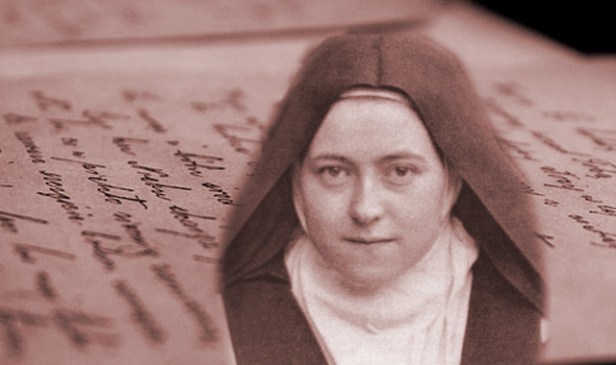
In 1927, Pope Pius XI declared St. Thérèse of Lisieux and Saint Francis Xavier as co patrons of the Mission. Both of them were passionate about the mission and became references for the Church as great missionaries. They motivate all Christians to be missionaries, to love Christ, to bear witness to Him, and to help others experience the love of God. In a special way, their legacy inspires missionaries working in the mission ad gentes, those who are spreading the Gospel among non-Christians.
The choice of both St. Thérèse of Lisieux and Saint Francis Xavier as co-patrons of the Mission is very enlightening because it highlights two different and mutually complementary approaches to missionary work: prayer and apostolic work; contemplation and action.
Saint Francis Xavier is renowned for his extensive missionary work. He traveled extensively, preaching the Gospel in India and Japan, and died while traveling to announce the Gospel in China. His efforts led many to know Jesus Christ, and he baptized thousands.
Whereas St. Thérèse is considered a reference to the Mission despite never leaving her Carmelite convent in Lisieux, France. She was a missionary through prayer and sacrifices for missionaries around the world and for people who had not yet experienced the love of God. She had a missionary heart and wanted to make Jesus loved by everyone. Her service to the mission was humble and hidden, full of love and conviction that God would listen to her prayers.
Usually, we tend to give more emphasis to the active work of evangelization, such as preaching, baptizing, celebrating Mass, and caring for the sick and the poor — work that is visible and measurable. But the figure of Saint Teresa teaches us that there is a deep and mysterious way doing mission that we should not underestimate. Rather, we should realize that without prayer, there is no mission; without contemplation, apostolic work can become sterile. Saint Teresa teaches that God is the center of mission. She inspires us to have a personal and profound experience with Christ, from which the fire and passion for the mission arise. Her missionary desire is that others may experience the love of God and love Jesus deeply. St. Thérèse shows us how to put Jesus’ teachings into practice in a simple way, the “little way,” and to trust wholeheartedly in the Lord.
In this article, I want to emphasize some insights we can learn from St. Thérèse as a missionary. In particular, I will emphasize that mission starts with a personal encounter with Jesus, and that prayer and sacrifices are effective and necessary ways of doing mission.
1. The mission of the Church begins with a personal encounter with Christ.
The mission is deeply rooted in a personal encounter with Christ. This foundational experience ignites the fire and passion necessary for evangelization. St. Thérèse of Lisieux witnessed this truth through her profound personal relationship with Christ, which fueled her missionary spirit and service.
In his apostolic exhortation “Evangelii Gaudium” (The Joy of the Gospel), Pope Francis emphasizes that Jesus is the source of the mission. From experiencing his love and goodness, comes the conviction to share the Gospel with others so that they may experience the same joy found in Christ that we have experienced. In this document, Pope Francis emphasizes that the mission of the Church begins with the experience of being loved by Jesus, as he states, “The primary reason for evangelizing is the love of Jesus which we have received, the experience of salvation which urges us to ever greater love of him.” (264). This encounter with Jesus Christ transforms individuals and impulses them to share the Good News with others, as he says: “Whenever we encounter this anew, we become convinced that it is exactly what others need, even though they may not recognize it.”(265) Therefore, Pope Francis invites all Christians to a renewed personal encounter with Jesus Christ, so that we all of us may become missionary disciples.
St. Thérèse was a missionary disciple who personally experienced the love of Christ and had a passion to share Jesus’s love with others. Her autobiography, “Story of a Soul,” reveals that she had a profound personal relationship with Christ, which drove her missionary spirit.
Thérèse’s personal experience with Christ was not characterized by grand visions or mystical experiences, but by a profound sense of Jesus’ love for her and her reciprocal love for him. Her love for Christ was so evident that she carved on the door of her cell: “Jesus is my one love.” Thérèse’s declaration of love for Christ on her door reveals the central role of Christ in her life. She considered herself a spouse of Christ and expressed a deep, personal union with Him. This statement on the door of her cell is a testament to her entire spiritual journey and the essence of her teachings. In fact, the door of her cell is simply a mirror that reflects Thérèse’s heart. Before carving the door with this declaration of love for Jesus, she had already engraved it in her heart: “Jesus, you are my only love.”
Her love for Christ was not individualistic and self-centered; instead, it was holy, self giving, compassionate, and self-sacrificing for others. Theresa’s love for Christ was a missionary love. Jesus’ love made Thérèse open herself to the needs of others and commit herself to helping others love Christ. Thérèse’s deep relationship with Christ was the source of her strength and the driving force behind her desire to bring others to know and love Him.
Thérèse’s missionary passion is evident in her writings and letters. She wrote numerous letters throughout her life, corresponding with family members, friends, and religious figures. One of these religious figures was Sr. Anne of the Sacred Heart, Maria de Souza. Sr. Anne, born in Macao to a Portuguese father and a Chinese mother, initially joined the Carmel of Saigon, Vietnan, but was later sent to Lisieux. Thérèse and Sr. Anne lived together for seven years until Sister Anne returned to Saigon in 1895. During this time, they developed a beautiful friendship and spiritual bond. (1)
In 1897, five months before Thérèse’s death, she wrote a letter to Sister Anne in which she expressed her love for Jesus and her passion for bringing people to him, making him known and loved. She wrote:
“The blazing sun of Saigon is nothing compared to the fire that burns in your soul. O my sister! I beg you, ask Jesus that I too love him and make him loved; I would like to love Him not with an ordinary love but like the Saints who did follies for Him. Alas! how far I am from resembling them!…Ask Jesus again that I always do his will, for that I am ready to cross the world… and I am also ready to die!” (2).
Thérèse’s words in this letter reveal her deep missionary passion and her intense love for Jesus. She wants to love Jesus as the saints love him. At the same time, Thérèse humbly acknowledges that she feels far from the level of the saints. Humility is a strong characteristic in her spirituality, as it is expressed in the “little way”. Her humility made her the saint that she is. From her great and humble love for Christ comes her willingness to share the love of Christ with others, to cross the world to announce Christ, and to give her life for the mission as a martyr.
2. Mission through Prayer and Sacrifice
St. Thérèse was chosen by the Church as the patroness of the Mission without ever leaving the convent. Unlike Saint Francis Xavier, who traveled around the world announcing Christ and baptizing thousands of people, St. Thérèse was a missionary through prayer and sacrifices, which she offered for missionaries and for the salvation of souls. For her, prayer was the foundation of her missionary work. She was committed to pray for others, do sacrifices for the mission, intercede for sinners, pray for the salvation of souls.
One of Thérèse’s foundational experiences occurred before she entered the Carmel, when she was only 14 years old. She prayed for the conversion of Henri Pranzini, a man sentenced to death for committing murder and who was unrepentant. Thérèse was deeply moved by Pranzini’s case and prayed fervently for his conversion, placing her absolute trust in the mercy of Jesus. She was overjoyed when she learned that just before Pranzini’s execution, he took the crucifix the priest was holding out to him and kissed the sacred wounds three times. This intense experience of trusting in the mercy of God and praying for others fueled Thérèse’s desire to save souls. This desire grew every day until the end of her life, when she wanted to go to Heaven to continue interceding for the mission.
Thérèse’s missionary service was characterized by her unwavering dedication to praying and offering sacrifices for others with complete trust in Jesus. Her prayers and sacrifices were her way of participating in the missionary work of the Church. She constantly prayed for missionaries and priests, offering her prayers to support their missionary work. Additionally, she prayed for those who did not know Christ, with the intention of bringing them closer to God and helping them to love Jesus.
In her autobiography, Story of a Soul, Manuscript A, Thérèse wrote ” In the solemn examination before my profession I declared—as was customary—the reason of my entry into the Carmel: “I have come to save souls, and especially to pray for Priests.” (3) Thérèse understood that her vocation was to love, and she fulfilled this by doing small things with great love, particularly through interceding for the mission and for others.
In 2023, during a general audience, Pope Francis indicated Teresa as a reference for us and taught about the fundamental importance of prayer in the work of evangelization of the Church. He stated:
“Thérèse was a “spiritual sister” to several missionaries: she accompanied them from her monastery through her letters, through her prayer, and by offering continuous sacrifices for them. Without being visible, she interceded for the missions, like an engine that, although hidden, gives a vehicle the power to move forward.” (4)
Thérèse’s letters reveal the depth of her prayer life and her commitment to praying for and assisting missionaries in their mission. Among the missionaries she prayed for was Father Adolphe Roulland, a priest of the Foreign Missions of Paris. Still a seminarian, he asked the Carmel of Lisieux for a spiritual sister. Mother Marie de Gonzague chose Thérèse to accompany him through prayer and sacrifices. He was ordained in 1896, and shortly after, he visited the Carmel of Lisieux, where he talked with Thérèse in the parlor. After a month, Father Roulland left for China, where he served as a missionary (5).
Thérèse corresponded six times with Father Adolphe Roulland accompanying him in his mission in China and calling him “my Brother”. In 1897, Teresa wrote a letter to him expressing her longing for saving souls, even after her death. She wrote: This word finds an echo in my heart, I would like to save souls and forget myself for them; I would like to save some even after my death” (6).
In her last letter to Father Roulland, Teresa encouraged him in the tough and humbling experience of learning a difficult language, such as Chinese. Despite being very sick and knowing that she would not live much longer, Saint Theresa shared hope and joy with Fr. Roulland, assuring him that from heaven she would continue to pray for him, the mission, and the conversion of people. Theresa wrote:
“You tell me in your last letter: “I am a baby learning to speak.” Well ! me, for five or six weeks, I am also a baby, because I live only lolo, but soon I will sit at the celestial banquet, I will quench my thirst with the waters of eternal life! When you receive this letter no doubt I will have left the earth. The Lord, in his infinite mercy, will have opened his kingdom to me and I will be able to draw from his treasures to lavish them on the souls who are dear to me. Believe, my Brother, that your little sister will keep her promises, and that with happiness her soul, delivered from the weight of the mortal envelope, will fly towards the distant regions that you are evangelizing. Ah! my brother, I feel it, I will be much more useful to you in Heaven than on earth and it is with joy that I come to announce to you my forthcoming entry into this blessed city, sure that you will share my joy and thank the Lord for provide the means to help you more effectively in your apostolic works…
What attracts me to the Fatherland of Heaven is the call of the Lord, it is the hope of finally loving him as I have so longed for and the thought that I will be able to make him loved with a multitude of souls who will bless him eternally. ” (7)
As a missionary working for the Mission in Macau, China, I find great comfort in knowing that Saint Teresa is praying for us from heaven and has a special affection for the mission in Asia. Saint Teresa’s life, witness, and missionary spirituality help me deepen my understanding and faith that mission is not only about crossing the oceans to announce the Gospel and baptize people, but that the foundation of the mission is prayer – the hidden way of doing mission. Without prayer, mission is like a car without fuel.
During my seven years on mission in China, I have heard many testimonies of Chinese people who, after encountering and believing in Jesus, experienced profound transformations in their lives. They found happiness, peace, and healing in Jesus. I know many Chinese people who love Jesus with all their hearts. In this, we see that the prayers of Saint Theresa and many other people who intercede for the mission on earth and in heaven have been producing fruit.
I entrust myself and our mission in China to the prayers and intercession of Saint Theresa, the co-patron of the mission, and ask the Lord to strengthen my conviction that she is praying for me and for us from heaven.
Notes:
1. Cf. Archives du Carmel de Lisieux. (n.d.). Biographie de Sœur Anne du Sacré-Cœur. Retrieved from https://archives.carmeldelisieux.fr/en/au-carmel-du-temps-de-therese/la-communaute/anne-du-sacre coeur/biographie-de-soeur-anne-du-sacre-coeur/
2. Thérèse of Lisieux. “Letter to Sister Anne of the Sacred Heart, LT 225.” 1897. Archives of the Carmel of Lisieux, https://archives.carmeldelisieux.fr/en/oeuvres-de-therese/correspondance-de-therese/.
3. Manuscript A, in: Story of a soul: The autobiography of St. Thérèse of Lisieux (MARC FOLEY, O.C.D, ed.). pg. 231.
4. Francis. (2023, June 7). General Audience. Vatican. Retrieved from https://www.vatican.va/content/francesco/en/audiences/2023/documents/20230607-udienza generale.html.
5. Cf. Archives du Carmel de Lisieux. “P. Adolphe Roulland.” Accessed September 14, 2024. https://archives.carmeldelisieux.fr/en/personnage/p-adolphe-roulland/
6. Thérèse of Lisieux. “Letter to Fr. Roulland, LT 221.” 1897. Archives of the Carmel of Lisieux, https://archives.carmeldelisieux.fr/en/correspondance/lt-221-au-p-roulland-19-mars-1897/.
7. Thérèse of Lisieux. “Letter to Fr. Roulland, LT 254.” 1897. Archives of the Carmel of Lisieux, https://archives.carmeldelisieux.fr/en/correspondance/lt-254-au-p-roulland-14-juillet-1897/.
Bibliography
1. Archives du Carmel de Lisieux. (n.d.). Biography de Soeur Anne du Sacré-Coeur. Retrieved from https://archives.carmeldelisieux.fr/en/au-carmel-du-temps-de Thérèse/la-communaute/anne-du-sacre-coeur/biographie-de-soeur-anne-du-sacre coeur/
2. Archives du Carmel de Lisieux. “P. Adolphe Roulland.” Accessed September 14, 2024. https://archives.carmeldelisieux.fr/en/personnage/p-adolphe-roulland/
3. https://www.vatican.va/content/francesco/en/audiences/2023/documents/20230607- udienza-generale.html
4. Moroney, Paula. “The Fire Burning in the Soul: The Missionary Spirit of St. Thérèse.” in: Mount Carmel, vol. 64, no. 3, July-Sept. 2016.
5. Pope Francis. (2023, June 7). General Audience: The passion for evangelization: the apostolic zeal of the believer. Witnesses: Saint Thérèse of the Child Jesus, patron of the missions. Vatican. Retrieved from
6. Pope Francis. (2023, October 15). Apostolic Exhortation on Saint Teresa of the Child Jesus. Vatican. https://www.vatican.va/content/francesco/en/apost_exhortations/documents/20231015 -santateresa-delbambinogesu.html
7. Pope Francis. Evangelii Gaudium: Apostolic Exhortation on the Proclamation of the Gospel in Today’s World. Vatican City: Libreria Editrice Vaticana, 2013.
8. Thérèse of Lisieux, Saint. Story of a Soul: The Autobiography of St. Thérèse of Lisieux. Edited by Marc Foley, O.C.D., translated by John Clarke, O.C.D., 3rd ed., ICS Publications, 1996.
9. Thérèse of Lisieux. “Letter to Fr. Roulland, LT 221.” 1897. Archives of the Carmel of Lisieux, https://archives.carmeldelisieux.fr/en/correspondance/lt-221-au-p-roulland 19-mars-1897/.
10. Thérèse of Lisieux. “Letter to Sister Anne of the Sacred Heart, LT 225.” 1897. Archives of the Carmel of Lisieux, https://archives.carmeldelisieux.fr/en/oeuvres-de-therese/correspondance-de-therese/.
11. Thérèse of Lisieux. “Letter to Fr. Roulland, LT 254.” 1897. Archives of the Carmel of Lisieux, https://archives.carmeldelisieux.fr/en/correspondance/lt-254-au-p-roulland 14-juillet-1897/.
