Fr. Manuel João, comboni missionary
Sunday Reflection
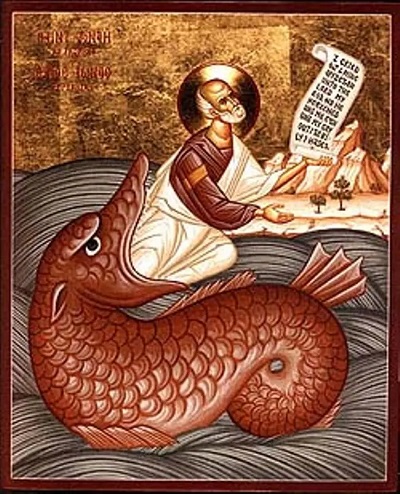
from the womb of my whale, ALS
Our cross is the pulpit of the Word
Five Loaves and Two Fish, the Recipe for a Miracle!
Year B – Ordinary Time – 17th Sunday
John 6:1-15: “This is indeed the prophet”
This Sunday, the liturgy pauses the reading of the Gospel of Mark, which had reached the account of the multiplication of the loaves, to include the Johannine version of this miracle. For five Sundays, we will listen to Chapter 6 of the Gospel of John, the longest chapter of the four Gospels. The multiplication of the loaves is the only miracle recounted by all the Gospels. In fact, it appears six times as it is duplicated in Mark and Matthew. This highlights the significance that the early Christians attributed to this sensational event.
John’s Chapter 6 is particularly rich and profound from a symbolic perspective. This “sign” (as John calls miracles) is meditated upon and elaborated with great care, as he does with all the seven “signs” in his Gospel. At the heart of the narrative, we find the “bread,” mentioned 21 times (out of 25 in the entire Gospel of John). In the background of the narrative and the subsequent discourse in the synagogue of Capernaum, we find references to the Eucharist. It’s worth noting that John does not recount the institution of the Eucharist, which is replaced by the washing of the feet. Here, he presents his meditation on the Eucharist.
The Risk of Reductionism
Before approaching the text, it seems appropriate to emphasize the need to avoid some potential reductionisms:
1) Focusing our attention almost exclusively on the miraculous aspect, i.e., the historical dimension, the “fact” itself. The four evangelists provide versions with quite different details. This shows us that each of them already interprets it in light of their community, intertwining the “fact” with its catechetical interpretation;
2) Considering only the symbolic dimension of the story, thereby emptying the “sign” of its historical reference, reducing it to a “parable.” Without the veracity of the miracle, it’s hard to explain why the evangelists and the early Christian community gave so much importance to this “sign”;
3) Interpreting the narrative exclusively in a Eucharistic key. All the evangelists connect the miracle to the Eucharist, but the narrative has a broader and richer scope. In John 6, the explicit reference to the Eucharist appears only towards the end of Jesus’ discourse;
4) Having a univocal reading of the text, i.e., solely “religious” (the miracle as a figure of spiritual food), or solely “material” (as a simple call to sharing and solidarity).
Some Symbolic Elements
1) The New Passover. “The Passover, the feast of the Jews, was near.” The reference to Passover is not just a temporal note but has symbolic significance. This “great crowd” no longer goes towards Jerusalem to celebrate Passover but towards Jesus. He is the new Passover, initiating the definitive exodus of our liberation.
2) The New Moses. “Jesus went up on the mountain, and there he sat down with his disciples.” This ascent of the mountain (first with the disciples and then alone) reminds us of Moses. The parallel becomes even clearer considering that immediately after, the narrative follows with Jesus walking on the sea (John 6:16-21). Jesus is the new Moses, the new prophet and leader of God’s people who is about to offer the new manna.
3) The True Shepherd. “Make them sit down. There was much grass in that place.” This note, besides being a reference to spring and the Passover period, recalls Psalm 23: “The Lord is my shepherd; I shall not want. He makes me lie down in green pastures.” Jesus, who gathers the crowd around him and perceives their needs, is the Shepherd promised by God (Ezekiel 34:23).
4) The New Manna. “Gather up the leftover fragments, that nothing may be lost.” The manna was not to be gathered for the next day, except for the Sabbath (Exodus 16:13-20). Here, however, Jesus instructs to gather the leftover pieces. This is not just to avoid waste, but as an allusion to the Eucharist. “They gathered them up and filled twelve baskets,” as many as the twelve tribes of Israel, the hours of the day, and the months of the year.
Two Points for Reflection
1) Converting to a Global Vision of the Kingdom. Firstly, we note that Jesus cares not only about people’s spiritual hunger but also their physical hunger. We cannot ignore that besides the hunger for the Word, there is also a dramatic hunger for bread in the world. The Kingdom of God concerns the whole person. However, our mentality still holds a dualistic view of life, separating the spiritual from the material. “People go to church to pray; to eat, everyone goes home and fends for themselves!”: this is our very practical logic! It was also that of the apostles, as we see in Luke’s version of the story, where they say to Jesus: “It’s getting late. Send the crowd away to go into the villages and countryside to find lodging and get provisions.” But Jesus, seeming impractical, responds: “You give them something to eat” (Luke 9:12-13). The Church cannot be indifferent to the conditions in which humanity lives, “fallen into the hands of robbers”!
2) From the Economy of Commerce to the Economy of Gift. “Where can we buy bread, so that these people may eat?” Jesus said this [to Philip] to test him.” Why does he ask Philip? Because he is practical and quick-witted (see John 1:46; 14:8-9). In fact, he quickly does the math: “Two hundred denarii worth of bread would not be enough for each of them to get a little.” Two hundred denarii was a lot, considering that a denarius was a day’s wage for a laborer. At this point, Andrew, his friend and fellow townsman, intervenes, as Jesus had asked “where” they could find bread: “There is a boy here who has [to sell?] five barley loaves and two fish,” but realizing the absurdity, he quickly adds: “but what are they for so many?” But 5+2 makes 7, the number of fullness. For Jesus, it is more than enough. And the miracle happens!
Such miracles are rare today. Like Gideon, we might ask: “Where are all his wonderful deeds that our fathers recounted to us?” (Judges 6:13). But if miracles do not happen today, it is not because “the Lord’s hand is shortened” (Isaiah 59:1). He would like to perform many “miracles”: the miracle of ending world hunger, of stopping wars that kill his sons and daughters and mar his creation, of establishing a new world where peace and justice reign… However, there is a problem. After creating humanity, God resolved not to do anything without human cooperation. The Lord would like to perform miracles, but he lacks the ingredients that only we can provide. He lacks the five barley loaves and two fish that we stubbornly want to sell instead of sharing!
For Weekly Reflection
1) What are the “five barley loaves and two fish” that the Lord is asking of me to change my life?
2) What logic predominates in my life: that of accumulation or solidarity?
3) For meditation:
– “If we share the bread of heaven, how can we not share the bread of earth?” (Didache);
– “The bread of the needy is the life of the poor; whoever deprives them of it is a murderer. To take away a neighbor’s living is to commit murder; to deprive an employee of wages is to shed blood.” (Sirach 34:25-27);
– “There is enough bread in the world for everyone’s hunger, but not enough for the greed of a few” (Gandhi).
Fr. Manuel João Pereira Correia MCCJ
Verona, 25 July 2024
