16th Sunday in Ordinary Time – Year B
Mark 6:30-34
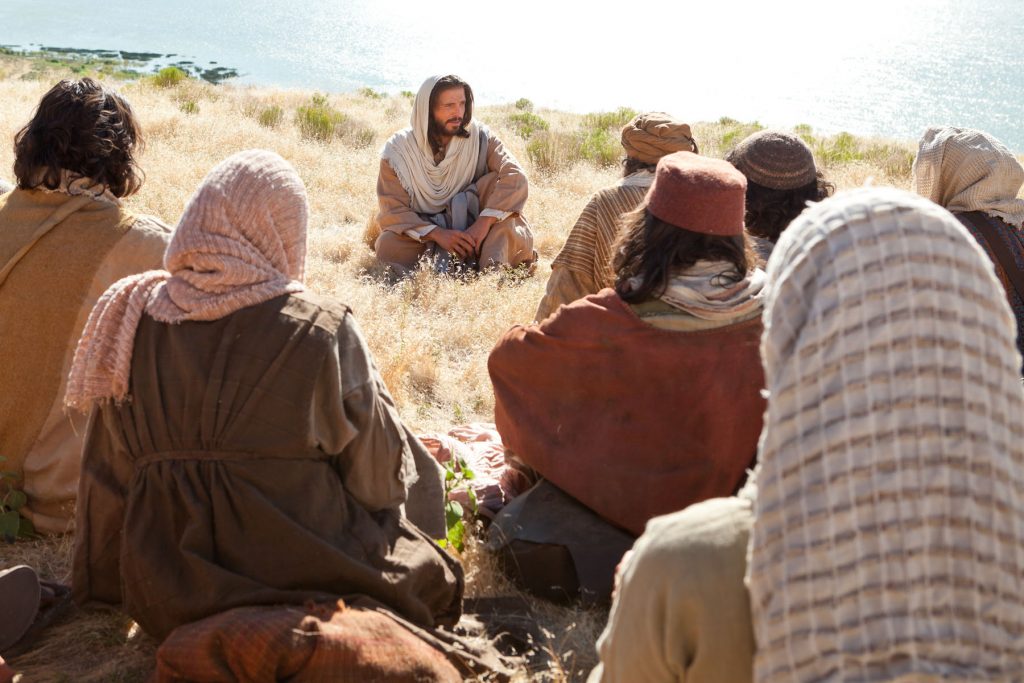
The apostles rejoined Jesus and told him all they had done and taught. Then he said to them, ‘You must come away to some lonely place all by yourselves and rest for a while’; for there were so many coming and going that the apostles had no time even to eat. So they went off in a boat to a lonely place where they could be by themselves. But people saw them going, and many could guess where; and from every town they all hurried to the place on foot and reached it before them. So as he stepped ashore he saw a large crowd; and he took pity on them because they were like sheep without a shepherd, and he set himself to teach them at some length.
Compassion is born from contemplation
Pope Francis
Jesus’s attitude that we observe in the Gospel of today’s liturgy (Mk 6:30-34) helps us to grasp two important aspects of life. The first is rest. To the Apostles returning from the labours of the mission who enthusiastically begin to relate everything they had done, Jesus tenderly directs this invitation to the Apostles: “Come away by yourselves to a lonely place, and rest a while” (v. 31). An invitation to rest.
In so doing, Jesus gives us a valuable teaching. Even though he rejoices on seeing his disciples’ happiness due to the wonders of their preaching, he does not spend time giving them compliments or asking questions. Rather, he is concerned about their physical and interior tiredness. And why does he do this? Because he wants to make them aware of a danger that is always lurking there for us too: the danger to be caught up in the frenzy of doing things, to fall into the trap of activism where what is most important are the results that we obtain and the feeling of being absolute protagonists. How many times this happens in the Church: we are busy, we run around, we think that everything depends on us and, in the end, we risk neglecting Jesus and we always make ourselves the centre. This is why He invites His disciples to rest a bit with Him on their own. It is not only physical rest, but also rest for the heart. For it is not enough to “unplug” ourselves, we need to truly rest. And how do we do this? To do so, we must return to the heart of things: to stop, to remain in silence, to pray so as not to go from the frenzy of work to the frenzy of times of relaxation. Jesus did not neglect the needs of the crowd, but each day, before anything else, he would withdraw in prayer, in silence, in intimacy with the Father. His tender invitation – rest a while – should accompany us. Let us beware, brothers and sisters, of efficiency, let us put a halt to the frantic running around dictated by our agendas. Let us learn how to take a break, to turn off the mobile phone, to contemplate nature, to regenerate ourselves in dialogue with God.
Nonetheless, the Gospel tells us that Jesus and his disciples could not rest as they had wished. The people find them and flock to them from all sides. At which point, he is moved with compassion. This is the second aspect: compassion, which is God’s style. God’s style is to draw near, compassion and tenderness. How many times we find this phrase in the Gospel, in the Bible: “He had compassion on them”. Touched, Jesus dedicates himself to the people and begins to teach again (cf. vv. 33-34). This seems to be a contradiction, but in reality, it is not. In fact, only a heart that does not allow itself to be taken over by hastiness is capable of being moved; that is, of not allowing itself to be caught up in itself and by things to do, and is aware of others, of their wounds, their needs. Compassion is born from contemplation. If we learn to truly rest, we become capable of true compassion; if we cultivate a contemplative outlook, we will carry out our activities without that rapacious attitude of those who want to possess and consume everything; if we stay in touch with the Lord and do not anesthetise the deepest part of ourselves, the things to do will not have the power to cause us to get winded or devour us. We need – listen to this – we need an “ecology of the heart”, that is made up of rest, contemplation and compassion. Let us take advantage of the summer time for this! It will help us quite a bit.
And now, let us pray to the Madonna, who cultivated silence, prayer and contemplation and who is always moved with tender compassion for us, her children.
Angelus 18/7/2021
JESUS’ GAZE
José Antonio Pagola
Mark describes the situation in great detail. Jesus sets out in the boat with his disciples towards a quiet and out-of-the-way place. He wants to listen to them calmly, since they have returned tired after their first evangelizing foray and they’re wanting to share their experience with the Prophet who sent them.
Jesus’ plan gets frustrated. The people discover his intention and get there before him by running along the shore. When Jesus and his disciples arrive at the place, they find a crowd that has come from all the surrounding villages. How will Jesus react?
Mark graphically describes his actions: the disciples have to learn how they should treat the people; in the Christian communities it must be remembered how Jesus was with those people lost in anonymity, those whom no one is concerned about. «As he stepped ashore he saw a large crowd; and he took pity on them, because they were like sheep without a shepherd, and he set himself to teach them at some length».
The first thing that the Gospel writer notes is Jesus’ gaze. He doesn’t get irritated that his plans have been interrupted. He lets his gaze linger on them and he’s moved within. Never does he get annoyed at the people. His heart senses the disorientation and the abandonment in which the villagers find themselves.
In the Church we need to learn to gaze at the people as Jesus did: catching on to the suffering, the loneliness, the confusion or the isolation that many suffer. Compassion doesn’t spring from paying attention to norms or remembering our duties. It awakens in us when we look attentively at those who suffer.
From that way of seeing, Jesus discovers the deepest needs of those people: they go about «like sheep without a shepherd». The teaching they get from the teachers of the Law doesn’t offer them the nourishment they need. They live without anyone truly caring for them. They have no shepherd to guide and defend them.
Moved by compassion, Jesus «set himself to teach them at some length». Calmly, unhurriedly, he patiently sets out to teach them the Good News of God. He doesn’t do it because of obligation. He’s not thinking of himself. He communicates the Word of God to them, moved by the need that they have for a shepherd.
We can’t remain indifferent in the face of so many people who, within our Christian communities, go about seeking a more solid food than what they’re getting. We shouldn’t accept as normal the religious disorientation within the Church. We need to react lucidly and responsibly. Quite a few Christians seek to be better fed. We need shepherds who share with them the message of Jesus.
To Feed is to Give Food, Not Orders
Fernando Armellini
Introduction
Who holds power is called to perform a service to the brethren, but is also subject to the temptation to abuse one’s own position of prestige and use it to impose oneself, to further one’s own personal or family interests. The author of the Book of Wisdom warns: “For the lowly there may be excuses and pardon, but the great will be severely punished” (Wis 6:5-6).
The domination of others is strictly prohibited in the Christian community (Lk 22:25). Christ does not claim a power conferred by the institution to ask the disciples adherence to his proposal of life. He precedes the flock, feeds it with his word and his bread and attracts it by his example.
In the church, who leads cannot but reproduce the pattern of the Master. Peter, reproved by Jesus several times for his eagerness to stand out, recommended to the priests of his community: “Shepherd the flock which God has entrusted to you, guarding it not out of obligation but willingly for God’s sake; not as one looking for a reward but with a generous heart; do not lord it over those in your care rather be an example to your flock” (1 Pet 5:1-2).
Whoever wrote the following reflection for the scout leader seems to have in mind this recommendation: “Remember, scout leader, if you slow down, they stop; if you give in, they shrink back; if you sit down, they lie down; if you doubt, they despair; if you criticize, they break down; if you walk forward, they will overtake you; if you give your hand, they will give their skin; if you pray, they shall be holy.”
Gospel Reflection
He who works needs to take a break. Paul who was engaged in apostolic work for many years says, it is “hard work” (2 Cor 11:23). That’s why, at the return from their mission, the apostles are invited by Jesus to rest for a while. The episode itself may seem rather trivial, but the evangelist brings it back because it contains important messages for the disciples of Christ.
In the first part (vv. 30-32) the apostles returning satisfied from their mission are introduced. They gather around the Master, and report what they have done and taught. After listening, he invites them to retire with him apart into a desert place, away from the crowds.
The scene of Jesus leaving with the disciples is repeated often in the Gospel of Mark. It always prepares for a major revelation. After Jesus had told parables to the crowds, in private, he explained everything to his disciples (Mk 4:34). “Apart from the crowd” he cures the deaf and dumb man of Bethsaida (Mk 7:33); leads Peter, James and John on the Mount of Transfiguration “apart by themselves” (Mk 9:2). It is “in private” that he responds to the disciples who ask for explanations about the end of the world (Mk 13:3) and the reason why they failed to cast out a demon (Mk 9:28).
In our passage the phrase is repeated twice “on the sidelines” and is accentuated by the fact that “Jesus and the twelve are alone” on a boat, in silence, slowly moving away on the lake.
The first message, the most simple and straightforward, Mark intends to direct it to those who, in the Christian community, have the responsibility of leadership and of announcing the word of God. He wants them to compare their apostolic zeal with that of the twelve, and learn to serve the brothers with such dedication and love even having no more time to eat.
The main message is, however, another and must be grasped in the expression “apart” that sets the tone for the entire passage.
Service to the community requires much effort and great generosity. However, there is a need to be attentive because it can easily turn into frenzied activity, assessed according to the criteria of enterprise productivity; then the danger of losing contact with the giver of the work, with Christ and his word, looms even on the most generous ministers.
The apostles gather around the Master and evaluate with him, what they did and taught. They show what should be the benchmark of all apostolic activity. Before implementing projects there is a need of a sincere meeting with the Master, to receive from him the instructions on the task at hand and to feel being sent by him. Programs cannot be elaborated without a constant reference to the gospel. The choices, initiatives that do not come from prayer, meditation and community reflection of God’s word, are likely to be dictated by human standards. Behind the screen of the charitable and beneficent work, sometimes, less noble goals, ambitions, personal interests, desire to compete, to impose, to proselytize are hidden.
It is true that all of life is prayer, that in the poor one meets God, in the service of others one works in the name of Christ. However, if one does not reserve spaces and moments of silence where one is alone with the Lord, if one does not get away from the crowds and activities that absorb all time and energy, one ends up in atrophy.
Even during the implementation of apostolic programs we must, at all times, let Christ challenge us. The reference to his word and to the completed work must not be missing. To “withdraw to the sidelines” is always necessary to evaluate with him, as did the twelve, what has been achieved. Only those who act in this way can fuel the belief that they are not “of working or have worked in vain” (Gal 2:2).
The rest of Jesus and of the apostles did not last long, only the time of crossing of the lake.
In the second part of the passage (vv. 33-34), here they are, in fact, back in the midst of the crowd that flocked from all over, waiting for them on the shore.
The occupants of the boat represent the Christian community which, after taking a good time to reflect on itself and to be with the Master, now returns to the service of people. Its withdrawing apart was not an escape, but a spiritual recharge. When they are bearers of a divine word that instills hope and communicates salvation, the disciples are always eagerly awaited and welcomed with joy.
The encounter of Jesus with the crowd stirs a very strong emotional reaction. To describe it, the evangelist uses the greek word splagknízomai. It expresses a feeling of compassion so deep and so intense that it can be proved only by God. The Bible indicates the tender and loving gesture of the Lord who stoops to bandage the wounds.
Mark has already pointed out this feeling in Jesus when a leper, on his knees, begged him (Mk 1:40-41) and, again, he will reveal it to the hungry multitudes, “I feel sorry for these people, because they have been with me for three days and now have nothing to eat” (Mk 8:2). The reaction of Jesus reveals God’s tenderness in front of human pain.
When misery, evil, pain are caused by sin, the spontaneous and natural reaction is to wait or, in the case of others, even to invoke the divine punishment, considered an expression of perfect justice. In the emotion of Jesus, the Christian community captures the unique feeling that she too must make shine: always and only mercy.
The evangelist completes the scene with an image of an unmatched beauty and a sweetness, “He had compassion on them, for they were like sheep without a shepherd” (v. 34).
The image recalls the various texts of the Old Testament. The first reference is to the prayer that, coming to the conclusion of the exodus from Egypt, Moses said to the Lord. Fearing that after his death, Israel would remain without a guide, worried, he begged this grace: “May the God of the spirits that give life, appoint a leader for this community, who shall go out and come in at their head, that the community of the Lord may not be like sheep without a shepherd” (Num 27:16-17).
The image also alludes to the accusations of the prophets against the leaders who led the nation to ruin: “They have scattered for want of a shepherd and became prey of wild animals. My sheep wandered over the mountains and high hills and no one bothers about them or looks for them” (Ezk 34:5-6) and the famous Psalm: “The Lord is my shepherd, I shall not want” (Ps 23:1).
Returning to the image of the shepherd, Mark shows in Jesus the guide sent by God in answer to the prayer of Moses, and in fulfillment of the promises made by the prophets. In Israel, there were those who presented themselves as shepherds: the scribes, the Pharisees, the rabbis, political leaders, King Herod; but they fed themselves, not the people.
Jesus is the true shepherd because he reveals a heart sensitive to the needs of the people, a heart that immediately perceives what kind of food they are hungry and what kind of water they are thirsty. He has in mind the words of the prophet: “Days are coming when I will send famine upon the land, not hunger for bread or thirst for water, but for hearing the word of the Lord. Men will stagger from sea to sea, wander to and fro, from north to east, searching for the word of the Lord, but they will not find it” (Am 8:11-12).
The leaders of the people were not able to satisfy this hunger and thirst, in fact, with their false doctrines, they had led the people in the lurch. Jesus then began to distribute his bread, the twofold bread: the teaching that feeds the mind and the heart and the food that feeds the body.
Today’s passage concludes observing that Jesus “began a long teaching session with them” (v. 34). He was not broken down, nor cursed those responsible for the painful condition in which the people had been reduced. He began to teach, above all because this is the bread that man needs.
https://sundaycommentaries.wordpress.com
