Fr. Manuel João, comboni missionary
Sunday Reflection
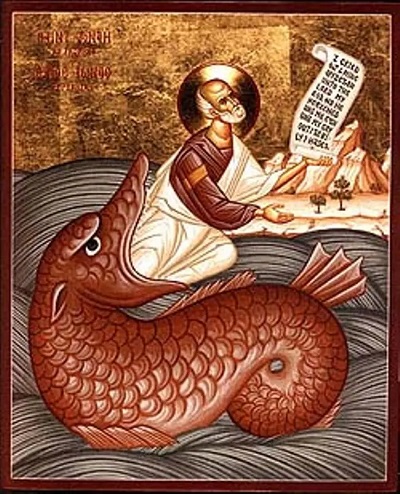
from the womb of my whale, ALS
Our cross is the pulpit of the Word
The Mission with Sandals on Feet and Staff in Hand
Year B – Ordinary Time – 15th Sunday
Mark 6:7-13: “He summoned the Twelve and began to send them out in pairs”
The central theme of the readings for this 15th Sunday is vocation and mission:
– The vocation/mission of the prophet: “It was the Lord who took me from herding the flock, and the Lord who said, “Go, prophesy to my people Israel.” (First reading, Amos 7:12-15);
– The vocation/mission of the Christian: “Before the world was made, he chose us, chose us in Christ, to be holy and spotless, and to live through love in his presence” (Second reading, Ephesians 1:3-14);
– The vocation/mission of the apostle: “Then he summoned the Twelve and began to send them out in pairs” (Gospel).
Some Reflections on Vocation
Before moving on to the gospel passage, let us reflect for a moment on this pairing of vocation and mission, that is, calling and sending, election and commission, discipleship and apostleship… the two inseparable dimensions of being and doing.
First of all, let’s remove from our minds the old idea that vocation only concerns priests and nuns, religious and missionaries, or at most, a few laypeople called to perform a particular task in the Christian community. In reality, the Christian life is a vocation, whether lived in special consecration or in lay and matrimonial life. Indeed, one could say, in a broad sense, that “vocation” characterizes every human life, as a search for meaning.
Secondly, it would be misleading to think that the question of vocation only concerns young people in search of a life project or God’s plan for them. It embraces the entire span of our existence. The “vocational search” does not cease once we have learned what God wants from us, but continues throughout life. “Every morning he makes my ear attentive to listen like a disciple” (Isaiah 50:4). Living our lives in vocational tension gives each moment a taste of freshness and novelty. Otherwise, we easily fall into the weariness of grey everyday life. To be faithful to the vocation, it is not enough to go forward by inertia. We must constantly rekindle the fire of the call, as Paul recommended to Timothy: “I remind you to fan into flame the gift of God, which is in you through the laying on of my hands.” (2 Timothy 1:6). Our “Yes” must be renewed every day, otherwise it wears out and fades.
Finally, I would dare to say that our “Yes” does not only concern the present and the future, but even the past because, strange as it may seem, past faithfulness is never safe until the final “Yes.” Today, I can regret a choice that I made at the time with joy and generosity. Indeed, the great “Yes” renewed to the past can be even more challenging than the “Yes” of today, made perhaps out of necessity or inertia. This explains why so many vocations, both consecrated and matrimonial, end in bitterness or failure. Here lies the supreme beatitude – that of salvation – which Jesus proclaims precisely in the context of sending the Twelve on a mission: “He who stands firm to the end will be saved” (Matthew 10:22).
After these considerations, perhaps not entirely pertinent, let us underline some aspects of today’s gospel.
The Three Stages of Vocation
The gospel passage begins by saying that “Jesus summoned the Twelve”. There are three special calls in our lives. First of all, there is the personal call: “As he walked by the Sea of Galilee, he saw Simon and his brother Andrew… James and John… and he called them” and they became DISCIPLES (Mark 1:16-20). This call has also reached each of us!
Secondly, there is the communal call: “Jesus went up on a mountainside and called to him those he wanted, and they came to him. He appointed twelve – designating them apostles – that they might be with him and that he might send them out to preach.” (Mark 3:13-14). Thus, the disciples became a COMMUNITY. We are all “convoked,” ‘called together.’ There are no ‘private’ vocations!
Finally, there is the apostolic vocation, the sending on a mission. This is the moment presented in today’s gospel: “Then he summoned the Twelve and began to send them out in pairs” and they became APOSTLES. Every vocation culminates in mission. A communal mission (two by two), ecclesial, not as lone rangers!
This is the first sending of the Twelve, an apprenticeship in view of the final sending after the resurrection, which will definitively characterize them as “apostles,” sent ones, missionaries: “Go into all the world and preach the gospel to all creation” (Mark 16:15). Let us therefore take a closer look at this third stage.
Our Mission Continues that of Jesus
The apostles continue the mission of Jesus (Mark 3:14-15): to proclaim the Kingdom of God, cast out demons, and heal the sick. Therefore, the Lord bestows upon them his power: “giving them authority over the unclean spirits”. The Gospel of Mark is known for highlighting Jesus’ activity in casting out impure spirits. Why does he do this? Not only to demonstrate Jesus’ divine power but to highlight that the Kingdom of God is advancing and defeating the kingdom of Satan.
The apostles are aware that they have received this “authority over the unclean spirits” and exercise it successfully. Unfortunately, with us, it is often not so. We do not have faith in this gift given to us through the sacrament of confirmation. Out of fear or cowardice, we often do not fight evil and thus allow “the unclean spirits” to spread in our environments.
The Mission of the Staff and Sandals
Once this power is conferred, the Lord “instructed [commanded] them to take nothing for the journey except a staff – no bread, no haversack, no coppers for their purses. They were to wear sandals but, he added, ‘Do not take a spare tunic’”. This command of Jesus challenges any missionary. It is the only time in Mark’s gospel that Jesus commands something to the disciples. He commands it because this is not a natural thing. We are tempted to do mission with powerful and effective means. Deep down, we do not trust the power of God’s Word and his providence. By instinct, we seek other human securities.
“Until you are poor, everything you give is only an exercise of power,” says Silvano Fausti. Life and mission, however, take charge of stripping the apostle. Failure, disappointment, opposition, fragility… lead us to the conclusion that the mission is carried out in weakness so that God’s power may be manifested in us (2 Corinthians 12:7-10).
If we look at the parallel texts in Matthew (ch. 10) and Luke (ch. 9 and 10), we will notice that Jesus says not to even procure a staff and sandals. In this case, the staff is considered the weapon of the poor, and the mission is to be carried out unarmed. For Mark, however, the staff is the pilgrim’s tool that helps him walk. Moreover, it is the sign of the power that God gives to his envoy, like the staff of Moses.
Sandals for Matthew and Luke are a luxury. For Mark, in a different cultural context, they are a sign of freedom. Slaves went barefoot. Evangelization, however, carries a message of freedom.
In Conclusion, Let Us Ask Ourselves:
1. Am I a pilgrim Christian or a sedentary Christian, with too much “baggage” to be able to move?
2. Do I recognize God’s action in my weaknesses, stripping me of false securities?
3. What is the “staff” I lean on to walk?
4. Am I an Easter Christian, “with my loins girded, my sandals on my feet and my staff in hand” (Exodus 12:11), always ready to depart?
Manuel João Pereira Correia MCCJ
Verona, 11 July 2024
