Fr. Manuel João, comboni missionary
Sunday Reflection
from the womb of my whale, ALS
Our cross is the pulpit of the Word
Our Life Between Two Shores
Year B – Ordinary Time – 12th Sunday
Mark 4:35-41: “Let us cross over to the other side!”
Last Sunday we heard two brief parables from the fourth chapter of the Gospel of Mark, dedicated to the parables of sowing. Today, the gospel presents us with the episode of the calming of the storm, which concludes the chapter. Jesus, the Sower, at the end of His day of parables, entrusts Himself to the work of the fisherman apostles. This account by St. Mark is of great symbolic richness that risks escaping us if we read it only as one of the many miracles performed by Jesus.
Let us start from Jesus’ invitation: “Let us cross over to the other side”. This invitation can be a key to understanding our human and believer’s life. We pass from shore to shore until we reach the eternal shore. I would like to touch on three of these “crossings” as a stimulus to discern which shores await us today.
“Jesus said to his disciples, ‘Let us cross over to the other side”:
From our shore to the other shore!
The crossing to which Jesus refers in today’s gospel is quite specific. It involves leaving the familiar shore of believing Israel to go toward the shore of pagan peoples. It is the passage toward the mission of the Church. Such a passage has never been easy and serene. Crossing “to the other side” has meant facing a sea of obstacles, persecutions, prejudices, risks, and unknowns.
An emblematic example is the case of Paul and his companions on a mission, invited to cross from the eastern shore to Europe: “During the night Paul had a vision: a Macedonian stood before him and begged him, ‘Come over to Macedonia and help us.’ After Paul had seen the vision, we got ready at once to leave for Macedonia, concluding that God had called us to preach the gospel to them.” (Acts 16:9-10).
Jesus’ invitation, however, is a metaphor for life and our existence. Life demands great flexibility from us. One does not grow without crossings. Sometimes these crossings happen naturally, without trauma. Other times, they are painful and require crossing a stormy sea, in the dark of night and with contrary winds, risking shipwreck. Life requires great mental, psychological, and spiritual readiness for change. Often we resist, preferring to stay in the known and tranquil “here” rather than move toward an unknown and uncertain “beyond.” But we often say, those who stand still are lost or even already dead.
Life does not like immobility, both in natural life and in that of faith. Sometimes facing the challenge of change is imposed on us by life itself: a bereavement, an illness, a marital crisis, a broken relationship… It takes courage to face certain dramatic situations and find a new balance. Other times it is the Lord Himself who invites us to leave our mediocrity, to go towards “the other,” to welcome the poor and the stranger, to open ourselves to life, to take on a new commitment…
Let us ask ourselves: what crossings is life asking of me and how am I facing them? To what crossings is the Lord inviting me? Am I perhaps trying to avoid them?
“Master, do you not care? We are going down!”:
From the shore of doubt to that of trust!
In the crossings, we often face the storms of life. Then in the midst of the storm, doubt assails us: is it really true that the Lord is with me, is with us? This has always been the Great Temptation: “Is the Lord among us or not?” (Exodus 17:7). If there is something the Lord cannot tolerate, it is precisely this: doubting His presence. Because this means doubting His essence: Emmanuel, God with us (see Psalm 94 and Hebrews, chapter 4). This temptation can come to us both personally, especially in some dramatic moments of existence, and socially and ecclesially, in this time of epochal changes, that is, thinking there is no future for this society or that the church’s boat is about to sink.
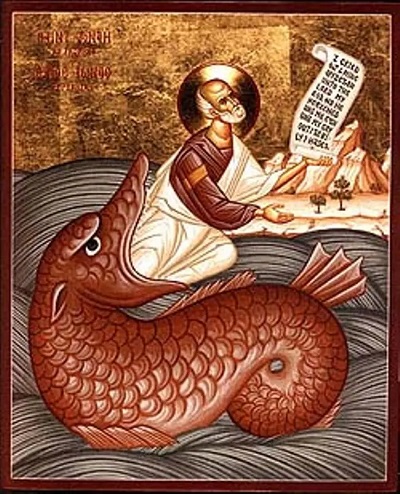
This doubt will never completely abandon us. Some psalms comfort us because they give voice and expression to this doubt of ours, which perhaps, out of shame, we would have preferred to keep silent: “Awake! Why do you sleep, Lord? Rouse yourself!… Why do you hide your face?… Rise up and help us!” (Psalm 44). Yes, we often have the impression that He falls asleep. Perhaps He falls asleep because He trusts us! Indeed, He entrusts to us the continuation of His mission. This sleep of Christ, moreover, is a post-Easter allusion to His death and His “distance” after the resurrection, when the hurricane of persecution will rage against Christians, threatening to wreck Peter’s fragile boat. However, Jesus’ sleep is not that of the prophet Jonah who “had gone below deck, where he lay down and fell into a deep sleep” (Jonah 1:5), indifferent to the distress of his travel companions who faced the storm. Jesus’ sleep is that of the Psalmist’s trust: “In peace I will lie down and sleep, for you alone, Lord, make me dwell in safety.” (Psalm 4:9). Jesus also has the heart of the lover: “I sleep but my heart is awake” (Song of Songs 5:2). He, Jesus, sleeps at the stern, that is, at the helm, but His heart watches over His travel companions.
Let us not deceive ourselves. Our entire journey of faith will be a permanent crossing from doubt to trust until we reach the shore of the serenity of filial abandonment.
“Why are you so frightened? How is it that you have no faith?”
From the shore of unbelief to that of faith!
Unbelief leaves God out of the boat. One relies only on one’s own strength. Sometimes we do not even rely on others because “every man for himself!” says the proverb. It is a Promethean, voluntarist, and individualistic logic of life. This can also happen to us, so-called believers. We think we are sailing on Christ’s boat but, in reality, we have boarded another boat, that of materialism or worldly spirit, of power or well-being. On Christ’s boat, the logic of risk and giving life prevails, while on the world’s boat, the law of “save yourself!” dominates.
So let us ask ourselves if we are on the right boat when we face certain crossings or decisive issues in our lives. One thing is to travel with Jesus, even if He seems to be sleeping, and another is to have forgotten Him on the shore. This is the temptation to set faith aside when we face the concrete problems of life. Worse still if we have domesticated a Jesus to our measure! Christ must be taken “as He is”: “They took Him, just as He was, in the boat”. And “as He is” will always surprise us: “Who can this be? Even the wind and the sea obey him!”
Fr. Manuel João Pereira Correia mccj
Verona, June 20, 2024
