Fr. Manuel João, comboni missionary
Sunday Reflection
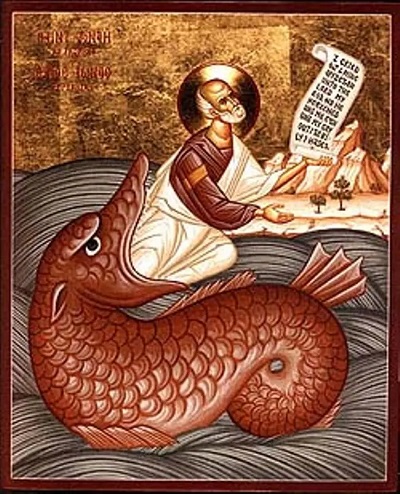
from the womb of my whale, ALS
Our cross is the pulpit of the Word
The four Pentecosts
Year B – Easter Season – 8th Sunday – Pentecost
Gospel: John 20:19-23
Today the Church celebrates the great solemnity of Pentecost, the feast of the descent of the Holy Spirit, fifty days after Easter, according to the account in the Acts of the Apostles (see first reading). Pentecost, which means Fiftieth (day) from the Greek, was a Jewish feast, one of the three pilgrimage feasts to the Temple in Jerusalem: Passover, Pentecost and the Feast of Booths (the harvest festival in autumn). It is an agricultural feast of thanksgiving for the harvest of the first fruits, celebrated on the 50th day after Passover. It is also called the “Feast of Weeks” because it takes place seven weeks after Passover. This agricultural festival was later also associated with the remembrance of the giving of the Law or Torah by Moses on Mount Sinai.
The Christian Pentecost is the fulfilment and conclusion of the Easter season. It is our Passover, the passage to a new condition, no longer under the dominion of the Law, but of the Spirit. It is the feast of the birth of the Church and the beginning of the Mission.
The readings for the feast in fact present us with four comings of the Holy Spirit, or four different but complementary ways in which He is present. I would say that there are four “Pentecosts”!
1. The Pentecost of the Church
The first reading (Acts 2:1-11) presents us with a surprising, impetuous and luminous coming of the Spirit:
When the day of Pentecost came, the Apostles were all gathered together in one place. Suddenly, a rumour like a strong gust of wind was heard from heaven, which filled the whole house where they were. They then saw a kind of tongue of fire appear and divide, and one fell on each of them. They were all filled with the Holy Spirit and began to speak in other languages as the Spirit gave them utterance.
It is a coming that arouses astonishment and wonder, enthusiasm and euphoria, consolation and courage. It is absolutely free, unpredictable and never programmable. These are exceptional cases. We find some of them in the Book of Acts, but there have also been some in the history of the Church, although not as showy and imposing, but always of great fruitfulness. In fact, Pentecost is always followed by an ecclesial springtime. God knows how much we need it in the ecclesial winter we’re going through in the West! Only the unceasing prayer of the Church, the humble patience of the sower and docility to the Spirit can obtain such a grace!
2. The Pentecost of the world
The outpouring of the Spirit extends to the whole of creation. It is he “who gives life and sanctifies the universe” (Eucharistic Prayer III). It is he who “brings spring pollen into the heart of history and of all things” (Ermes Ronchi). That’s why, with the Psalmist, we invoke Pentecost on the whole earth: “Send forth your Spirit, O Lord, and renew the face of the earth.” (Psalm 103). This should be a typical and habitual Christian prayer: to invoke Pentecost on the world, on the dynamics that govern our social life, on the events of history. Everyone complains about “how the world is going wrong!”, about the “bad spirit” that animates it, but how many of us make the “epiclesis” (invocation) of the Spirit so that he descends on the people, situations and events of our daily lives?
3. The Pentecost of spiritual gifts, ministries and charisms
In the second reading (1 Corinthians 12), the apostle Paul draws our attention to another epiphany of the Spirit: spiritual gifts and ministries. “In each one the gifts of the Spirit are manifested for the common good.” Today there is a lot of talk about gifts, charisms, ministries and sharing ecclesial services, but there is a growing and worrying lack of interest among the younger generations. The sacrament of confirmation, the “personal Pentecost”, which should become the gateway to full participation in the life of the Church, is unfortunately the moment of desertion. A clear sign that we have failed in our goal of Christian initiation. What should be done? The Church must equip herself with an extremely sensitive “ear” and strengthen her “antennae” in order to perceive the Voice of the Spirit at this particular moment in her history. I dare say that the most serious problem is the spiritual mediocrity of our communities. Preoccupied with safeguarding the orthodoxy and good order of the liturgy, we have lost sight of the essential: the experience of faith!
4. Sunday Pentecost
The liturgy offers us once again the Gospel of the appearance of the risen Jesus on Easter evening (John 20:19-23). It’s a gospel full of Easter resonances:
On the evening of that day, the first of the week, when the doors of the house where the disciples were were shut for fear of the Jews, Jesus came and stood in their midst and said to them, “Peace be with you”. Having said this, he showed them his hands and his side.The disciples were filled with joy at seeing the Lord.
Jesus said to them again, “Peace be with you. As the Father has sent me, so I send you. Having said this, he breathed on them and said to them, “Receive the Holy Spirit: whose sins you forgive, they are forgiven them; and whose sins you retain, they are retained”.
This Gospel is called the “little Pentecost” of St John’s Gospel, because here Easter and Pentecost coincide. The Risen Lord offers the Spirit on Easter evening. This whole context makes us think of the Sunday meeting and the Eucharist. It is here that the Spirit “hovers over the waters” (Genesis 1:2) of chaos and fear of death and brings peace, harmony and the joy of life. The Spirit’s pre-eminent role must be rediscovered. This is his time. Without him, we can’t proclaim that “Jesus is Lord” (1 Corinthians 12:3), or cry out “Abba! Father!” (Galatians 4:6). There is no Eucharist without the intervention of the Spirit. So let’s enter the Eucharist pleading in our hearts: Come, come, Holy Spirit!
To conclude, how do you navigate the sea of life: by oar or by sail?
We breathe in the Holy Spirit. He is the Christian’s oxygen. Without him, the Christian life is a law and a duty, a constant rowing, with effort and fatigue. With him, it’s the joy of living and loving, the lightness of sailing. Now that we’re back to ordinary time after Easter, with the routine of life, how do you prepare to sail: with the strength of the oars or by letting yourself be carried away by the wind that blows on the unfurled sail of your heart?
Fr. Manuel João Pereira Correia mccj
Verona, 16th May 2024
For further reflection, see: https://comboni2000.org/2024/05/17/riflessione-domenicale-quale-e-il-nostro-progetto-di-vita-babele-o-pentecoste/
