Fr. Manuel João, comboni missionary
Sunday Reflection
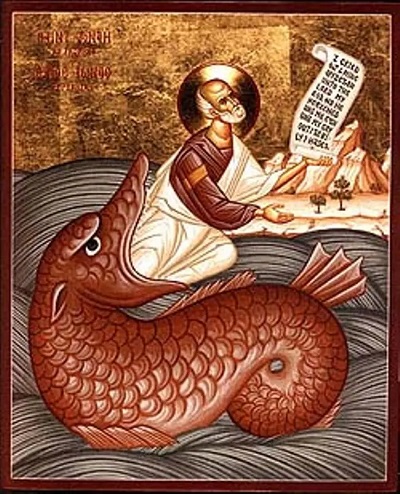
from the womb of my whale, ALS
Our cross is the pulpit of the Word
Like a river in flood
Year B – Easter Time – 6th Sunday
John 15:9-17: “As the Father has loved me, I also have loved you. Abide in my love”
The gospel of this Sixth Sunday of Easter is a continuation of that of last Sunday (“I am the vine and you are the branches”). We are in chapter 15 of John’s gospel. This is the second of three waves of the farewell discourse during Jesus’ last supper with his disciples (chapters 13-14; 15-16; 17). In Jesus’ farewell discourse we find all the themes dear to the evangelist John. These chapters (13-17) are like the ‘magna carta’ of the Christian life, to which we should return periodically to re-read and revive our faith.
I would like to focus on five words/realities that emerge from today’s gospel passage: Love, Commandment, Father, Friends and Joy. These are five ‘words’ that, in a way, sum up the Christian life. I hope that each one of us can dwell on that one word that we perceive in our hearts, by a touch of the Spirit, to be addressed to us personally.
1. The love of AGAPE
“As the Father has loved me, I also have loved you. Abide in my love”. Last Sunday’s watchword was “abide”. Today’s is love, which we find 19 times in the readings (9 in the gospel, 9 in the second reading and 1 in the psalm) and more than 30 times in the mouth of Jesus in his farewell discourse. In Greek (the language in which the New Testament was written) we find a very rich vocabulary to express love, with a great variety of nuances, but there are three main terms of reference: eros, philia and agape.
– Eros (έρως) is, for the most part, sensual, passionate, sexual love;
– Philia (φιλία) is the love of affection, of friendship, reciprocated between friends;
– Agape (αγάπη) is love that is gratuitous, disinterested, unconditional, altruistic, oblative and, therefore, often associated with spiritual love. In Latin it is translated as caritas.
This term ‘agape’, rather rare in classical Greek, is the one adopted by Holy Scripture to describe the love of God and fraternal charity. Agape is the perfection and sublimation of love. In the New Testament, the root of this Greek term occurs 320 times (Gianfranco Ravasi). Agape has become the characteristic expression of the Christian conception of love. “God is love” (1 John 4:7-10, second reading) and “The whole Law finds its fullness in one precept: You shall love...” (Galatians 5:14). The boundless love for God and one’s brothers and sisters makes St Augustine say: “Happy is he who loves you, the friend in you, the enemy for you”.
The word ‘love’ is so much used and abused, both in common language and in our ecclesial sphere, as it is worn out. I believe it would do us good to “fast” of this word to try to rediscover its genuine flavour, which has been lost. By dint of talking about love we may delude ourselves that we know how to love, but “one does not become drunk by hearing about wine” (Isaac the Syrian). Rather than talking about it, let us try to let this “word” resonate in us, make it “true” for us, to astonish us, amaze us, move us to tears: “Jesus, knowing that his hour had come to pass from this world to the Father, having loved his own who were in the world, he loved them to the end” (John 13:1, introduction to the farewell discourse). Let us accept this overflowing love, without resistance, and let us allow ourselves to be swept away by this overflowing river!
2. The COMMANDMENT
“This is my commandment: that you love one another as I have loved you”; “This I command you: that you love one another”. Strange to say, the second ‘word’ that recurs most often in today’s gospel passage is commandment/command. But can one command the heart?! Yes and no! Love is a gift, but it is also a commitment, an adherence and a decision of the will. One can choose to live in love or in unlove, in indifference and even in hatred. This choice is often made almost unconsciously, little by little.
While eros love is spontaneous and instinctive, agape love, on the other hand, must be willed and desired and, therefore, ‘commanded’ by reason. It will never be ‘natural’. This is what Jesus means by his “new commandment”!
3. The FATHER
“As the Father has loved me, I also have loved you”. The “Father” appears here four times and more than fifty times in chapters 13-17. Jesus speaks of the Father with love and tenderness, with the exaltation of a lover, and would like to convey this passion of his to us. It is the Father who kneels before us, his children, to wash our feet, because “he who has seen me has seen the Father!”. It is the Father who, by the anointing of the Spirit, makes beautiful the feet of his children called to proclaim the Gospel: “How beautiful on the mountains are the feet of the messenger who proclaims peace, the messenger of good news.” (Isaiah 52:7). Every day we invoke God as Father, but how much has our image of God been evangelised? The worst consequence of sin is to distort our idea of God, who from Father becomes master and judge!
NB. For the other points of reflection, see my blog: https://comboni2000.org/2024/05/02/la-mia-riflessione-domenicale-come-un-fiume-in-piena/
Prayer of Mother Teresa to ask for the gift of love:
Teach me love
Lord, teach me not to speak
like a resounding bronze or a ringing cymbal,
but with love.
Make me capable of understanding
and give me the faith that moves mountains,
but with love.
Teach me that love which is always patient and always kind;
never jealous, conceited, selfish or touchy;
the love that feels joy in truth,
always ready to forgive,
to believe, to hope and to endure.
Finally, when all things are over
will dissolve and all will be clear,
may I have been the weak
but constant reflection of your perfect love.
M. Teresa of Calcutta
Father Manuel João Pereira Correia mccj
Verona, 2 May 2024
