Fr. Manuel João, comboni missionary
Sunday Reflection
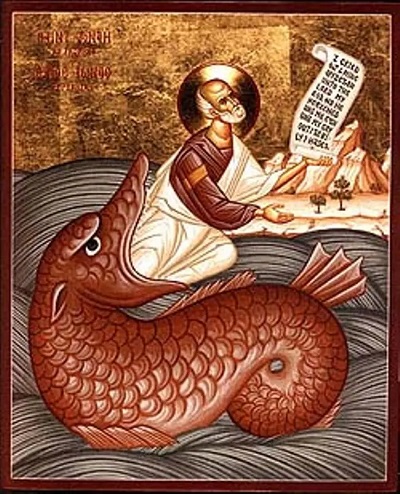
from the womb of my whale, ALS
Our cross is the pulpit of the Word
“We should like to see Jesus!”
Year B – Lent – 5th Sunday
Readings: Jeremiah 31:31-34; Psalm 50; Hebrews 5:7-9
John 12:20-33: “Now the hour has come!”
The fifth Sunday of Lent is an immediate preparation for Easter. Next Sunday we will celebrate Palm Sunday and the account of the Passion and Death of Jesus will be proclaimed. Today’s gospel, taken from St John, is meant to introduce us into the mystery that is approaching, so that we may experience it, not as spectators, but as disciples. It is Jesus himself who reveals to us the meaning of what is about to happen.
We should like to see Jesus!
We are at the last Passover of the Lord and immediately after his “triumphal” entry into Jerusalem. The city was full of pilgrims, who had come from all parts. The gospel passage speaks of a group of Greek-speaking proselytes who, hearing about Jesus, would like to see him, that is, to know him. Not knowing Aramaic, they speak to Philip who also speaks to Andrew. The two are the only ones of the group of Twelve who bear a Greek name and certainly knew some Greek. “We should like to see Jesus” is their request, and their and our “prayer”! Every man and woman carries this prayer in the innermost depths of his or her heart: “Your face, O Lord, I seek” (Psalm 27:8).
Salvation comes through looking!
The whole of John’s gospel winds between the invitation to go to Jesus to see: “Come and see!” (1:39) and the joyful experience of the disciples: “We have seen the Lord!” (20:25), concluding with the final beatitude: “Blessed are those who have not seen and have believed!” (20:29). If in the first Covenant the sense of hearing was the privileged one in the relationship with God, in the second Covenant it is that of vision. The entire gospel of John is permeated by the sense of vision. We find about 150 words related to this sense. Impressive! From “seeing” and “not seeing” passes both the tragic and dark drama of human history and the trail of light, joy and life that runs through it! Salvation passes through the gaze! The story begins with God’s complacent gaze towards his creation, repeated seven times: “And God saw that it was good” (Genesis 1) and ends with man’s contemplative and ecstatic gaze before the new creation: “And I saw a new heaven and a new earth… And I also saw the holy city, the new Jerusalem, coming down from heaven, from God, ready as a bride adorned for her husband” (Revelation 21:1-2). Then, yes, what Qohelet says will come true: “The eye shall not be satisfied with looking, nor the ear with hearing” (1:8).
Philip and Andrew are you and me!
The men and women of today are looking for Jesus, in a variety of ways, even in the lost on the way of the senses. And they turn to us to see him and to know him. But we find it difficult to understand their questions because we do not speak their “language”. Only by living immersed in this humanity, in its culture and history, in its hopes and fears, will we be able to interpret their search. The language they understand is not that of sermons, nor of catechism, but that of the senses and of testimony. Only if we ourselves have heard, touched and seen the Lord will we be able to tell them:
“That which was from the beginning, which we have heard, which we have seen with our eyes,which we have looked at and our hands have touched—this we proclaim concerning the Word of life. The life appeared; we haveseen it and testify to it, and we proclaim to you the eternal life, which was with the Father and has appeared to us. We proclaim to you what we have seen and heard, so that you also may have fellowship with us” (1 John 1:1-3).
Now the hour has come!
Jesus’ response to the Greeks’ request is quite disconcerting: “Now the hour has come for the Son of Man to be glorified. I tell you, most solemnly, unless a wheat grain falls on the ground and dies, it remains only a single grain; but if it dies, it yields a rich harvest… And when I am lifted up [on the cross] from the earth, I shall draw all men to myself”. Jesus in the Greeks’ request already sees the first fruits of the extraordinary fruitfulness of the “Grain of wheat”. Jesus lived in anticipation of this “hour”, but nevertheless experiences, he too like us, the perturbation and anguish before the prospect of his imminent death: “Now my soul is troubled. What shall I say: Father, save me from this hour? But it was for this very reason that I have come to this hour”. The synoptics recount this hour of Gethsemane in far more dramatic tones!
The law of the “grain of wheat” concerns the life of every living being, but we find it difficult to accept it. We would like to remain a flower blossomed in the fullness of its beauty in an eternal spring. Having reached the ripe fruit of summer, we cling to the tree of life, in a desperate effort to endure the autumn and not fall to the ground… Instead, the purpose of life is to become an autumn fruit! “To feel the juicy soul of the fruit within oneself: the same sweetness, the same golden transparency, the same thirst to fall. To detach oneself, not from pride or weariness, but from excess weight and sap. Detach oneself like an autumn fruit…. Learn the “detachment” of the ripe fruit, the fragility of fullness. A drop of pity, a thrill of love make the inebriated cup of autumn overflow; the slightest bump throws the fruit swollen with aromas and sunshine to the ground” (Gustave Thibon, French philosopher).
For the weekly reflection:
During this last week of Lent, let us ask for the grace of the purification of the senses, especially that of sight, perhaps repeating in prayer, the cry of Bartimaeus, the blind man of Jericho, with his same confidence and determination: “Rabbuni, let me see again!” (Mark 10:46-52). Only in this way can we too follow Jesus on the road to Jerusalem!
Manuel João Pereira Correia mccj
Verona, 13th March 2024
For full reflection, see: https://comboni2000.org/2024/03/14/la-mia-riflessione-domenicale-vogliamo-vedere-gesu/
