Fr. Manuel João, comboni missionary
Sunday Reflection
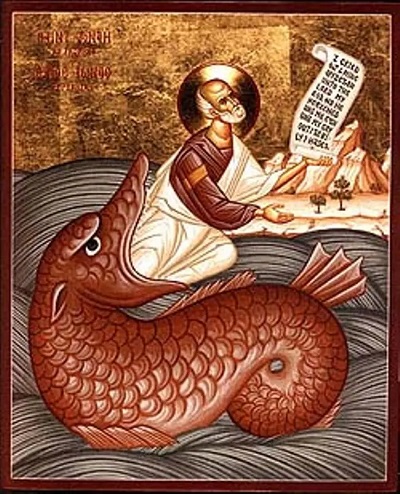
from the womb of my whale, ALS
Our cross is the pulpit of the Word
The “must” of love
Year B – Lent – 4th Sunday
John 3:14-21: “For God so loved the world that he gave his only Son”.
The celebration of the Fourth Sunday of Lent opens with a strong invitation to joy, which the entrance antiphon takes from the prophet Isaiah: “Rejoice [Laetare], Jerusalem and all who love her. Be joyful, all who were in mourning; exult and be satisfied at her consoling breast” (cf. Isaiah 66:10-11). This is the so-called “Laetare Sunday” (like the third Sunday of Advent, called “Gaudete”). A touch of joy is added to the penitential Lenten tone for the approach of Easter, and instead of purple liturgical vestments, rose ones can be used. Small signs that announce Easter joy and invite Christians to “hasten toward the solemn celebrations to come”, as we ask in the opening prayer (Collect).
Everything depends on a “MUST”
Love and mercy are the common thread linking the three readings. Around them we find a whole corollary of concepts that are at the heart of the Christian message: belief/faith, grace/goodness, light/darkness, good works/evil works, salvation/condemnation, life/death… But everything depends on a “MUST”: “So must the Son of Man be lifted up”!
The gospel passage is the conclusion of Jesus’ dialogue with Nicodemus, “one of the leaders of the Jews” who comes to him at night, perhaps struck by his prophetic gesture of the cleansing of the Temple. The text begins in a rather enigmatic way: “Just as Moses lifted up the serpent in the desert, so must the Son of Man be lifted up” (v.14). Jesus refers to the episode recounted in the book of Numbers, ch.21, when the people of Israel in the wilderness, bitten by snakes, cry out to God, and then “The Lord said to Moses, ‘Make yourself a snake and put it on a pole; whoever is bitten and looks at it will remain alive’”.
In this v.14 the verbal form “must” (δεῖ, in Greek) appears. We find the same verb in the other three gospels, in the first announcement of Jesus’ passion, death and resurrection (Mt 16:21; Mk 8:31; Lk 9:22). Jesus’ passion and death are presented by him as a “necessity”. Of course, his death is not a “fatality”, but we might ask: where does this necessity, need or duty come from? One might answer: from a divine disposition or to fulfil the Scriptures, but these motivations leave us unsatisfied. The context of the verse suggests that the real motivation for this “must” is love: “For God so loved the world that he gave his only Son”. St Paul also emphasises this in the second reading: “God loved us with so much love that he was generous with his mercy: when we were dead through our sins, he brought us to life with Christ” (Ephesians 2:4-10). It is a synthesis of the whole gospel!
It is love that says: one must! Not by imposition of will or moral duty, but by a transport of the heart. Egoism, on the other hand, says: “What need is there? Who makes me do it?”. God’s “need” to love mankind passionately, once accepted, creates our need to love like him. How our lives would be totally changed if it was the “need” to love that guided them!
The first reading (2 Chronicles 36) attributes the destruction of Jerusalem (before the exile) to God’s wrath: “They ridiculed the messengers of God, they despised his words, they laughed at his prophets, until at last the wrath of the Lord rose so high against his people that there was no further remedy.” This is an interpretation resulting from an anthropomorphic view of God. In reality, “the path from evil committed to evil suffered does not pass through divine wrath” (Cardinal Tolentino de Mendonça). It must be recognised that evil is indeed a serious matter that does not forgive or spare anyone. Its consequences can drag on for generations. There are no loopholes or discounts, unfortunately! How can we fight evil “crouching at our door”? (Genesis 4:7). Here are two proposals suggested by the Gospel.
Contemplation of the Crucified One
The Word of this Sunday is all an invitation to pause before the cross, to fix our gaze on Jesus, Love exposed and lifted up, and to let ourselves be drawn by him: “And I, when I am lifted up from the earth, will draw all men to myself” (John 12:32). Only by “keeping our gaze fixed on Jesus” (Hebrews 12.2) can we overcome evil. St Daniel Comboni recommended his missionaries to “always keep their eyes fixed on Jesus Christ, loving him tenderly, and endeavouring to understand better and better what a God who died on the cross for the salvation of souls means. If with living faith they contemplate and savour a mystery of such love, they will be blessed to offer themselves to lose everything, and to die for Him, and with Him” (Writings, 2720-2722).
By looking at the “lifted up” Christ (a Johannine expression that is equivalent to “glorified”) we can be healed of the “poison” of the Serpent. Unfortunately, we live a life poisoned by hatred and violence, by the selfishness that dehumanises us, by the race for the ephemeral, dazzled by a thousand illusions of a consumerist society… Only contemplation of the Crucified One is the antidote to these poisons! Numerous little snakes lurk in our hearts that, as soon as they are touched, awaken, ready to strike. Only contemplation of the Crucified One can flush them out and overcome them.
Exposure to the Light
Let us return to the gospel text. “This is the verdict, that the light came into the world, but people preferred darkness to light,because their works were evil… But whoever lives the truth comes to the light”. Man’s great temptation from the beginning is to “hide”. It is a mechanism we all carry within us. One of our risks in the life of faith is to dwell, more or less unconsciously, in the half-light, not too far from the light so as not to be swallowed up by darkness, nor too close to the light so as not to have to face the “shame” of our “nakedness” (Genesis 3:8-10). Lent is a propitious time to respond to the voice of God “coming out” in our search: “Adam/Eva, where are you?”. It is an opportune time to come out of our hiding places, our “dens” and go towards the Light!
As a spiritual exercise for the week I propose:
1) Carve out times and spaces to contemplate our Crucified Christ;
2) Find an occasion for the personal celebration of the Sacrament of Penance.
Manuel João Pereira Correia, mccj
Verona, 6 March 2024
NB. For full reflection, see: https://comboni2000.org/2024/03/07/la-mia-riflessione-domenicale-la-necessita-dellamore/
