Fr. Manuel João, comboni missionary
Sunday Reflection
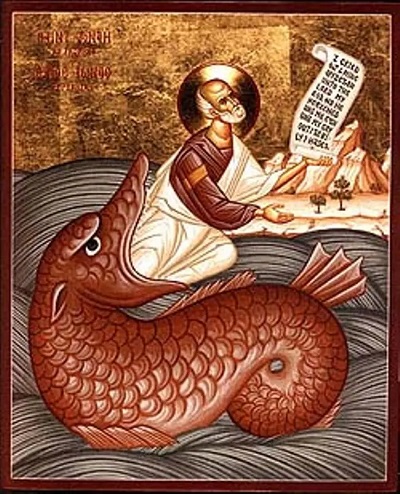
from the womb of my whale, ALS
Our cross is the pulpit of the Word
From Mount Tabor to the Temple Mount
Year B – Lent – 3rd Sunday
John 2:13-25: “Stop turning my Father’s house into a market!”
Here we are on the third Sunday of Lent. From the desert (for a profound encounter with ourselves) we have ascended to Tabor with Jesus (for a transfiguring encounter with God). Today we ascend to Jerusalem, to the Temple of the Lord, to review and purify our relationship with God. We go with Jesus on pilgrimage because Easter, the feast par excellence, the feast of our liberation, is approaching.
The first Easter, the starting point
The gospel that guides us on this visit to the Temple is no longer Mark, but John. Strangely enough, the evangelist John places this Easter at the beginning of Jesus’ public life, while the synoptics (Matthew, Mark and Luke) place it at the end of his ministry, a few days before he was condemned and crucified. For John it is the starting point, for the other evangelists it is the end point. This fact should not surprise us, if we take into account that the narratives are aligned according to the catechetical purpose that each gospel proposes. It should also be noted that only John tells us of three Passovers during Jesus’ public life (cf. Jn 2:13; 6:4; 11:55), while the synoptics speak of only one, the final one. John’s account is more articulate and provides us with valuable historical data, while the synoptics narrate the gospel in a more linear way, as if the whole ministry of Jesus was oriented and carried out in function of that one Easter of his passion, death and resurrection.
This Easter is the one known as the ‘cleansing of the Temple’. “In the Temple Jesus found people selling cattle and sheep and pigeons, and the money-changers sitting at their counters there”. At this sight Jesus went into a rage: “Making a whip out of some cord, he drove them all out of the Temple, cattle and sheep as well, scattered the money-changers’ coins, knocked their tables”. Such a thing had never been seen since the time of the prophets! Jesus’ gesture was a provocative act, a prophetic gesture of indignation. The prophet Malachi (3:1-6) had said that the Messiah, “like the fire of the smelter and like the lye of the washerwomen”, would purify the Temple and worship. That is why the religious leaders ask him the meaning of that gesture: “What sign can you show us to justify what you have done?”.
The purification of the Temple of our heart
What is the profound meaning of this episode for us today? In what way does it challenge us? I will limit myself to presenting four aspects.
1) The anger of the “Lion of Judah”. We are used to seeing a Jesus who is “meek and humble of heart” and, therefore, we are astonished and bewildered at his reaction. Let us not hasten to describe this anger as ‘holy’, but rather… healthy! Jesus, the Son of God, is true man and knows all our feelings of reaction to events. How is this gesture to be interpreted? The evangelist offers us the key to the interpretation: “Then his disciples remembered the words of scripture: Zeal for your house will devour me” (Psalm 69:10). This wrath of Jesus challenges a certain “crooked-necked” and “spineless” attitude of ours. Yes, he is “the Lamb of God”, but he is also “the Lion of Judah” (Revelation 5:5), and so must his disciples be. Our problem is that when we should be “lions” we behave like “lambs”, out of fear and cowardice. When we should be “lambs” we act like “lions”, driven by violence and aggression!
2) The combination of God and money! “Stop turning my Father’s house into a market!”. Here is Jesus’ prophetic denunciation: the mammon god had taken possession of the Temple of God! Easter was the great occasion for business, for the sale of animals for sacrifices, for the exchange of currency, for those who came from the diaspora, and of the money that circulated in the Temple, where ‘profane’ currency with the effigy of the Caesar could not be brought in. Moreover, it was at Easter that the temple tax was brought in. A river of money flowed in those days, managed by the priestly class, especially the family of the High Priests, Annas and Caiaphas. Just to give you an idea, the Temple in Jerusalem was considered the largest ‘bank’ in the ancient Middle East. Let us not dismiss this complaint too hastily, believing that it does not concern us or at most concerns the institutional church. In reality, we are all in danger of serving the ‘god’ money and that this idol takes the place of God in our hearts!
3) The age of ‘sacrifices’ is over! “Take all this out of here”, Jesus says to the sellers, driving the animals for the sacrifices out of the Temple. But, if there are no animals, how will the sacrifices be made? If there is no lamb, how will Easter be celebrated? The era of sacrifices is over; it is time to take a step forward in this pagan religiosity that claims to please God with sacrifices! God is free in his love; he does not want sacrifices, but justice, love and compassion! Let us not take this step for granted. We are all tempted to think that God loves us if… we are good, if we fulfil certain duties, if we go to mass on Sundays!… Certain practices risk being done with a true mercantile mentality, a form of buying God’s favour. We are easily ‘religious’, but slow to believe!
4) Jesus, the new Sanctuary. “Destroy this sanctuary, and in three days I will raise it up”, Jesus replies enigmatically to the religious leaders. His disciples will only understand this after the resurrection: that “he was speaking of the sanctuary that was his body”. Jesus will say to the Samaritan woman: “The hour is coming – and this is it – when true worshippers will worship the Father in spirit and truth” (John 4:23). Jesus is the new and definitive Temple. There are no longer “holy times” and “holy spaces” that can circumscribe God’s presence. In the New Testament there is the conviction that the Christian is associated with this new Temple and the new liturgy. St Peter says: “As living stones you are also built as a spiritual edifice, for a holy priesthood and to offer spiritual sacrifices acceptable to God through Jesus Christ” (1 Peter 2:5). And St Paul says: “Know ye not that ye are the temple of God, and that the Spirit of God dwelleth in you? If anyone destroys the temple of God, God will destroy him” (1 Corinthians 3:16-17). Today there is a growing awareness that not only the Christian, but every man and woman is a temple of God to be respected!
Reflection for the week
1) Confront the four aspects mentioned above to carry out the purification of the Temple of your heart. If need be, ask the Lord to intervene with the “whip” of His Word.
2) Ask yourself how much the awareness that every man/woman is God’s Temple has grown in you.
Manuel João Pereira Correia, mccj
Verona, 28 February 2024
NB. For full reflection see: https://comboni2000.org/2024/02/28/la-mia-riflessione-domenicale-dal-monte-tabor-al-monte-del-tempio/
