Flavor of the month – Siria Day – War never again!
On the Plea for Peace
“I have decided to proclaim for the whole Church on 7 Sept. next, the vigil of the birth of Mary, Queen of Peace, a day of fasting and prayer for peace in Syria, the Middle East, and throughout the world” – VATICAN CITY, September 01, 2013
War never again!
Dear Brothers and Sisters, Hello!
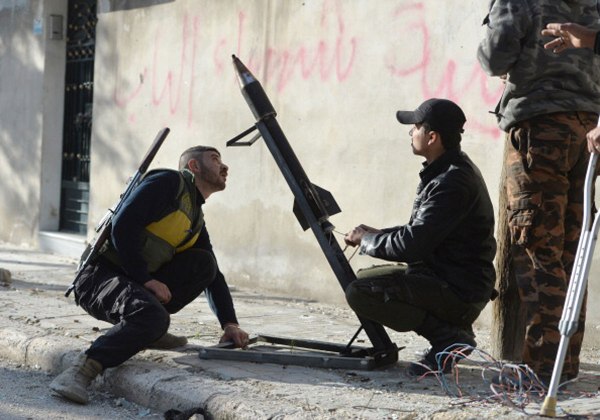 Today, dear brothers and sisters, I wish to add my voice to the cry which rises up with increasing anguish from every part of the world, from every people, from the heart of each person, from the one great family which is humanity: it is the cry for peace! It is a cry which declares with force: we want a peaceful world, we want to be men and women of peace, and we want in our society, torn apart by divisions and conflict, that peace break out! War never again! Never again war! Peace is a precious gift, which must be promoted and protected.
There are so many conflicts in this world which cause me great suffering and worry, but in these days my heart is deeply wounded in particular by what is happening in Syria and anguished by the dramatic developments which are looming.
I appeal strongly for peace, an appeal which arises from deep within me. How much suffering, how much devastation, how much pain has the use of arms carried in its wake in that martyred country, especially among civilians and the unarmed! I think of many children who will not see the light of the future! With utmost firmness I condemn the use of chemical weapons: I tell you that those terrible images from recent days are burned into my mind and heart. There is a judgment of God and of history upon our actions which are inescapable! Never has the use of violence brought peace in its wake. War begets war, violence begets violence.
With all my strength, I ask each party in this conflict to listen to the voice of their own conscience, not to close themselves in solely on their own interests, but rather to look at each other as brothers and decisively and courageously to follow the path of encounter and negotiation, and so overcome blind conflict. With similar vigour I exhort the international community to make every effort to promote clear proposals for peace in that country without further delay, a peace based on dialogue and negotiation, for the good of the entire Syrian people.
May no effort be spared in guaranteeing humanitarian assistance to those wounded by this terrible conflict, in particular those forced to flee and the many refugees in nearby countries. May humanitarian workers, charged with the task of alleviating the sufferings of these people, be granted access so as to provide the necessary aid.
What can we do to make peace in the world? As Pope John said, it pertains to each individual to establish new relationships in human society under the mastery and guidance of justice and love (cf. John XXIII, Pacem in Terris, [11 April 1963]: AAS 55, [1963], 301-302).
All men and women of good will are bound by the task of pursuing peace. I make a forceful and urgent call to the entire Catholic Church, and also to every Christian of other confessions, as well as to followers of every religion and to those brothers and sisters who do not believe: peace is a good which overcomes every barrier, because it belongs all of humanity!
I repeat forcefully: it is neither a culture of confrontation nor a culture of conflict which builds harmony within and between peoples, but rather a culture of encounter and a culture of dialogue; this is the only way to peace.
May the plea for peace rise up and touch the heart of everyone so that they may lay down their weapons and let themselves be led by the desire for peace.
To this end, brothers and sisters, I have decided to proclaim for the whole Church on 7 September next, the vigil of the birth of Mary, Queen of Peace, a day of fasting and prayer for peace in Syria, the Middle East, and throughout the world, and I also invite each person, including our fellow Christians, followers of other religions and all men of good will, to participate, in whatever way they can, in this initiative.
On 7 September, in Saint Peter’s Square, here, from 19:00 until 24:00, we will gather in prayer and in a spirit of penance, invoking God’s great gift of peace upon the beloved nation of Syria and upon each situation of conflict and violence around the world. Humanity needs to see these gestures of peace and to hear words of hope and peace! I ask all the local churches, in addition to fasting, that they gather to pray for this intention.
Let us ask Mary to help us to respond to violence, to conflict and to war, with the power of dialogue, reconciliation and love. She is our mother: may she help us to find peace; all of us are her children! Help us, Mary, to overcome this most difficult moment and to dedicate ourselves each day to building in every situation an authentic culture of encounter and peace. Mary, Queen of Peace, pray for us!
Pope’s Homily at Vigil of Prayer for Peace
September 07, 2013
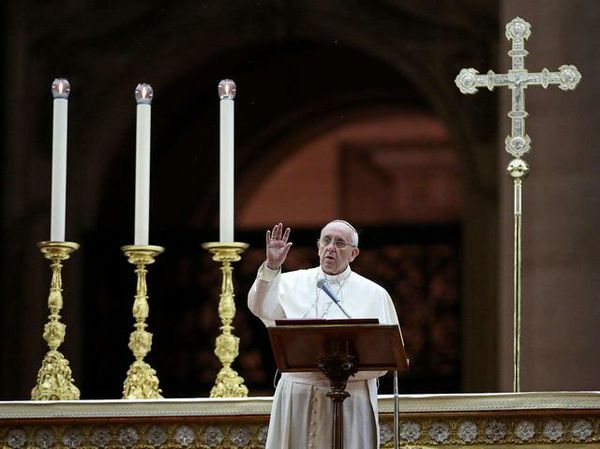 “And God saw that it was good” (Gen 1:12, 18, 21, 25). The biblical account of the beginning of the history of the world and of humanity speaks to us of a God who looks at creation, in a sense contemplating it, and declares: “It is good”. This, dear brothers and sisters, allows us to enter into God’s heart and, precisely from within him, to receive his message.
We can ask ourselves: what does this message mean? What does it say to me, to you, to all of us?
1. It says to us simply that this, our world, in the heart and mind of God, is the “house of harmony and peace”, and that it is the space in which everyone is able to find their proper place and feel “at home”, because it is “good”. All of creation forms a harmonious and good unity, but above all humanity, made in the image and likeness of God, is one family, in which relationships are marked by a true fraternity not only in words: the other person is a brother or sister to love, and our relationship with God, who is love, fidelity and goodness, mirrors every human relationship and brings harmony to the whole of creation. God’s world is a world where everyone feels responsible for the other, for the good of the other. This evening, in reflection, fasting and prayer, each of us deep down should ask ourselves: Is this really the world that I desire? Is this really the world that we all carry in our hearts? Is the world that we want really a world of harmony and peace, in ourselves, in our relations with others, in families, in cities, in and between nations? And does not true freedom mean choosing ways in this world that lead to the good of all and are guided by love?
2. But then we wonder: Is this the world in which we are living? Creation retains its beauty which fills us with awe and it remains a good work. But there is also “violence, division, disagreement, war”. This occurs when man, the summit of creation, stops contemplating beauty and goodness, and withdraws into his own selfishness.
When man thinks only of himself, of his own interests and places himself in the centre, when he permits himself to be captivated by the idols of dominion and power, when he puts himself in God’s place, then all relationships are broken and everything is ruined; then the door opens to violence, indifference, and conflict. This is precisely what the passage in the Book of Genesis seeks to teach us in the story of the Fall: man enters into conflict with himself, he realizes that he is naked and he hides himself because he is afraid (cf. Gen 3: 10), he is afraid of God’s glance; he accuses the woman, she who is flesh of his flesh (cf. v. 12); he breaks harmony with creation, he begins to raise his hand against his brother to kill him. Can we say that from harmony he passes to “disharmony”? No, there is no such thing as “disharmony”; there is either harmony or we fall into chaos, where there is violence, argument, conflict, fear ….
It is exactly in this chaos that God asks man’s conscience: “Where is Abel your brother?” and Cain responds: “I do not know; am I my brother’s keeper?” (Gen 4:9). We too are asked this question, it would be good for us to ask ourselves as well: Am I really my brother’s keeper? Yes, you are your brother’s keeper! To be human means to care for one another! But when harmony is broken, a metamorphosis occurs: the brother who is to be cared for and loved becomes an adversary to fight, to kill. What violence occurs at that moment, how many conflicts, how many wars have marked our history! We need only look at the suffering of so many brothers and sisters. This is not a question of coincidence, but the truth: we bring about the rebirth of Cain in every act of violence and in every war. All of us! And even today we continue this history of conflict between brothers, even today we raise our hands against our brother. Even today, we let ourselves be guided by idols, by selfishness, by our own interests, and this attitude persists. We have perfected our weapons, our conscience has fallen asleep, and we have sharpened our ideas to justify ourselves. As if it were normal, we continue to sow destruction, pain, death! Violence and war lead only to death, they speak of death! Violence and war are the language of death!
After the chaos of the flood, when it stopped raining, a rainbow appeared and the dove returned with an olive branch. Today, I think also of that olive tree which representatives of various religions planted in the Plaza de Mayo in Buenos Aires in 2000, asking that there be no more chaos, asking that there be no more war, asking for peace.
3. And at this point I ask myself: Is it possible to walk the path of peace? Can we get out of this spiral of sorrow and death? Can we learn once again to walk and live in the ways of peace? Invoking the help of God, under the maternal gaze of the Salus Populi Romani, Queen of Peace, I say: Yes, it is possible for everyone! From every corner of the world tonight, I would like to hear us cry out: Yes, it is possible for everyone! Or even better, I would like for each one of us, from the least to the greatest, including those called to govern nations, to respond: Yes, we want it! My Christian faith urges me to look to the Cross. How I wish that all men and women of good will would look to the Cross if only for a moment! There, we can see God’s reply: violence is not answered with violence, death is not answered with the language of death. In the silence of the Cross, the uproar of weapons ceases and the language of reconciliation, forgiveness, dialogue, and peace is spoken. This evening, I ask the Lord that we Christians, and our brothers and sisters of other religions, and every man and woman of good will, cry out forcefully: violence and war are never the way to peace! Let everyone be moved to look into the depths of his or her conscience and listen to that word which says: Leave behind the self-interest that hardens your heart, overcome the indifference that makes your heart insensitive towards others, conquer your deadly reasoning, and open yourself to dialogue and reconciliation. Look upon your brother’s sorrow – I think of the children: look upon these… look at the sorrow of your brother, stay your hand and do not add to it, rebuild the harmony that has been shattered; and all this achieved not by conflict but by encounter! May the noise of weapons cease! War always marks the failure of peace, it is always a defeat for humanity. Let the words of Pope Paul VI resound again: “No more one against the other, no more, never! … war never again, never again war!” (Address to the United Nations, 1965). “Peace expresses itself only in peace, a peace which is not separate from the demands of justice but which is fostered by personal sacrifice, clemency, mercy and love” (World Day of Peace Message, 1975). Brothers and Sisters, forgiveness, dialogue, reconciliation – these are the words of peace, in beloved Syria, in the Middle East, in all the world! Let us pray this evening for reconciliation and peace, let us work for reconciliation and peace, and let us all become, in every place, men and women of reconciliation and peace! So may it be.
Letter to Congress on Syria
United States Conference of Catholic Bishops
September 5, 2013
United States Senate/United States House of Representatives
Washington, DC 20510/Washington, DC 20515
Dear Senator/Representative:
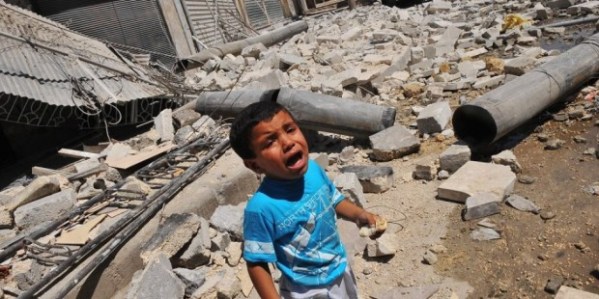 As Congress takes up a resolution to authorize the use of military force in Syria, we want to assure you of our prayers and offer a contribution to that debate from our perspective as Catholic pastors and teachers.
We absolutely condemn the use of chemical weapons in Syria. These indiscriminate weapons have no place in the arsenals of the family of nations. With you we mourn for the lives lost and grieve with the families of the deceased. At the same time, we remain profoundly concerned for the more than 100,000 Syrians who have lost their lives, the more than 2 million who have fled the country as refugees, and the more than 4 million within Syria who have been driven from their homes by the violence. Our focus is on the humanitarian catastrophe unfolding in Syria and on saving lives by ending the conflict, not fueling it.
We have heard the urgent calls of the Successor of Saint Peter, Pope Francis, and our suffering brother bishops of the venerable and ancient Christian communities of the Middle East. As one, they beg the international community not to resort to military intervention in Syria. They have made it clear that a military attack will be counterproductive, will exacerbate an already deadly situation, and will have unintended negative consequences. Their concerns strongly resonate in American public opinion that questions the wisdom of intervention and in the lack of international consensus.
We make our own the appeal of Pope Francis: “I exhort the international community to make every effort to promote clear proposals for peace in that country without further delay, a peace based on dialogue and negotiation, for the good of the entire Syrian people. May no effort be spared in guaranteeing humanitarian assistance to those wounded by this terrible conflict, in particular those forced to flee and the many refugees in nearby countries.”
The Congressional resolution acknowledges that “the conflict in Syria will only be resolved through a negotiated political settlement.” A central moral question is: Will more or less lives and livelihoods be destroyed by military intervention? On this question Pope Francis has been clear: “How much suffering, how much devastation, how much pain has the use of arms carried in its wake in that martyred country, especially among civilians and the unarmed!” Instead of employing armed force, in this situation our nation, working with the international community, should direct all of its energies urgently and tirelessly toward dialogue and negotiation.
The longstanding position of our Conference of Bishops is that the Syrian people urgently need a political solution. We ask the United States to work with other governments to obtain a ceasefire, initiate serious negotiations, provide impartial humanitarian assistance, and encourage efforts to build an inclusive society in Syria that protects the rights of all its citizens, including Christians and other minorities.
Please be assured of our prayers as Congress faces the complex challenges and humanitarian catastrophe that have engulfed Syria.
Sincerely yours,
Timothy Cardinal Dolan
Archbishop of New York
President, United States Conference of Catholic Bishops
Most Reverend Richard E. Pates
Bishop of Des Moines
Chair, Committee on International Justice and Peace
